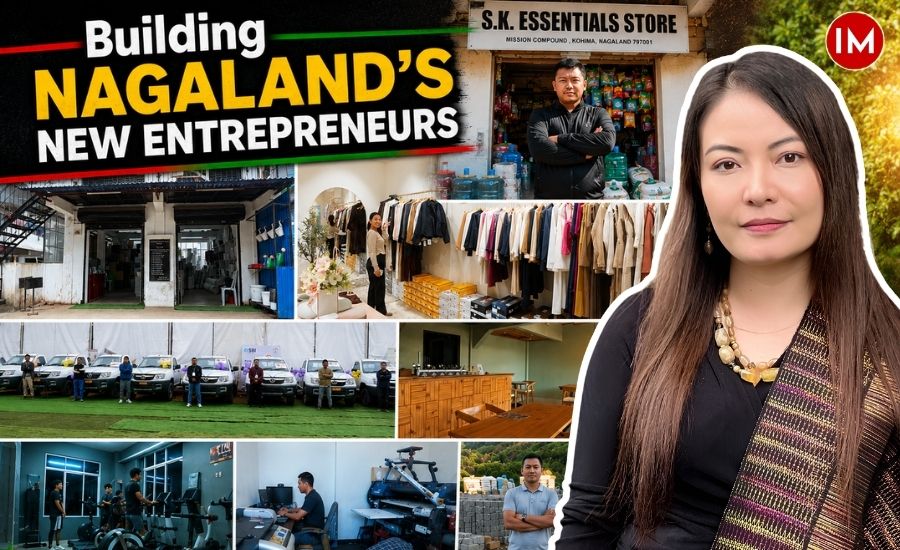
For decades, entrepreneurship in Nagaland faced a challenge that had little to do with talent or ambition. Families possessed traditional skills, agricultural knowledge, livestock-rearing experience and thriving cottage industries, yet transforming those strengths into sustainable businesses remained difficult. The missing link was not enterprise—it was access to formal finance.
The Chief Minister’s Microfinance Initiative (CMMFI) was conceived to bridge that gap. More than a loan programme, it is an attempt to reshape the relationship between the people of Nagaland and the formal banking system.
Designed by the Government of Nagaland’s Finance Department, the initiative reduces the risks for both banks and borrowers while encouraging first-generation entrepreneurs to participate in the formal economy.
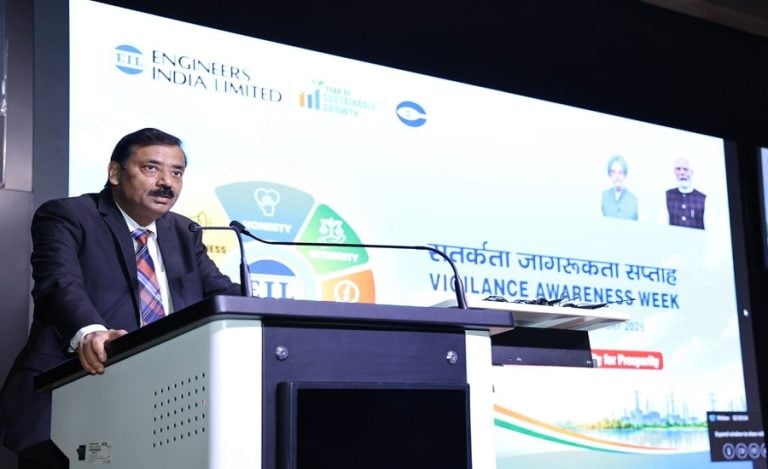
Leading this transformation is Abeinuo Jamine Ashao, Under Secretary, Department of Finance, Government of Nagaland, who has been closely associated with the implementation of the initiative. Speaking with Indian Masterminds about the philosophy behind the scheme, she explains, “CMMFI is not about deciding who deserves credit. It is about ensuring that every capable entrepreneur gets the opportunity to prove what they can build.”
Rebuilding Trust Between Banks and Citizens
Nagaland’s economic challenge was never simply the absence of money. It was the absence of trust between financial institutions and local communities.
Banks were reluctant to lend because conventional collateral systems rarely matched Nagaland’s tribal land ownership patterns. Many aspiring entrepreneurs, meanwhile, had never interacted with formal banks or understood the documentation required for institutional credit. The result was predictable: low lending, limited private enterprise and dependence on informal borrowing.
The state’s Annual Credit Plan reflected this disconnect. Before CMMFI, it stood at approximately ₹400 crore. Today, it has expanded to over ₹2,500 crore, signalling a dramatic increase in institutional lending across the state.
Ms Ashao says, “The objective was not merely to increase lending. We wanted to rebuild confidence on both sides—banks needed confidence to lend, and citizens needed confidence to borrow responsibly.“
Why CMMFI is Different
Unlike conventional subsidy schemes, CMMFI does not distribute grants.
Every beneficiary receives a bank loan that must be repaid. Banks continue to conduct credit appraisals and evaluate projects. What changes is the support provided by the government.
Interest subvention, collateral assistance and moratorium provisions reduce financial risks without removing financial responsibility.
This carefully balanced approach ensures borrowers develop formal credit histories while banks gain confidence through successful recoveries. Every repaid loan strengthens the ecosystem for future entrepreneurs.
“The loan still belongs to the borrower, and repayment remains essential,” says Ms Ashao. “What the government changes is the level of risk involved in taking that first entrepreneurial step.”
Creating a Credit Culture
One of CMMFI’s biggest achievements has been changing how institutional credit functions within Nagaland.
The state’s Credit Deposit Ratio, which indicates how much locally deposited money is lent back into the state’s economy, has crossed 60 per cent for the first time in Nagaland’s history.
This milestone represents far more than a banking statistic. It means capital generated within Nagaland is increasingly being invested in Nagaland’s own entrepreneurs instead of flowing elsewhere.
Rather than treating finance as a welfare measure, the scheme seeks to build long-term financial behaviour where entrepreneurs borrow, invest, repay and become eligible for larger opportunities.
Supporting Every Sector of the Economy
Nagaland’s economy is highly diverse, making a one-size-fits-all programme impractical.
Recognising this reality, CMMFI supports a broad range of sectors, including agriculture, livestock, handloom, transport, food processing, services, tourism and small businesses.
Instead of concentrating investments in urban centres or established industries, credit allocation is distributed according to population across districts, ensuring broader regional participation.
Special provisions have also been designed for women, differently-abled individuals and unemployed skilled youth, groups that traditionally faced greater difficulty accessing institutional finance.
“Inclusive growth cannot happen if finance reaches only familiar sectors or familiar borrowers,” Ms Ashao observes. “The design had to reflect the diversity of Nagaland’s economy and its people.”
Simplifying Access for First-Generation Entrepreneurs
For many aspiring entrepreneurs, preparing business proposals is often more difficult than running the business itself.
CMMFI addresses this through a structured facilitation system.
Applicants submit proposals through a common online portal, while district-level facilitation centres assist them in preparing detailed project reports, business plans and Udyam registrations at no cost.
Applications are then examined by district-level implementation and monitoring committees headed by Deputy Commissioners before being forwarded to banks for appraisal.
The process combines administrative verification with financial assessment, ensuring transparency while helping first-time borrowers navigate formal banking procedures.
Livestock: A Model of Rural Enterprise
Among all sectors supported under CMMFI, livestock demonstrates how relatively small investments can generate meaningful household income.
A family purchasing a piglet for around ₹5,000 can raise it over several months using locally available feed and family labour. Once mature, the animal can generate approximately ₹30,000. Managing three pigs simultaneously can provide an additional annual household income of nearly ₹90,000.
For rural families, this income frequently supports children’s education, healthcare expenses and household savings.
Rather than introducing unfamiliar economic activities, the programme strengthens livelihoods that communities already understand and practise.
Women Entrepreneurs Driving Growth
Women have emerged among the strongest participants under CMMFI.
Across Nagaland, women who previously managed informal businesses now have access to institutional credit for expanding livestock enterprises, food processing units, weaving activities, retail businesses and self-help group initiatives.
The significance extends beyond financing.
Every successfully repaid loan establishes a formal banking record, allowing women entrepreneurs to access larger credit opportunities in the future.
“When a woman entrepreneur repays her first loan, she earns far more than financial credibility,” says Ms Ashao. “She creates new opportunities for future growth and establishes her place within the formal financial system.”
Measurable Outcomes Across the State
The initiative has already generated measurable economic outcomes, with figures continuing to rise as implementation expands.
As of now:
- 3,402 enterprises have been established under CMMFI.
- Projects worth over ₹241 crore have been initiated.
- Banks have sanctioned approximately ₹197 crore in loans.
- Nagaland’s Credit Deposit Ratio has crossed 60 percent.
- The Annual Credit Plan has grown from ₹400 crore to over ₹2,500 crore.
Behind these numbers are entrepreneurs representing every corner of the state’s economy.
Some have built backyard piggeries that support household income. Others have launched premium cafés, jewellery businesses supplying customers across India, organic vegetable enterprises serving urban markets, transport services and tourism-based homestays.
These enterprises vary widely in scale but share a common beginning: access to formal credit that previously remained beyond reach.
Looking Beyond Credit
The government now aims to move beyond loan disbursement towards improving enterprise productivity and long-term sustainability.
The introduction of the Nagaland Gross Value-Addition Promotion Initiative under the CMMFI framework reflects this shift. Future efforts will focus on connecting entrepreneurs with markets, strengthening value chains, expanding mentorship and supporting businesses well beyond loan approval.
For Ms Ashao, the long-term vision extends beyond financial inclusion.
“The first phase was about helping people access credit,” she says. “The next phase is about ensuring those enterprises survive, grow and contribute to an economy increasingly owned by the people of Nagaland themselves.”
As the number of beneficiaries continues to increase, CMMFI is emerging as more than a government programme. It is laying the foundations of a stronger credit ecosystem where banks participate with confidence, entrepreneurs build sustainable businesses, and economic growth is driven by local ownership rather than external dependence.