Rudranath, one of the revered Panch Kedar temples of Uttarakhand, attracts thousands of pilgrims every year. Situated amid fragile alpine ecosystems, the shrine is known for its spiritual significance as well as its challenging trekking route. But just a few years ago, increasing tourism was creating mounting ecological and management concerns along the pilgrimage trail.
Unregulated tent settlements, encroachments, waste accumulation, open defecation, lack of medical support, inadequate signage, and safety concerns were gradually putting pressure on the landscape. Addressing these challenges required more than enforcement. It required community participation.
That solution came in the form of an innovative Eco-Development Committee (EDC) model introduced by 2022-batch Indian Forest Service officer Tarun S, currently serving as Divisional Forest Officer, Kalagarh Tiger Reserve (Corbett), Uttarakhand. The initiative was launched during his earlier posting in the Kedarnath Wildlife Sanctuary.
Recognising a Growing Challenge
According to IFS Tarun S, the situation demanded urgent intervention before it became irreversible.
“What was happening was that along the route to Rudranath, there were many places where people had encroached. Going by the situation at that time, these encroachments had the potential to increase further in the future, which would have been unsustainable,” Mr Tarun shared with Indian Masterminds.
The challenge was complex. Local communities depended heavily on pilgrimage-related income, while the sanctuary administration had to ensure that tourism remained within ecological limits. Any attempt to remove encroachments was often met with resistance from entire villages.
Instead of pursuing a purely enforcement-driven approach, Mr Tarun and his team designed a system that gave local communities a direct stake in conservation.
Also Read – How IFS Shashi Kumar Is Turning Tribal Skills Into Global Products in Jashpur
The Rudranath EDC Model
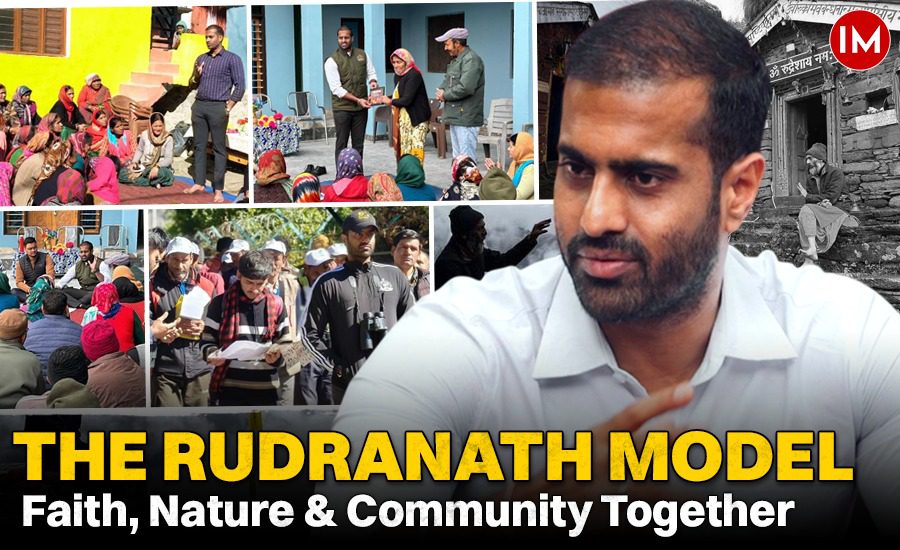
Five Eco-Development Committees were formed across villages that serve as access points to Rudranath. These committees, led by local representatives and managed by villagers themselves, became the foundation of a new governance framework.
The most significant reform involved regulating temporary accommodation facilities.
Using historical visitor data and scientifically assessed carrying capacity estimates, tent allocations were distributed among villages in proportion to the number of pilgrims traditionally using each route. The committees then decided how the allotted tents would be distributed among residents.
Some villages adopted lottery systems, others conducted auctions, while some prioritised economically weaker sections and members of scheduled communities.
“We had to convince the villagers that this model would be beneficial for the entire village community,” says Mr Tarun. “Through the EDCs, villages started earning revenue from the tents. Every tourist who stays pays a fee, and a certain percentage of that revenue goes to the EDC.“
The approach transformed what had previously been a source of conflict into a shared economic opportunity.
Bringing Order to Tourism Management
The initiative extended far beyond tent regulation.
Bio-toilets were installed along the route, addressing a longstanding sanitation challenge in a high-altitude environment. Medical emergency preparedness was strengthened through first-aid training for staff and rescue teams. Signboards were installed to improve navigation and reduce accidents.
A permit-based visitor management system was also introduced to regulate footfall and prevent overcrowding.
“We convinced them by explaining that if the number of visitors is regulated, people will stay longer in the villages, which will ultimately bring more revenue to them,” Mr Tarun explains.
While carrying-capacity limits could not always be enforced rigidly because of local livelihood concerns, the system introduced a more structured approach to tourism management than had previously existed.
Importantly, the initiative helped end the cycle of daily confrontations between authorities and local residents over illegal tent establishments.
The entire process eventually became streamlined and digitised, creating transparency and predictability for all stakeholders.
Ecological Gains on the Ground
One of the most visible outcomes of the project has been the reduction of ecological pressure on sensitive alpine meadows, known locally as bugyals.
A landmark court ruling had previously prohibited commercial accommodation facilities within these fragile grasslands. However, enforcement remained difficult because tents were often erected indiscriminately across the landscape.
The EDC model addressed this issue by designating specific zones where camping could be permitted. Villages were assigned designated locations, eliminating uncontrolled expansion.
Waste management also became institutionalised. A small environmental cess collected from visitors funds cleaning staff, toilet maintenance, and transportation of waste back from higher elevations using mules.
Cleanup drives complemented these efforts, helping improve the overall condition of the pilgrimage route.
The results demonstrate how conservation objectives and local economic interests can work together when communities become active partners rather than passive beneficiaries.
Winning Trust Was the Toughest Task
The biggest challenge was not infrastructure or logistics—it was building consensus.
“Convincing people — especially people from five different villages. The EDC concept is quite complex,” Mr Tarun says.
Resistance came from multiple directions. Legal cases were filed, and questions were raised regarding traditional rights and administrative authority. At one stage, the courts imposed penalties because the larger purpose of the initiative was not fully understood.
Over time, however, sustained dialogue helped build support. The model eventually received approval from the State Board for Wildlife, providing it with institutional legitimacy.
Today, the system continues to function even after IFS Tarun’s transfer, demonstrating the strength of community ownership.
During 2023–24 alone, nearly 20,000 visitors travelled to Rudranath, generating sustainable income opportunities for local communities while maintaining greater environmental oversight.
A Message for Pilgrims
For IFS Tarun S, conservation at Rudranath is deeply connected to the spiritual values that draw people to the shrine.
“When we visit such places, spirituality is on our minds, but we often forget that God does not reside only inside the temple. God resides everywhere in that landscape,” he says.
His message is simple: respecting nature should be an integral part of pilgrimage.
As Rudranath continues to welcome visitors from across the country, the EDC model offers an example of how community-led conservation can protect fragile ecosystems while creating lasting livelihood opportunities. It shows that when local communities, government institutions, and visitors work together, sacred landscapes can be preserved without compromising either ecology or development.
Also Read – From a Forgotten River to a Flowing Lifeline: How Shahjahanpur Revived the Bhainsi Through Collective Will