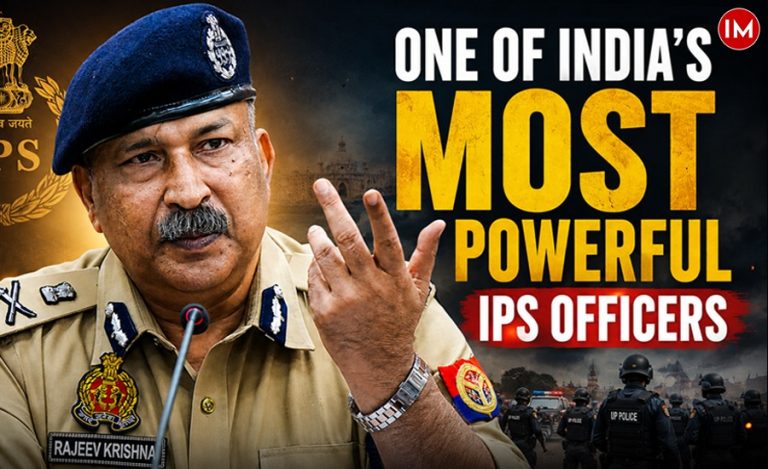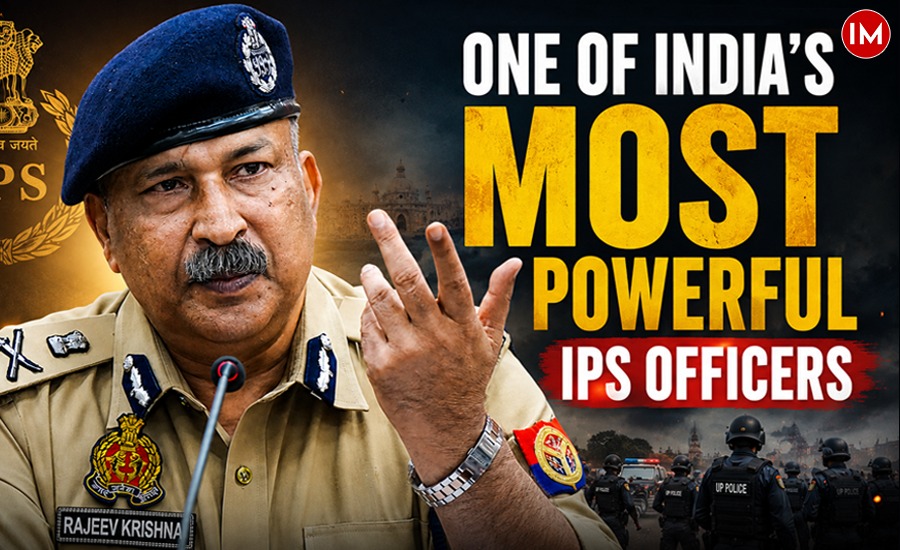
For over three decades, Rajeev Krishna has quietly occupied some of the most demanding positions in the Uttar Pradesh Police. Away from headlines and public glare, he built a career defined by operational policing, intelligence work, administrative leadership and institutional reforms. In 2026, that journey reached its highest office when the 1991-batch IPS officer was appointed the Director General of Police of Uttar Pradesh, becoming the state’s first permanent police chief in nearly four years.
Born on June 26, 1969, in Gautam Buddha Nagar, Rajeev Krishna grew up in an educated family. His father, H.K. Mittal, encouraged academics, and Krishna chose engineering before public service, earning a Bachelor of Engineering in Electronics and Communication. The analytical mindset of an engineer would later shape his approach to policing: methodical, technology-oriented and focused on systems rather than spectacle.
He joined the Indian Police Service on September 15, 1991, entering one of the country’s toughest police cadres at a time when Uttar Pradesh was witnessing dramatic political, social and security changes. Over the next three decades, he experienced nearly every dimension of policing, from communal tensions and organised crime to terrorism, cyber threats and large-scale police modernisation.
Also read: How IFS Piyusha Jagtap Is Changing Conservation Through Stories, Communities and Compassion | Video Interview
Learning Policing from the Ground Up
Rajeev Krishna’s career was built in the field before it reached the headquarters.
As Superintendent of Police in Mathura and later Senior Superintendent of Police in Etawah, Agra, Noida and Lucknow, he handled districts that demanded both administrative control and operational precision. Each posting came with its own challenges: crime syndicates, rapidly expanding urban centres, political sensitivities and high-profile investigations.
His tenure in Agra particularly strengthened his reputation as a field officer. Leading operations against kidnapping gangs and organised criminal networks, he demonstrated an intelligence-driven approach to policing. In Noida, one of India’s fastest-growing urban regions, he dealt with corporate security, industrial policing, VIP movement and complex urban law-and-order situations.
Lucknow, however, proved to be one of his defining assignments. Managing the capital city’s policing meant coordinating VIP security, political events, festivals, intelligence inputs and emergency responses while ensuring that the state’s administrative nerve centre functioned without disruption.
Building Uttar Pradesh’s Counter-Terror Response
Among Rajeev Krishna’s most significant contributions has been his association with the Uttar Pradesh Anti-Terrorism Squad (ATS), where he is widely regarded as one of its founding leaders.
At a time when terrorism was emerging as a growing national concern, the ATS focused on strengthening intelligence gathering, dismantling terror modules, investigating explosive-related cases and coordinating with national security agencies. The assignment demanded discretion, quick decision-making and close coordination across multiple agencies, helping shape Uttar Pradesh’s specialised counter-terror capabilities.
Leading Reform Beyond the Field
As his career progressed, Rajeev Krishna moved from operational policing to institution building.
As Director General of the Uttar Pradesh Police Recruitment and Promotion Board, he supervised one of the largest police recruitment exercises in India’s history. The responsibility carried even greater significance after the controversy surrounding the 2024 recruitment paper leak. Conducting the recruitment process under intense public scrutiny restored confidence in the system and highlighted his administrative capabilities.
His subsequent role as Director General of Vigilance reflected another dimension of his career. Entrusted with corruption inquiries and departmental investigations, he oversaw one of the state’s most sensitive institutions responsible for ensuring accountability within the government machinery.
From Acting Chief to Permanent DGP
Following the retirement of DGP Prashant Kumar in May 2025, Rajeev Krishna took over as Acting Director General of Police while simultaneously handling Vigilance and the Recruitment Board.
A year later, in May 2026, the Uttar Pradesh Government appointed him as the state’s permanent Director General of Police, ending a prolonged phase during which the state’s top police post had remained without a regular incumbent. With his retirement due in June 2029, he now leads one of India’s largest police forces through an era shaped by technology, public expectations and evolving security challenges.
Since assuming office, he has focused on proactive policing, directing statewide drives against absconding criminals and introducing the “Zero Incident, Zero Accident” strategy during the Kanwar Yatra to strengthen crowd management and public safety.
A Career Defined by Quiet Leadership
Rajeev Krishna has rarely sought the spotlight. His public appearances are limited, interviews are few and his family life remains private. Yet, within policing circles, his journey reflects steady progression through operational, intelligence and administrative assignments.
His career has earned him several distinguished honours, including the Police Medal for Gallantry in 2002, a Bar to the Gallantry Medal in 2009, the President’s Police Medal for Distinguished Service in 2015, along with the Director General’s Commendation Roll and Silver, Gold and Platinum Discs in successive years.
From an engineering graduate entering the IPS in 1991 to leading India’s largest state police force, Rajeev Krishna’s journey has been shaped less by public visibility and more by the institutions he has strengthened, the systems he has managed and the responsibilities he has consistently carried.
Also read: How YB Khurania Climbed Every Rung of Policing Before Becoming Odisha’s DGP