A river can be revived with check dams, recharge structures and scientific studies. But keeping it alive is a different challenge.
For IFS officer Dharam Singh Meena, that distinction became clear early in the Heval River Rejuvenation Programme. The water crisis in Tehri Garhwal was not merely an environmental problem. It was woven into the everyday lives of the people living around the river.
So when Meena began working on the Heval landscape, he did not want villagers to remain spectators to a government project.
He wanted them to eventually become its custodians.
“From the beginning itself, we tried to involve communities in the planning and execution phase. We had it in mind that after the work was completed, the communities themselves would carry it forward,” he shared in an exclusive conversation with Indian Masterminds.
That idea became the foundation of one of the programme’s most important components: the Heval Dhara Sanrakshan Samitis.
Also read: How IFS Dharam Singh Meena Revived Uttarakhand’s Heval River Through Science and Forest Restoration
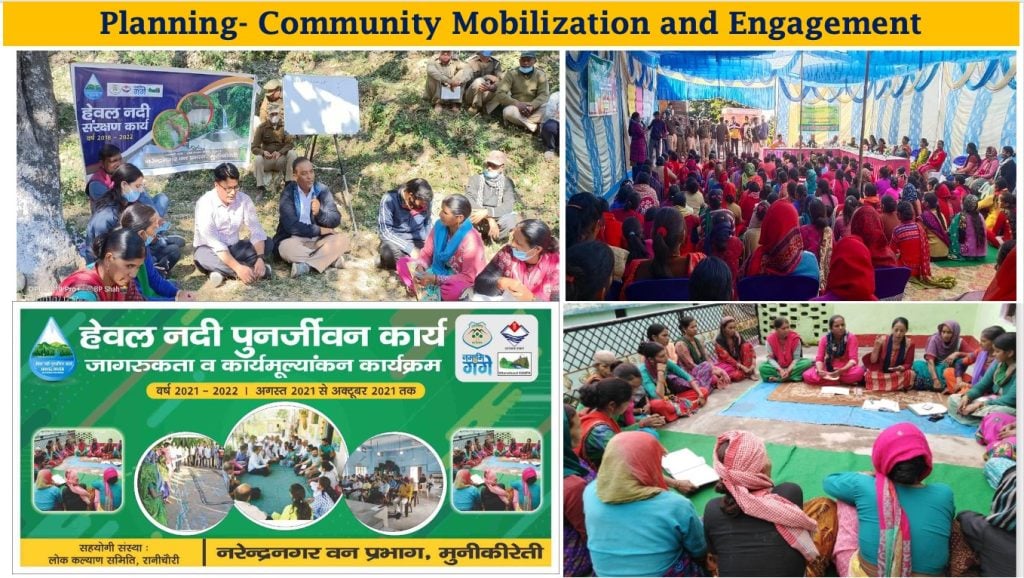
34 Committees, One Responsibility
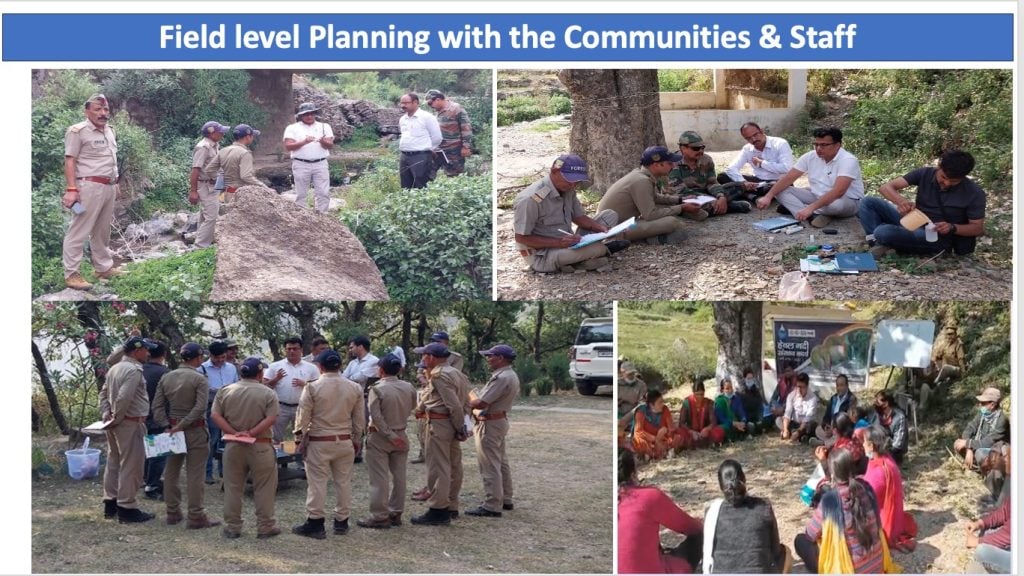
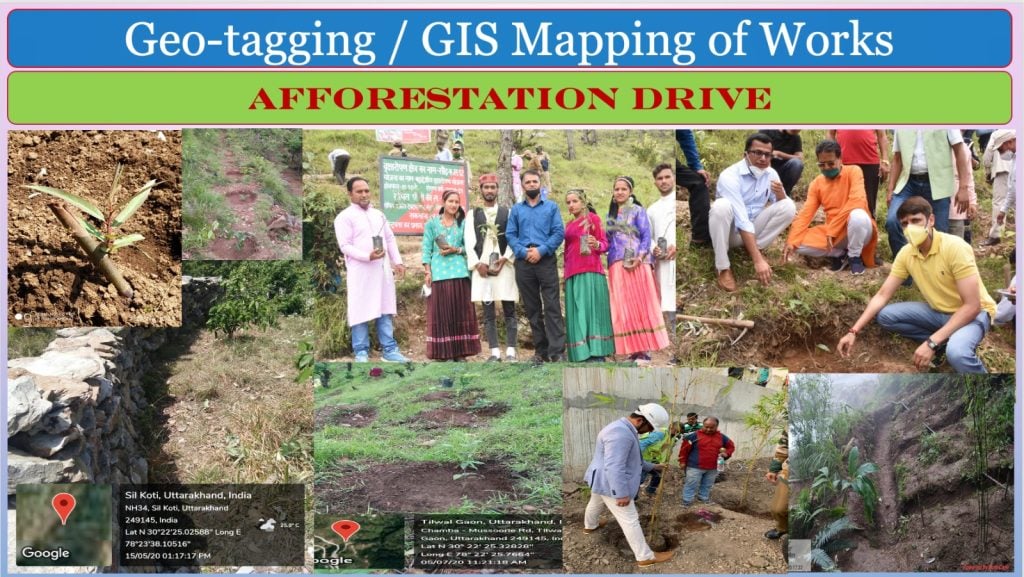
The process began village by village. Meena and his team visited Van Panchayats, met residents and identified people willing to take responsibility for the water sources around them. Interested women, educated young people and local representatives were brought into the process.
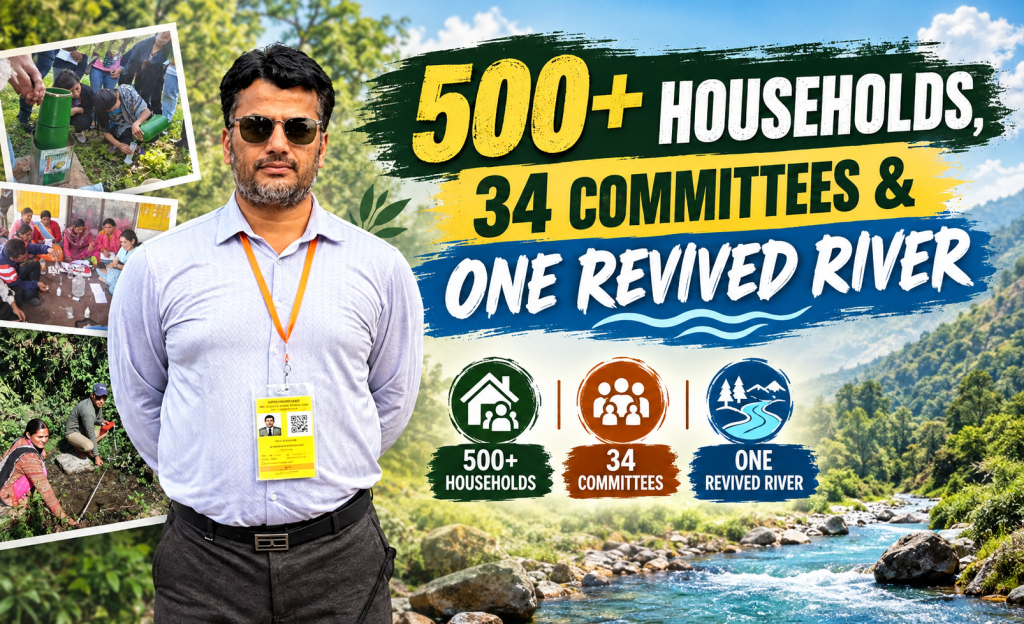
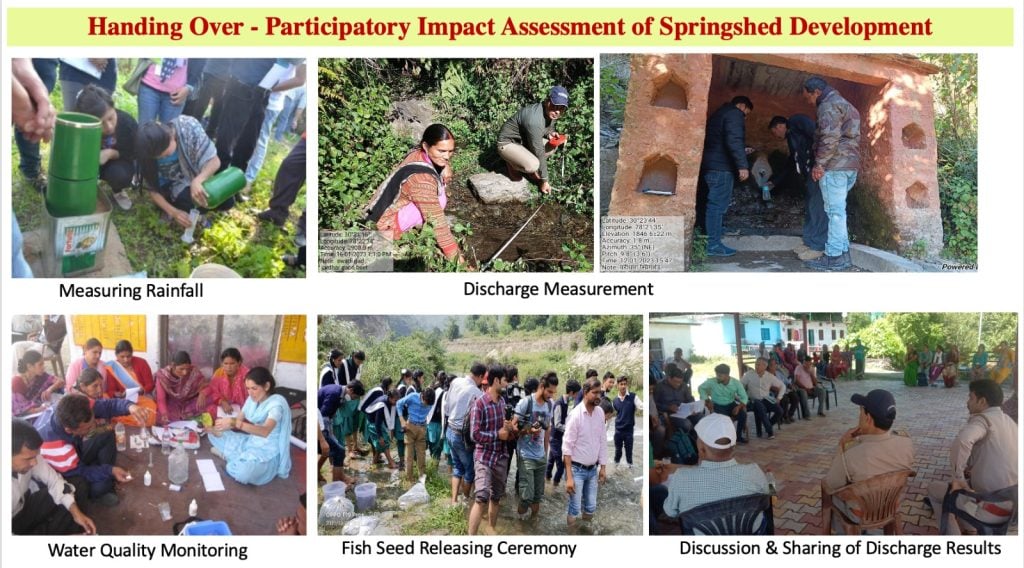
Across 32 larger villages, covering more than 100 smaller habitations, 34 Heval Dhara Sanrakshan Samitis were formed. The committees were formally recognised and given certificates along with clearly defined responsibilities. Their role was not symbolic. Members were involved in maintaining records, collecting data and measuring water discharge.
The intention was to gradually transfer responsibility from the department to the people who depended on the springs every day.
One example remains particularly memorable for Meena. At Nawa Pani Tok, when the project began, only a trickle of water was coming through a village pipe. Years later, during a routine visit, the village Pradhan approached him with an entirely different story.
The source was now delivering nearly two inches of water, and the local committee was functioning smoothly. For Meena, that was the moment the idea of community ownership became tangible.
When Women Stopped Carrying Water
The most emotional feedback came from women. In the hills, water scarcity had traditionally meant long walks to collect water. Even after springs were revived, the real measure of success was whether the water actually reached people’s homes.
At a community function, women spoke about how their lives had changed. Some became emotional while describing how they had earlier travelled long distances to fetch water. Now, water was available closer to home.
“I was overwhelmed by the feedback of the women. They were crying and saying that they used to go very far to collect water, and now things had become much better because water was available at home,” Meena stated.
The programme therefore moved beyond restoring springs. It began changing the relationship between communities and their natural resources.
When Roads Threatened the Springs
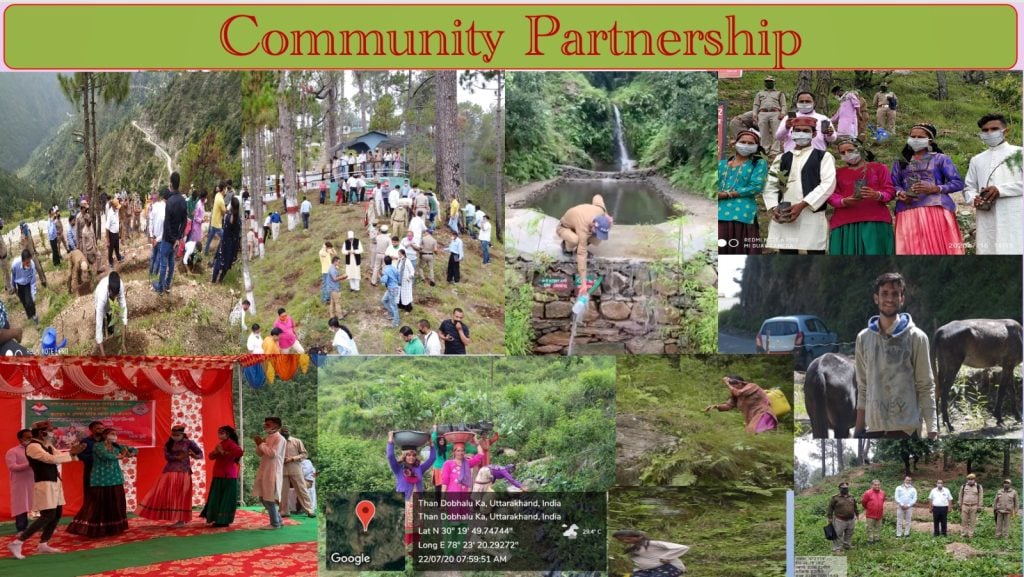
The work also had to adapt to new pressures. Construction associated with the Char Dham road led to disturbances in several water resources. Instead of allowing those sources to deteriorate, the project created recharge tanks and other structures to help capture and retain water.
At several locations, traditional-looking marble structures were developed around spring outlets, along with soak pits. Percolation and recharge ponds were created for wildlife.
The arrangement was designed around multiple needs: water for people, water for livestock and drinking water for wildlife. In several places, pipelines were extended to nearby villages.
It was a practical demonstration of an idea Meena had carried throughout the project: conservation works best when people can see how directly it improves their lives.
Conservation With an Economic Reason
But water alone could not solve the larger problem facing Himalayan villages. If young people and families had no livelihood opportunities, migration would continue. If conservation imposed only restrictions, local support could weaken.
Meena therefore connected ecological restoration with income generation. A women-led dairy enterprise was initiated through a JICA-supported project. The objective was straightforward: create an economic incentive alongside conservation.
The model eventually benefited more than 500 households and generated substantial revenue. By 2020 onwards, the wider livelihood initiatives linked to the programme had generated more than ₹8 crore in revenue, according to Meena.
The department later established a three-storey growth centre to address another problem: what happened after villagers produced something worth selling.
The ground floor became a display and sales outlet. Space was provided for meetings and conferences, while training facilities were also created. Kiosks and selling points helped producers take their products closer to consumers.
The idea was to ensure that livelihood did not end at production; there had to be a route to value addition and markets.
The Return of the Honey Bee
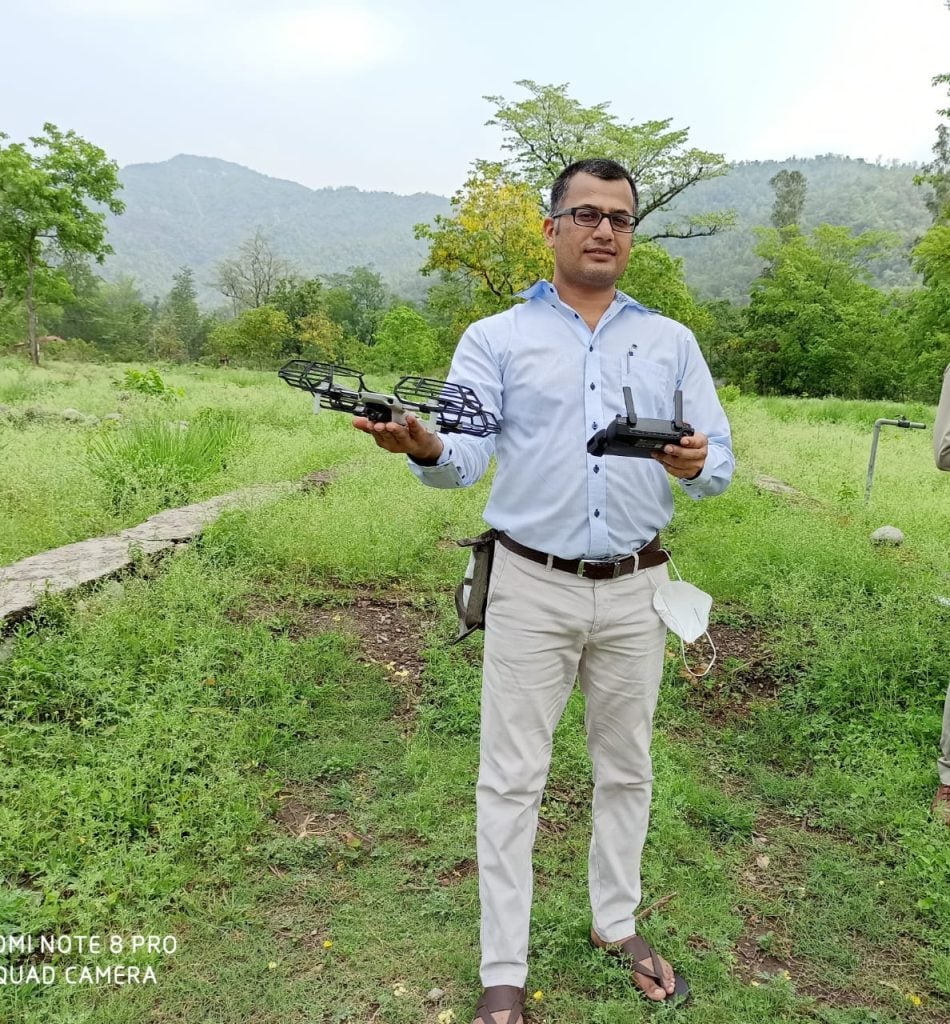
Another experiment turned into a model of its own. Honey-bee-based livelihoods had existed in forest areas earlier but had declined over time, partly because of predators such as bears and other practical difficulties.
The Heval project brought it back. Members of the Van Panchayats and Heval Dhara Sanrakshan Committees were trained in beekeeping. Honey boxes were provided, followed by regular technical training.
The team also collaborated with a Saharanpur-based federation to help villages with value addition and marketing. The product had an advantage: forest honey could command a premium because of its natural and medicinal qualities.
Women were among those who entered the enterprise, and the model began generating income for households.
Its success went beyond Heval. The Uttarakhand government subsequently announced that honey-based livelihood models would be developed in forest divisions across the state, taking the experience from the project into a wider policy framework.
Turning Waterfalls Into Livelihoods
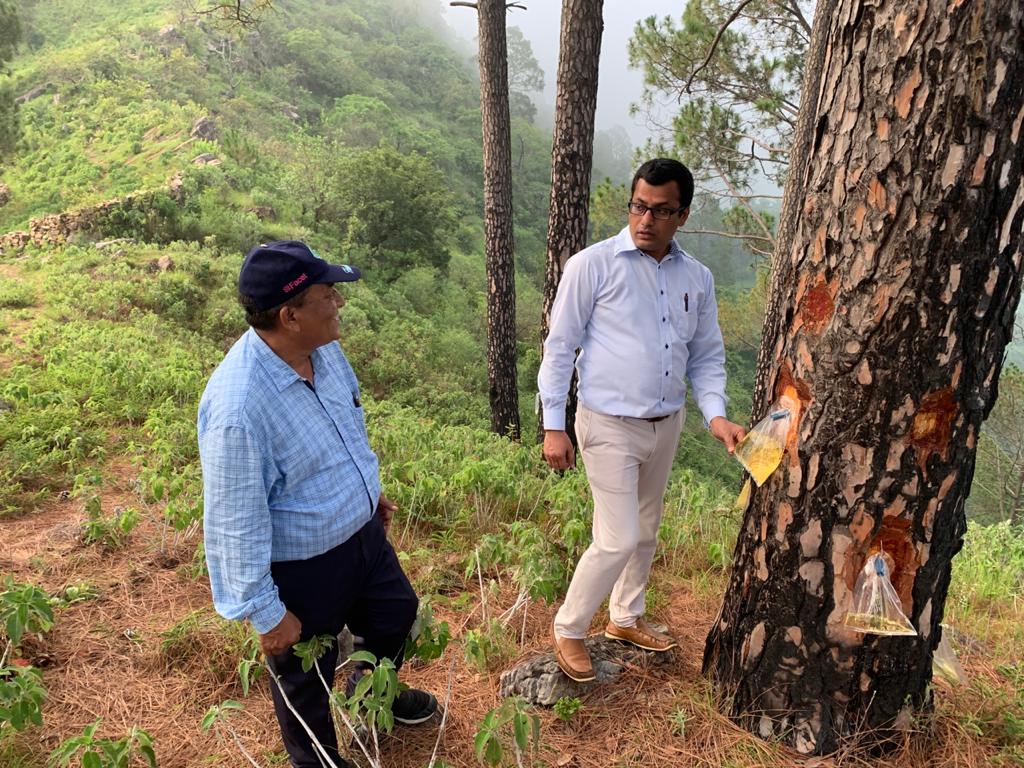
As the springs and streams recovered, another possibility emerged. Some of the revived streams began flowing strongly enough to form waterfalls. Rather than viewing them only as ecological outcomes, the administration explored their potential for eco-tourism.
Eco-tourism development was taken up at locations including Ganjar Khala, Kaddukhal and Shivpuri.
A 10-hectare riverfront biodiversity park was also developed, creating another space where conservation and local economic activity could meet. The logic was simple: if a restored landscape could attract visitors, local communities could earn from protecting the very resources that brought those visitors there.
A River That Became a Community Institution
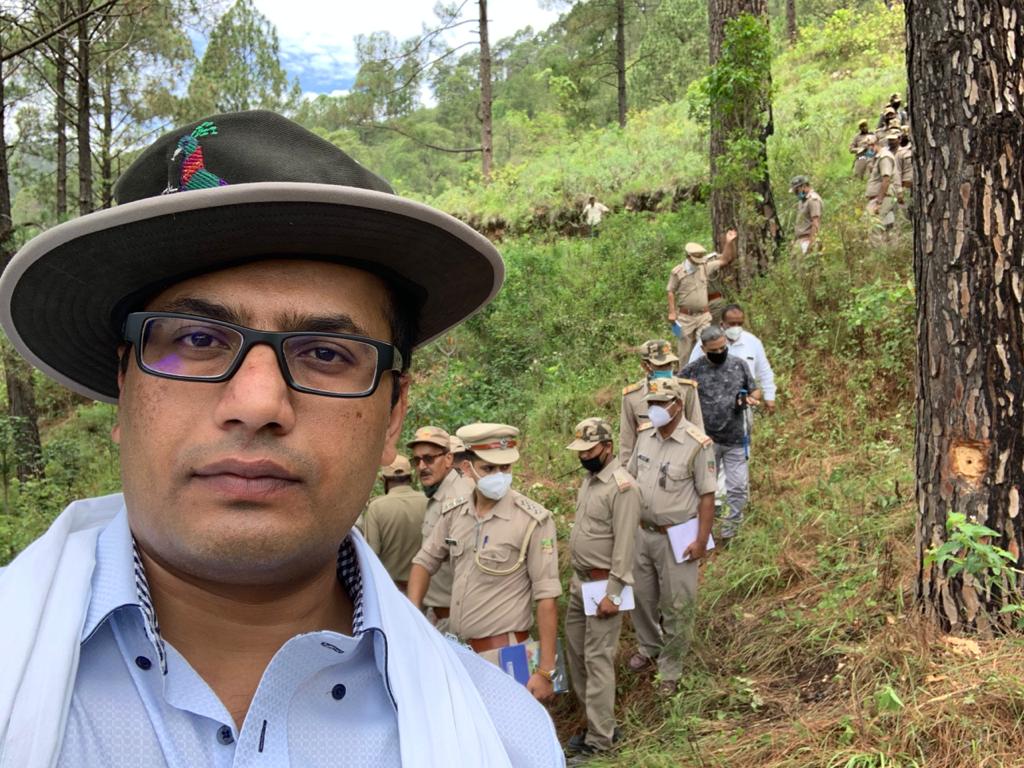
The Heval model eventually grew into something larger than a river-rejuvenation project.
Its 34 committees created local institutions around water. Women became participants in conservation and livelihood enterprises. Beekeeping created new income avenues. Dairy connected environmental work with household earnings. Eco-tourism gave restored landscapes economic value.
And the communities that once demanded water began participating in its protection.
The model also showed how government programmes could be brought together instead of functioning in isolation: water conservation, forestry, rural development, livelihoods, eco-tourism and technical institutions all became parts of one landscape-level effort. Meena believes that was essential to making the work last.
“We planned that the communities should carry it forward. We gradually handed over the responsibility at some places, because ultimately it is their water source and they have to look after it,” he told Indian Masterminds.
The impact can perhaps be best understood through a simple contrast: a village where a pipe once produced only a few drops later reported a steady two-inch flow; women who once walked long distances for water spoke of having it at home; and local committees that began as participants gradually became guardians.
From Heval to the Whole State
The experience eventually reached the policy level.
When Meena later served as Additional Secretary in the Uttarakhand government, he proposed institutionalising the approach. The challenges faced during Heval such as technical expertise, financing, coordination and access to specialised institutions, were among the issues the proposed Spring and River Rejuvenation Authority (SARRA) was designed to address.
SARRA became the apex institutional mechanism for taking the comprehensive spring-and-river approach forward across Uttarakhand. The Heval model was consequently positioned for replication beyond its original landscape.
The significance of that journey lies not simply in the number of springs revived or structures created. It lies in what happened around them.
A government programme entered villages as an intervention. It stayed because people began to see it as their own work. And perhaps that is the real story of Heval: Dharam Singh Meena did not merely try to restore a river for the communities. He built a system in which the communities could help restore, and then protect, the river themselves.
Also read: How IFS Diganth Nayak Turned a Human-Dominated Landscape Into a Tiger Habitat