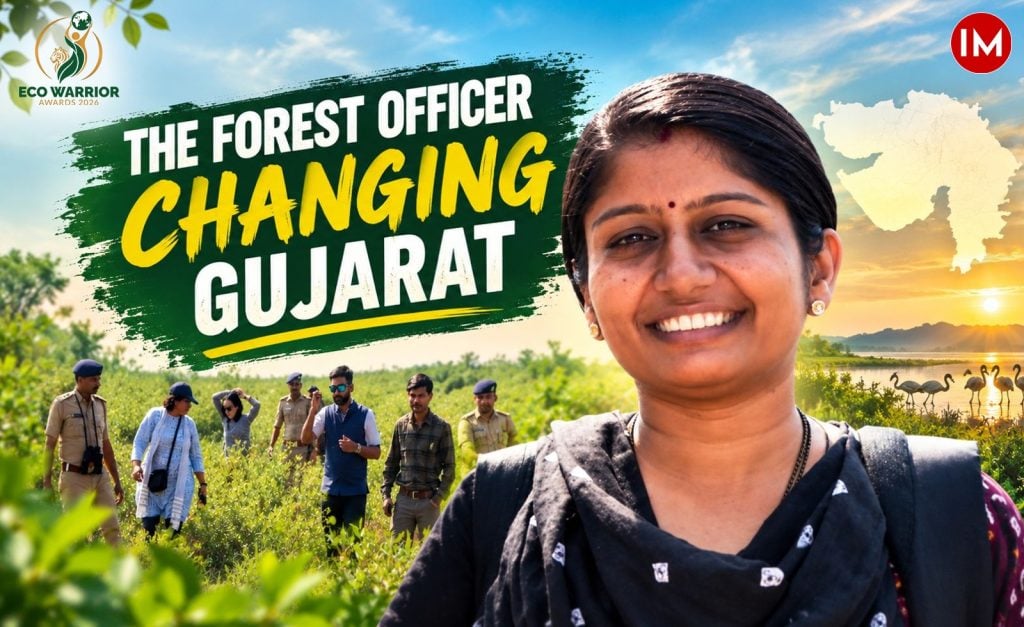
For Dr. Priyanka Gahlot, conservation has rarely been confined to the boundaries of a protected forest.
A 2013-batch Gujarat cadre Indian Forest Service officer, currently serving as Deputy Conservator of Forests, Godhra Territorial Division, her career has moved through wildlife, social forestry and territorial forestry assignments across the state. At every posting, the challenges have been different, but the approach has remained rooted in field action, scientific planning and public participation.
Her most demanding wildlife assignment came during her tenure as DCF, Social Forestry Division, Amreli, between 2017 and 2022.
Amreli lies within the Greater Gir landscape, where wildlife does not always remain inside protected-area boundaries. Asiatic lions, leopards and herbivores frequently move through revenue areas, bringing conservation directly into human settlements and agricultural landscapes.
Between 2019-20 and 2022-23, her division carried out 26 major wildlife rescues, including 14 Asiatic lions and 12 leopards. But one operation in December 2019 stood apart.
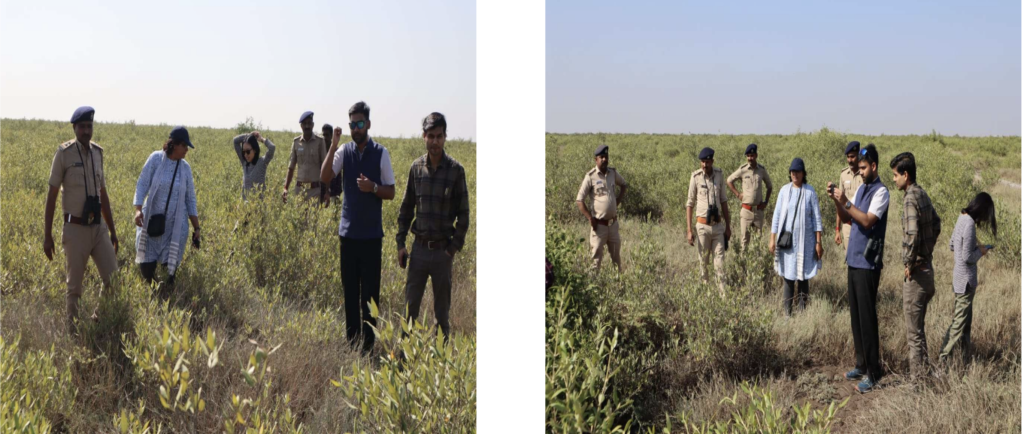
In Bagsara taluka of Amreli and adjoining Visavadar taluka of Junagadh, a leopard had become a serious threat to human life, having been linked to the deaths of six to seven people. Working with the district administration, police and field teams, the Social Forestry Division successfully captured the animal.
The same landscape presented another challenge: railway tracks cutting through wildlife habitat.
Through intensive patrolling, monitoring of animal movement and coordination between the Forest Department and Railways, her jurisdiction recorded zero Asiatic lion casualties on the railway stretch between Pipavav Port and Surendranagar during her tenure.
She also participated in the Asiatic Lion Population Estimation exercises in 2020 and 2025, including field work in Amreli and the Khamba-Tulsishyam area of Gir East. In the 2025 exercise, she was the only woman IFS officer from Gujarat entrusted with field responsibilities.
Also read: The 2025 Asiatic Lion Census: A Roaring Success Story
From forest land to city landscapes
When Dr Gahlot moved to Ahmedabad as DCF in October 2022, the conservation canvas changed dramatically. There were cities to green, degraded spaces to restore and difficult soils to overcome.
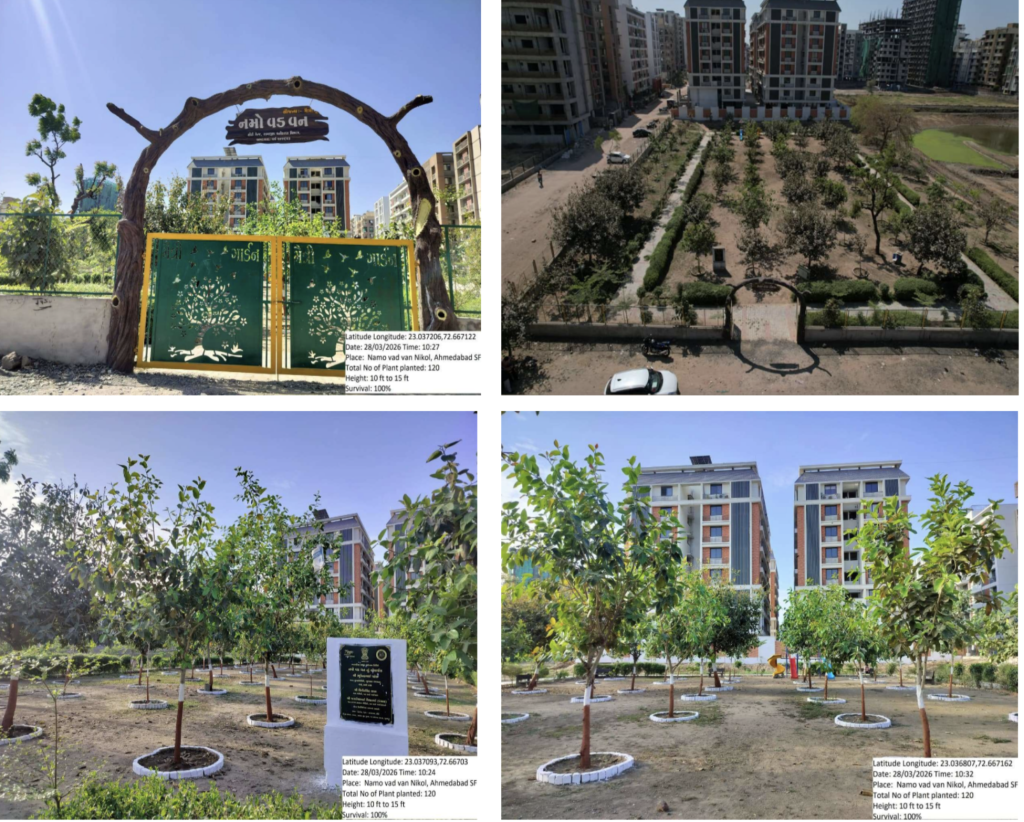
She worked on urban and rural plantations, including the Namo Vad Van initiative, where 120 banyan trees were planted along with supporting infrastructure. Soil enrichment and water supply helped the trees grow to around 8–10 feet.
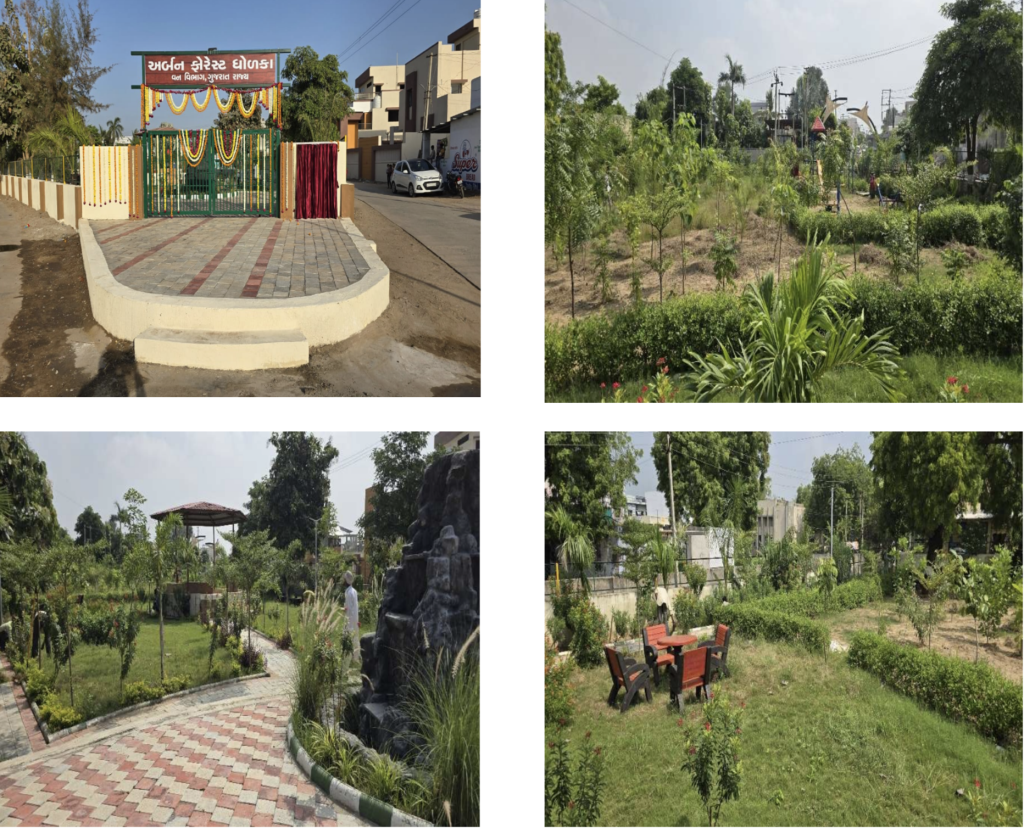
In Dholka, an urban forest was developed as a green recreational space for local residents and children. Van Kavach plantations using the Miyawaki method were also established in Bavla and Dholka, creating compact green spaces in areas where conventional forests were not an option.
But perhaps the most technically challenging plantation work came at Dholera SIR.
Here, high soil pH, sodic and alkaline soil, saline water, strong salty winds and low organic matter made plantation establishment extremely difficult. Instead of abandoning the effort, the department developed a site-specific plantation strategy based on soil testing.
Native species were selected, soil was enriched, mulching was undertaken and regular watering was used to wash excessive salts from the soil.
The pilot began in 2023-24 and expanded into additional plots in 2024-25. Across seven listed plantation blocks, 28,146 saplings were planted, with reported survival exceeding 80% in the plantation plots.
Bringing mangroves and wildlife care into the picture
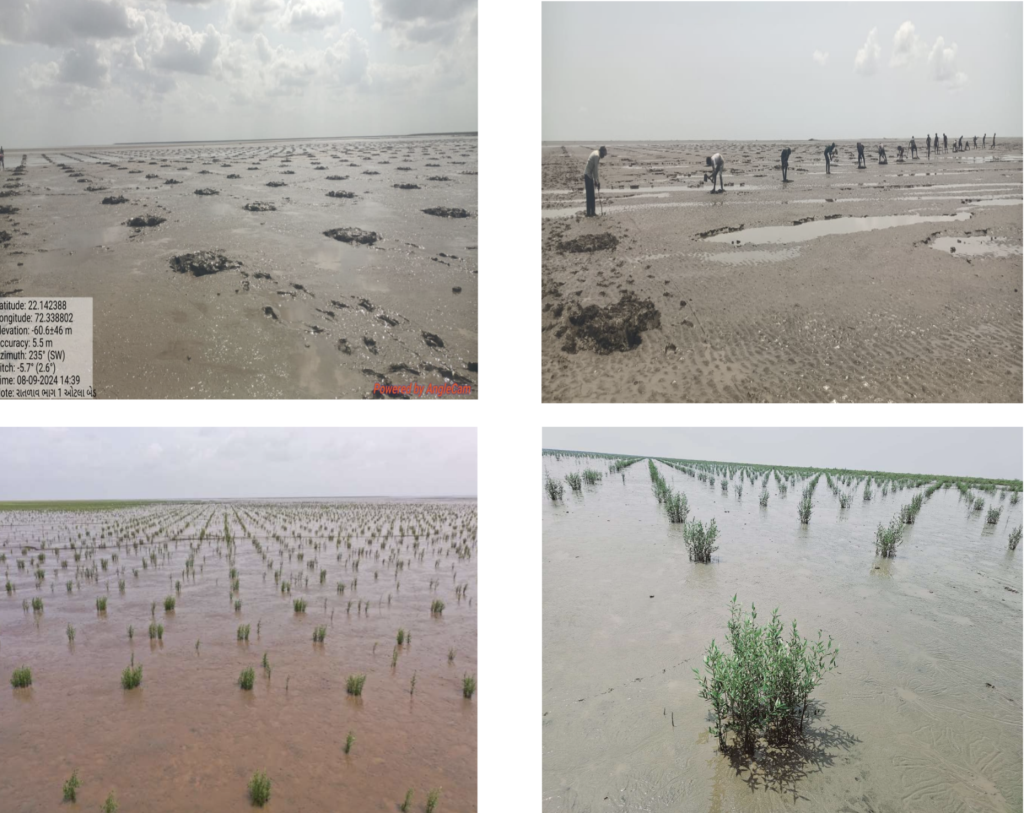
Her Ahmedabad tenure also extended to the coast. Mangrove plantations were undertaken along the coastal borders through seed sowing, raised-bed platforms and polybag nurseries adapted to different tidal zones. The plantations recorded around 70% survival, and a JICA PERG team visited and appreciated the work.
At the same time, wildlife welfare in the rapidly expanding metropolitan landscape received attention.
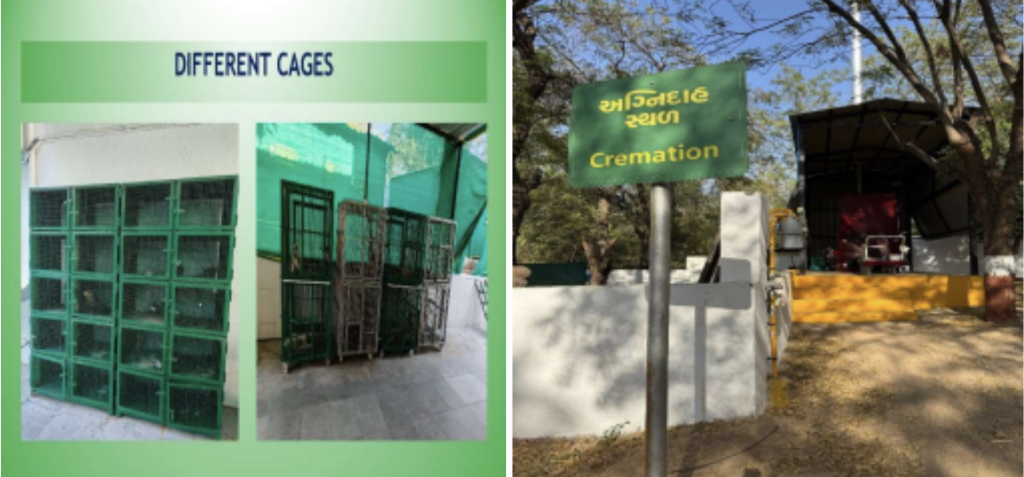
Existing wildlife care centres in Ahmedabad were upgraded with equipment and facilities including X-ray machines, operation-theatre facilities, OPD arrangements and improved record keeping. The 1926 helpline was publicised to help residents report wildlife rescue cases.
Then came an unusual first: Gujarat’s first PNG-based wildlife crematorium, established for the scientific disposal of wildlife carcasses. And every year during Uttarayan, another battle begins in Ahmedabad: this time in the skies.
The 10-day Karuna Abhiyaan
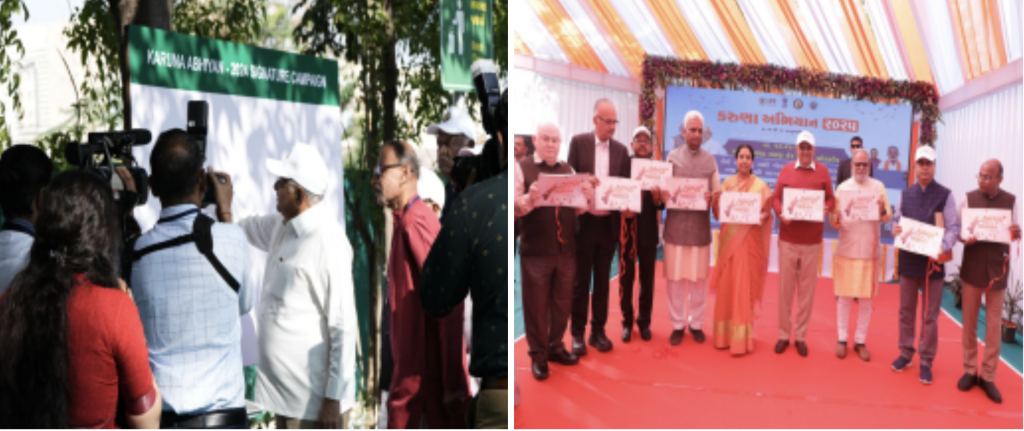
The annual Karuna Abhiyaan, conducted during the kite festival, brings together Forest Department personnel, NGOs, veterinary doctors and citizens to rescue and treat injured birds and wildlife.
From 2023 to 2025, the Ahmedabad programme treated 17,576 birds. Of these, 16,222 were successfully treated and released, while 1,354 died, giving the programme a reported survival rate of 92% in each of the three years.
The initiative was conducted with the participation of senior government leadership, including the Gujarat Chief Minister at the opening programmes in Ahmedabad. In 2025, the joint effort was also documented through a publication highlighting the work of the Forest Department, Animal Husbandry Department and NGOs.
At Godhra, conservation meets enforcement
Since May 2025, Dr Gahlot has been serving as DCF, Godhra Territorial Division in Panchmahal. Here, the focus has shifted towards forest protection, prevention of offences, action against illegal encroachments, confiscation of vehicles and timber involved in forest offences, and improvement of CAMPA and GCP plantation plots.
She also organised Ek Ped Maa Ke Naam 2.0 at Tajpura in Halol, where 25,000 saplings were planted. The programme included a Sindoor Van and brought together the Chief Minister, MPs, MLAs, senior forest officers, NCC cadets, devotees of Narayan Arogya Dham and local villagers.
But one of the most striking examples of administrative follow-through came from an old forest offence.
Seized Khair (Acacia catechu) timber from a 2016 case remained entangled in prolonged litigation. Despite the legal complications, the timber was eventually e-auctioned, generating approximately ₹1.25 crore, including taxes, for the government exchequer, with support from the district and state judiciary and guidance from senior forest officers.
From a dangerous leopard in Amreli to lions crossing railway corridors, from mangroves and Miyawaki forests to saline fields at Dholera, and from injured birds in Ahmedabad to seized timber in Godhra, Dr Gahlot’s career has unfolded across vastly different faces of conservation.
Today, her work spans forests, wildlife, cities, coastlines and communities. And perhaps that is what makes her conservation story distinctive: the forest is not treated as an isolated space. It is connected to the railway line, the village, the city, the nursery, the coastline and even the public institution handling a seized timber case.
Also read: How Dr Kumar M K Turned Gharana Into a Thriving Wildlife Haven