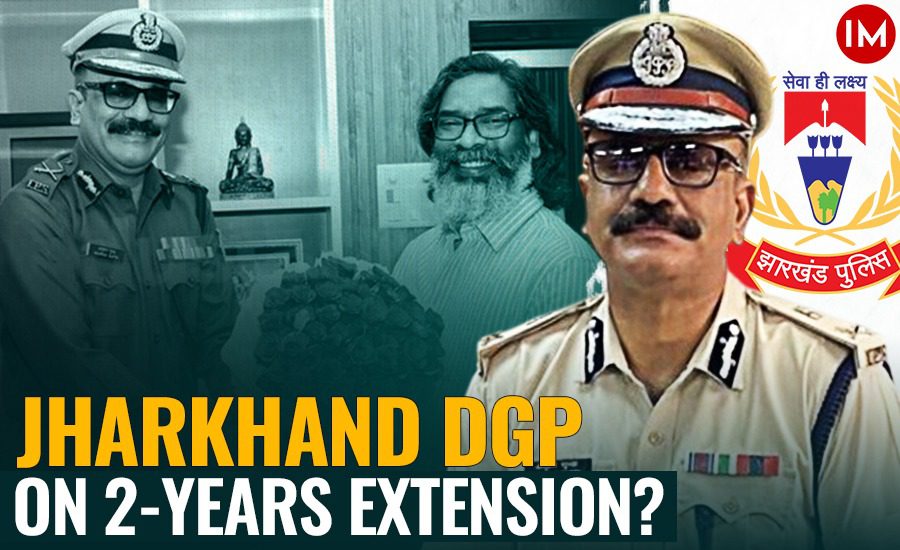
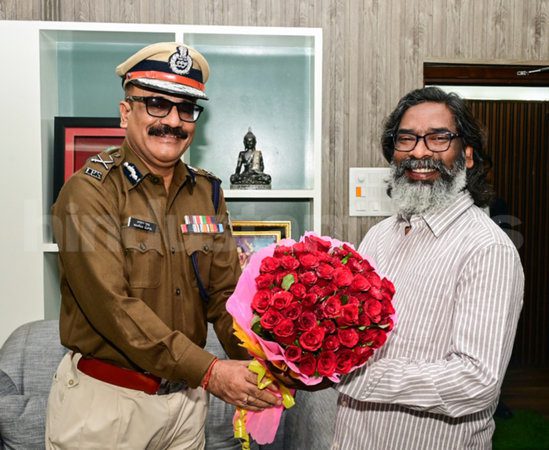
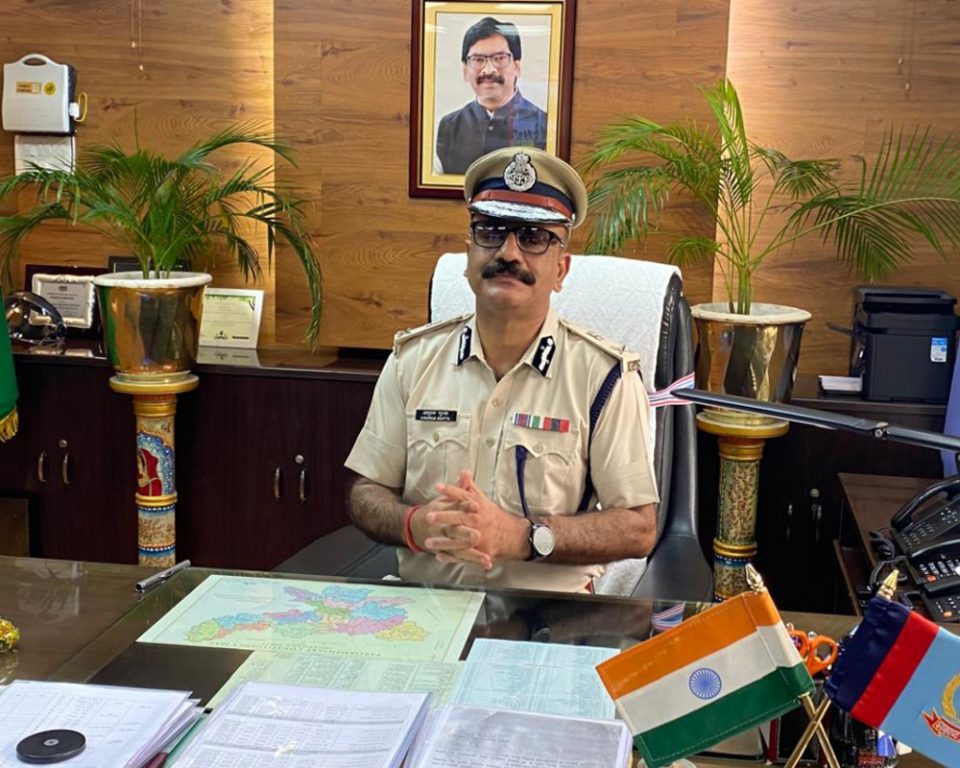
Jharkhand has now joined states like Uttar Pradesh, Punjab, Andhra Pradesh and Telangana who have formulated their own guidelines for appointment of the DGP, bypassing the Union Public Service Commission. Jharkhand has in fact, gone a step further. It has appointed Mr Anurag Gupta the DGP for a fixed period of two years. That was well within its rights. But, the problem is that Mr Gupta turned 60 on Saturday (April 26, 2025) and as per rules has to retire on April 30 (the last day of the month).
The appointment orders issued on February 3 meant that he would get an extension of service for almost two years. This is complete contravention of the Supreme Court India verdict delivered on September 22, 2006, on former UP DGP Mr Prakash Singh’s petition.
The SC judgement in Prakash Singh case was aimed at bringing about much-needed police reforms, including ensuring a fixed tenure for the DGP to protect them from arbitrary political transfers and to enhance their functional autonomy. The court directed states to constitute a State Security Commission (SSC) to lay down broad policy guidelines and evaluate police performance. Crucially, it mandated that the DGP should be selected from a panel of three seniormost officers empanelled by the UPSC based on merit and seniority, with a minimum tenure of two years irrespective of their date of superannuation.
THE RATIONALE
The rationale behind involving the UPSC was to inject a layer of impartiality and expertise into the selection process, insulating it from potential political biases and ensuring that the most competent officers lead the state’s police force. The UPSC, as an independent constitutional body, is entrusted with the responsibility of recruiting and selecting toplevel civil servants based on objective criteria. Its involvement in shortlisting candidates for the DGP post was seen as a mechanism to uphold these principles in the crucial appointment of the state’s top cop.
THE JHARKHAND CONUNDRUM
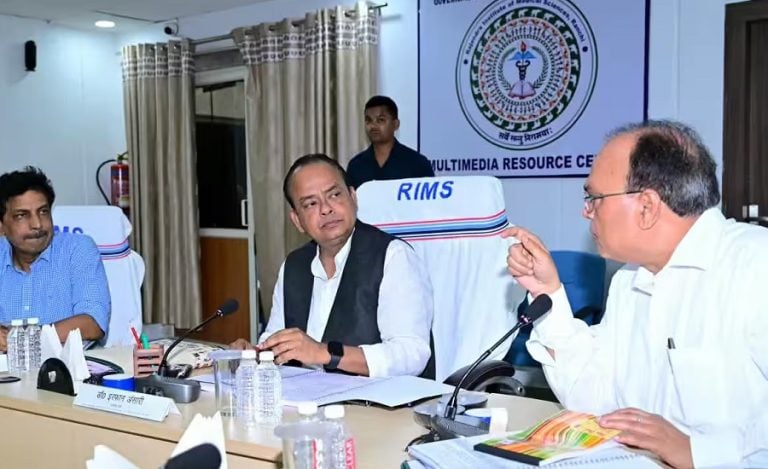
However, in recent times, several states have shown a tendency to deviate from these established norms. The Jharkhand government’s decision to grant a two-year extension to the current DGP, Anurag Gupta, who was initially appointed without the UPSC’s recommendation, has become a focal point of this controversy. The BJP has challenged this appointment in the Jharkhand High Court, alleging a blatant violation of Supreme Court guidelines. The state government has “arbitrarily appointing Gupta, whose name was not part of any UPSC-recommended panel, to shield a controversial and tainted officer,” said the state BJP chief in his petition.
Anurag Gupta, a 1990-batch IPS officer, had faced suspension in 2019-21 over alleged electoral malpractices. But the state government promoted him as DG in 2022 only to appoint him as Acting DGP on July 26, 2024. But, he was also removed from the post during state Assembly Sabha elections by the Election Commission of India (ECI) to be replaced with a 1989-baatch officer Ajay Singh. But he was reinstated by the JMM-led government as Acting DGP on November 28 same year. The Supreme Court issued a notice to the Jharkhand government, demanding an explanation for bypassing the UPSC. The case is scheduled for hearing on May 6 while Jharkhand High Court has fixed the hearing on June 16 – much after he would had resumed his extended tenure.
OTHER EXAMPLES
Jharkhand is not the only state to transgress the norms. In 2022, the AAP government in Punjab appointed Gaurav Yadav (1992-batch IPS officer) as acting DGP, ignoring the UPSCrecommended panel. The state also introduced the Punjab Police (Amendment) Bill, 2023, seeking to bypass the UPSC entirely—a move pending approval from the Governor. The Supreme Court has repeatedly pulled up Punjab for violating the Prakash Singh guidelines.
In 2024, the Mamata Banerjeeled West Bengal government appointed Rajeev Kumar (4th in seniority) as acting DGP, bypassing the UPSC. Kumar had previously faced allegations of suppressing political dissent, raising concerns about police neutrality. The Calcutta High Court has sought explanations for these violations.
Earlier, in 2022, the YSRCP government in Andhra Pradesh appointed K. Rajendranath Reddy (13th in seniority) as acting DGP, ignoring UPSC norms. Similarly, The BRS government in Telangana too appointed Anjani Kumar as DGP without UPSC consultation, leading to legal challenges. Both states have been issued notices by the Supreme Court for noncompliance.
THE UTTAR PRADESH MODEL
Similarly, Uttar Pradesh recently approved new rules for the selection of the DGP through a state-level committee headed by a retired High Court judge, explicitly bypassing the UPSC. Since 2022, UP has had four acting DGPs, including Prashant Kumar (19th in seniority). The state has consistently ignored UPSC recommendations, leading to Supreme Court reprimands. The state government argues that this new mechanism ensures an independent and transparent selection process, free from political or executive interference. The committee includes the Chief Secretary, a UPSC nominee, the Chairman or a nominee of the Uttar Pradesh Public Service Commission, the Additional Chief Secretary or Principal Secretary of the Home Department, and a retired state DGP. While the inclusion of a UPSC nominee might appear to align with the spirit of the Supreme Court guidelines, the primary authority for selection rests with the state-constituted body.
THE IMPLICATIONS
The implications of bypassing the UPSC in DGP appointments are manifold and potentially detrimental to the principles of police independence and meritocracy. Firstly, it opens the door for greater political influence in the selection process. Without the objective assessment of the UPSC, the appointment might become susceptible to the preferences and priorities of the ruling political establishment. This could lead to the selection of officers who are perceived to be more aligned with the government’s interests rather than those who possess the requisite competence, integrity, and leadership qualities.
Secondly, it could undermine the fixed tenure principle laid down by the Supreme Court. If the DGP’s appointment is heavily influenced by the state government, their tenure might become precarious, subject to the whims and fancies of the political executive. This instability can hinder effective policy implementation, longterm planning, and the overall morale of the police force. The fear of arbitrary transfers or premature removal could compromise the DGP’s ability to act independently and impartially.
Thirdly, bypassing the UPSC could potentially lead to a lack of transparency and accountability in the selection process. The UPSC’s involvement ensures a degree of objectivity and adherence to established norms. Without this oversight, the criteria and rationale for selecting a particular officer might not be as clearly defined or publicly scrutinized, raising concerns about favoritism and nepotism. This erosion of public trust in the fairness and impartiality of the appointment process can have a cascading effect on the public’s confidence in the police force itself.
THE WAY FORWARD
These controversies reflect deeper tensions in India’s federal structure and police governance. While states argue for autonomy in police matters, the Supreme Court guidelines aim to ensure professional, independent police leadership.
Thus finding a balance that respects both state autonomy and the need for insulated police leadership remains a challenge. The resolution of this issue will have significant implications for police reforms, federalism, and governance in India. What’s clear is that any sustainable solution must address both the letter and spirit of the Supreme Court’s guidelines while acknowledging the legitimate concerns of state governments regarding their authority over police administration.