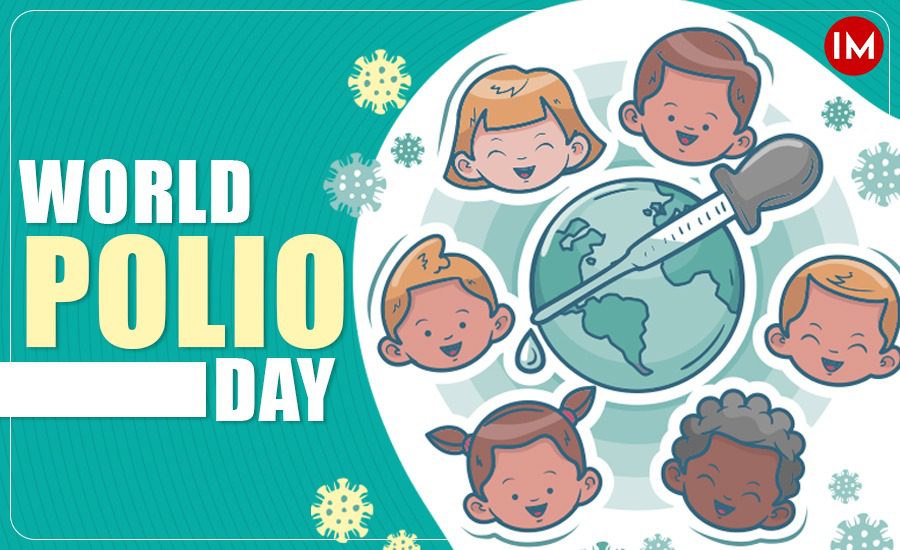
On January 13, 2011, Rukhsar Khatoon, a one-and-a-half-year-old girl from Howrah district in West Bengal, became the last reported case of polio in India. This significant moment marked the close of a prolonged and challenging chapter in the country’s battle against the disease. In 2014, India was officially declared polio-free by the World Health Organisation (WHO). This victory, which eradicated a virus once responsible for tens of thousands of annual cases, stands as one of the country’s greatest public health achievements. It was the culmination of 18 years of concerted efforts and innovative strategies, though the road to success was far from smooth.
THE FIGHT AGAINST POLIO
By the 1980s, India was shouldering more than half of the world’s polio cases, with the disease spreading through contaminated water and poor sanitation in densely populated areas. The government’s fight against polio began with the National Immunisation Programme in 1978, which later evolved into the Universal Immunisation Programme (UIP) in 1985. Polio vaccines were introduced as part of a broader effort to control diseases like tuberculosis, diphtheria, and tetanus.
A major international push began in 1988 with the launch of the Global Polio Eradication Initiative (GPEI) by WHO, UNICEF, Rotary International, and other partners, with India signing on to eliminate the disease by 2000. But progress was slow, and by the early 1990s, the disease still had a stronghold. It wasn’t until 1994, when Delhi’s government rolled out a pilot immunisation program targeting one million children, that a shift occurred. This success led to the national launch of the Pulse Polio Immunisation Programme in 1995.
At the time, India was recording between 50,000 and 150,000 polio cases annually. The Pulse Polio initiative introduced a comprehensive, aggressive approach to eradication that went beyond just administering vaccines—it involved raising awareness, overcoming cultural resistance, and mobilising millions of people.
MASSIVE NATIONWIDE MOBILISATION
The Pulse Polio Programme was one of the largest public health campaigns ever undertaken in India. Each year, it aimed to vaccinate 172 million children under the age of five. This mammoth effort was made possible by mobilising nearly two million health workers, who worked at more than 5,000 vaccination stations across the country. Vaccinators reached children wherever they could—in homes, schools, marketplaces, and even transit locations like bus stops and railway stations.
“The Pulse Polio campaign was a significant challenge. We had to vaccinate children nine times, covering 27 million kids in one day. The logistics of procuring and delivering the vaccine to every corner of the country were immense. Finding every child felt like searching for a needle in a haystack,” retired IAS K. Sujatha Rao, former Union Secretary of the Ministry of Health and Family Welfare, Government of India, told Indian Masterminds.
The program relied heavily on public communication, employing celebrity endorsements, print advertisements, and radio broadcasts to encourage families to vaccinate their children. But there were deeper challenges, particularly vaccine hesitancy in marginalised communities and areas with poor health infrastructure.
OVERCOMING BARRIERS IN LOCAL COMMUNITIES
Addressing vaccine hesitancy required a focused, grassroots approach. In many areas, families were suspicious of the vaccine, especially where rumours and myths were prevalent. Micro-planning, direct engagement with communities, and the involvement of religious and community leaders were key strategies in addressing these concerns. Volunteers were trained to counter misinformation and make the vaccine more acceptable, especially in rural and underdeveloped regions.
This effort was crucial in breaking down resistance in communities where cultural and religious concerns created barriers to vaccination. Local influencers and trusted leaders played a central role in shifting public opinion, helping ensure broader vaccine coverage.
“It was a tremendous achievement, a tribute to India’s dedication. The task of vaccinating millions of infants, scattered across the country—whether in villages, fields, or on trains—was enormous, but we did it. It’s something we should all be very proud of,” retired IAS K. Sujatha Rao, former Union Secretary of the Ministry of Health and Family Welfare, Government of India, told Indian Masterminds.
IAS ANURADHA GUPTA’S LEADERSHIP
While frontline workers and volunteers carried out the hands-on work of the campaign, it was strategic leadership at the national level that helped navigate the many challenges along the way. Anuradha Gupta, an IAS officer, played a pivotal role during her time as the Mission Director of the National Health Mission. Under her leadership, India improved its micro-planning for vaccination and addressed the gaps in vaccine distribution in remote and hard-to-reach areas. Ms. Gupta implemented innovative strategies that enhanced the immunisation process, ensuring equitable access to vaccines and tightening the system for tracking children who had missed doses.
A significant challenge arose during India’s polio fight when WHO delisted all global manufacturers of the bivalent polio vaccine after a quality audit. This jeopardised India’s global tender for the vaccine and put World Bank funding at risk. At this critical juncture, Gupta identified Bharat Biotech, an Indian company producing a bivalent vaccine approved by India’s National Regulatory Authority and prequalified by WHO. Although there was resistance to relying on an Indian supplier, Gupta, along with Dr. Naved Masood from the Ministry of Health, successfully redirected unused ministry funds to procure Bharat Biotech’s vaccine. This bold move ensured that India could continue its immunisation efforts without delay, playing a crucial role in its eventual victory over polio.
VIGILANCE POST-ERADICATION
Even after India was declared polio-free, the country has maintained its vigilance. National Immunisation Days (NIDs) are still held regularly to ensure children remain protected. In 2021, during a Polio Ravivar (polio Sunday), over 159 million children were vaccinated as part of continued efforts to prevent the reintroduction of the virus, particularly from polio-endemic regions.
India’s success in eradicating polio is a case study of the power of collaboration, strategic planning, and grassroots mobilisation. From logistical challenges to overcoming cultural resistance, the country’s experience provides valuable lessons for future public health campaigns.