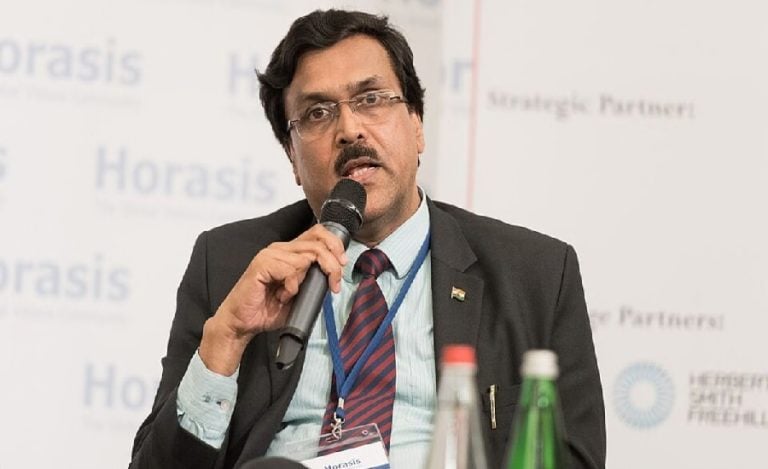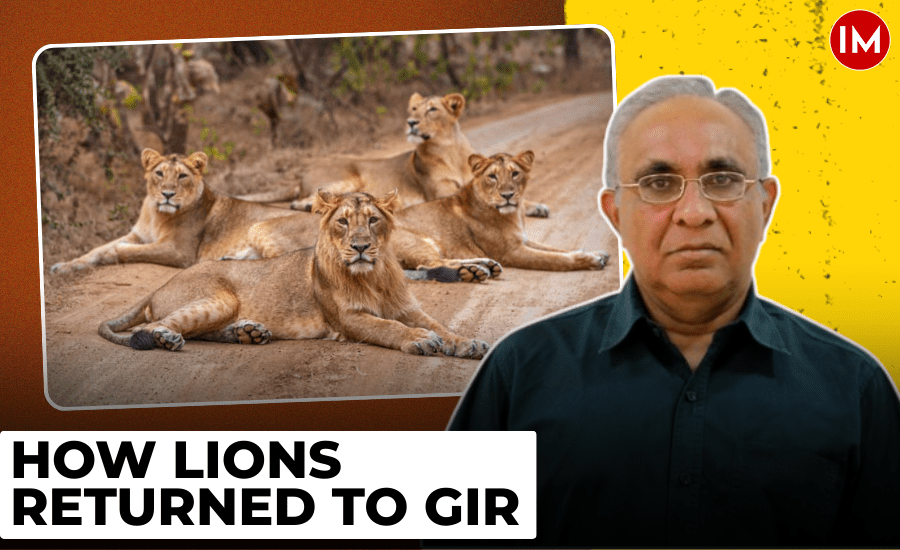
When people speak of the revival of the Asiatic lion, one name comes up again and again—Dr H. S. Singh. A former Principal Chief Conservator of Forests (PCCF) in Gujarat, Singh devoted his career in the Indian Forest Service to ensuring that the lions of Gir not only survived but flourished. Over the years, his work turned Project Lion into a landmark conservation initiative, one that transformed Gujarat’s Gir landscape into a living example of how scientific research, administrative foresight, and community participation can come together to save a species on the edge.
Watch the interview here:
TRANSFORMING LION CONSERVATION IN GIR
Singh’s association with lions began in the early years of his service, at a time when their future seemed uncertain. In the early 1970s, the population had dwindled to barely 180 individuals. The habitat was vulnerable, prey numbers were low, and dependence on livestock created frequent conflict with local communities. Against this backdrop, Singh brought both scientific rigour and practical wisdom into the picture. Instead of looking at conservation as a matter of numbers alone, he examined the ecology of the species, its relationship with people, and the broader socio-economic environment of the Gir region.
His detailed field studies over the decades provided insights that changed the course of lion management. He was among the first to scientifically document how lions were responding to conservation interventions. By 2010, he recorded that the population had crossed 400—a remarkable recovery that drew international attention. Equally striking was the simultaneous increase in the wild prey base. Ungulates multiplied thirteenfold, providing a natural food supply that reduced the lions’ dependence on cattle. Singh observed a fundamental shift in their diet, with nearly three-fourths of their food now sourced from wild prey.
Another dimension of his research was the dispersal of lions beyond the Gir sanctuary. Singh noted how they were gradually moving into agricultural fields, scrublands, and even human-dominated landscapes. While this created new conservation challenges, it also reflected the adaptability of the species. Singh’s observations shaped policies on habitat expansion, corridor protection, and engagement with communities who suddenly found themselves sharing space with big cats.
WIDER CONSERVATION VISION
Although lions became the defining symbol of his work, Singh’s conservation vision went much further. He contributed to recovery strategies for other threatened species, including the Great Indian Bustard, the wild buffalo, and the Sarus crane. He consistently emphasised that wildlife management could not be isolated from the people who lived alongside animals. His approach blended ecology with an understanding of local livelihoods, ensuring that conservation efforts were not only scientifically sound but also socially sustainable.
Singh’s influence extended into the world of scholarship and literature. He authored several books that remain key references for researchers and practitioners alike—*The Gir Lion* (2007), *The Asiatic Lion: Reviving the Pride of Gir* (2016), and *The Asiatic Lion – Pride of Gujarat* (2018). These works, along with more than forty scientific papers and numerous management plans, ensured that his field experience was available to a wider audience. His writing bridged the gap between science and administration, making complex ecological findings accessible to policymakers and managers.
SERVICE, LEADERSHIP & RECOGNITION
His career in the Indian Forest Service reflected a steady progression of responsibility and leadership. Serving in the Gujarat cadre, he held several important positions, including Chief Wildlife Warden, PCCF, and Chairman of the Gujarat Biodiversity Board. His expertise was valued at the national level as well, with membership in the National Board for Wildlife and the Gujarat State Board for Wildlife. In each of these roles, he combined the authority of an administrator with the precision of a scientist.
Recognition came in many forms. He received the Forestry Service Medal in 1993, the Brandis Prize in 1998, and the Chaturvedi Prize on three occasions. His scientific contributions earned him the ICFRE Award and, in 2014, the prestigious Elsevier Biological Conservation Review Award. These accolades reflected the respect he commanded both in India and internationally, across government and scientific circles alike.
EARLY LIFE AND ENDURING LEGACY
Singh’s academic journey had begun in a very different field. Born in 1954 in Allahabad, he studied physics at the University of Allahabad before turning towards wildlife sciences. He went on to earn a Ph.D. from Saurashtra University, where he combined rigorous scientific training with a growing passion for conservation. This unusual combination of physics and field ecology later shaped his distinctive approach to conservation—analytical, evidence-driven, yet always grounded in practical realities.
Today, the story of the Asiatic lion’s recovery cannot be told without acknowledging Dr. Singh’s contribution. From a fragile population of fewer than 200 individuals in the 1970s, the lions of Gir now stand as a thriving population that continues to expand its range. This recovery is not only the story of a species but also of a forest officer whose vision reshaped conservation practice in India. Singh’s career demonstrates how science, administration, and community participation can converge to protect wildlife in a modern, human-dominated world.
Dr. H. S. Singh’s legacy lies not only in the lions that roam Gir today but also in the knowledge systems, management practices, and conservation ethos he left behind. For generations of wildlife officers, researchers, and policymakers, his life’s work serves as a guiding example. The revival of the Asiatic lion will forever be linked with his name—a reminder that the future of species can change dramatically when guided by science, leadership, and commitment.