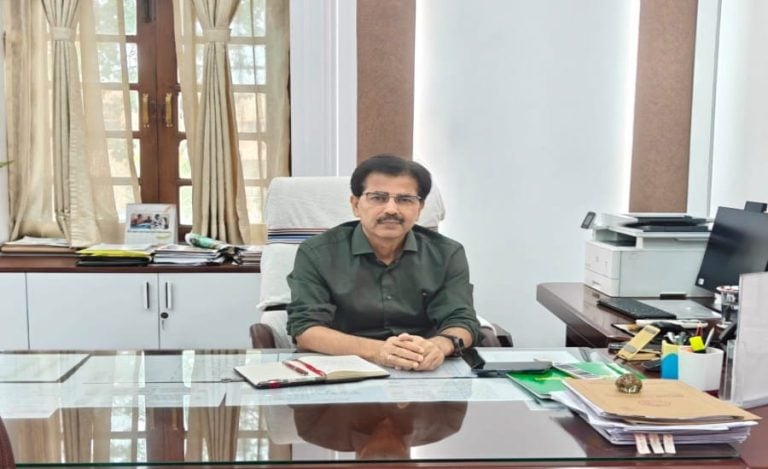
V. Srinivas, IAS
“In this decade of Amrit Kaal, we will give priority to Next Generation Reforms. We will ensure that all facilities like service delivery should reach citizens upto the last mile; it should reach the last person seamlessly without hesitation or any kind of difficulty. For the overall development of the country, unnecessary interference by the Government and Government processes in the lives of people has to be ended” – Excerpts from Prime Minister Narendra Modi’s address from the Red Fort on 75th Independence Day
Panch Pran
Prime Minister Modi in his historic third term has asked all Ministries and Departments to formulate initiatives and ideas for implementation as part of Panch Pran (five resolutions)announced in the independence day address on 15 August 2022. The Panch Pran of Amrit Kaal represent the Nation’s Good Governance Practices and Principles – the goal of a developed India, to remove any trace of colonial mindset, to take pride in our roots and unity and sense of duty among citizens. Prime Minister has asked the Nation to focus attention on the “Panch Pran” for the coming 25 years, while empowering citizens and reaching the last mile as the priorities for Viksit Bharat@2047 when the Nation celebrates 100 years of independence.
Maximum Governance – Minimum Government
The agenda of Maximum Governance – Minimum Government envisages a digitally empowered citizen and a digitally transformed institution. Bringing Government and Citizens closer using technology was successfully implemented for ease of living and ease of doing business. The Government has brought about qualitative improvements in the grievance redressal systems to make them more sensitive, accessible and meaningful. A whole of government approach was adopted in formulating and implementing policies and schemes and concerted steps have been taken for India to become the 3rd largest economy in the world. This has necessitated upskilling of state capacity and suitable incentives were provided for officials to take full advantage of the capacity building courses and modules on the karmayogi portal. Lacs of Officials have enhanced their capacities using the i-GOT modules. Further, governance models have adopted periodic monitoring of quality assessments by developing effective metrics to foster a competitive spirit amongst States and Districts to encourage them to adopt reforms in different areas of governance particularly in respect of statutory clearances and approvals.
At the centre of effective policy implementation lies the Prime Minister’s deep commitment to principles of social equity, justice, transparency and accountability. The Government has worked to provide equitable opportunities to everyone. Saturation approach of priority sector schemes has been the defining goal of Government’s all round, all pervasive and all-inclusive development model. The important priority sector schemes where saturation approach has been adopted include Har Ghar Jal Yojana, PM Awas Yojana, Mission Indradhanush, PM Ujjwala Yojana, PM Jaan Arogya Yojana, PM SVANidhi, PM Matru Vandana Yojana, PM Vishwakarma Yojana, PM Mudra Yojana, PM Poshan Yojana and Kisan Credit Cards Scheme. The vision of Sabka Saath, Sabka Vikas, Sabka Vishwas, Sabka Prayas has been the overarching National development goal.
Next Generation Reforms in Rajasthan
Rajasthan’s vision for good governance focuses on citizen centricity, holistic development with a “sab ka saath – sab ka vikas” approach, infrastructure development and patriotism/ nationalism with a “Nation First – Citizen First” approach. In the context of India’s vision to become Viksit Bharat and Rajasthan’s resolve to become a Viksit Rajasthan, ambitious goals have been laid down in the Vision Document “Viksit Rajasthan 2047”. The document highlights the aspirations of Rajasthan’s society, youth, farmers, women with ambitious goals in energy security, advancements in infrastructure, industrial development, rural development, social development, social justice, gender equality, advancements in sports emphasizing the importance of raising standards in every sector.
Rajasthan has pursued Next Generation Administrative Reforms to leverage technology for redressal of public grievances through the Rajasthan Jan Sampark platform. The impact of increased citizen satisfaction in public grievance redressal is evident in improved service delivery and civic amenities being available to citizens. The tremendous potential in increasing efficiency in decision making has been leveraged by the Raj Kaj analytics by ranking performances of Departments, improving records management practices and timely scrap disposal. Mission Rajeevika has been a significant success story in Rajasthan’s women’sdevelopment model, the institutional structuring is very sound to be taken forward – enhanced credit linkages, marketing linkages and skill linkages represent the next steps in scaling up the Lakhpati Didis, Banking Correspondents, Bank Sakhis, Solar Didis to the next level of financial empowerment.
Infrastructure development has been a major thrust area and the Raj Unnati has been nationallyappreciated for professionalism and impetus to review major infrastructure projects and priority sector schemes on the lines of PRAGATI model of Government of India. Over 2.5 lac croes of infrastructure projects have been reviewed in Raj Unnati meetings and several key projects of power sector, railways and petroleum sector have been expedited. Key projects include the Hindustan Rajasthan Refinery Limited and the ambitious Jaipur Metro Phase II project. The Mukhya Mantri Viksit Gram Abhiyan envisages preparation of development plans at Gram Panchayat level using the PM Gati Shakti platform. Implementation of the priority areas ofDeregulation and Compliance Reduction have enabled noticeable increases in the investor enthusiasm for investing in Rajasthan. Energy Security is being pursued with the accelerated implementation of green energy initiatives under the PM Kusum, PM Surya Ghar schemes and the Green Energy Transmission Corridors.
The Age of Technology
To quote Prime Minister Modi “In the age of technology, governance is not about managing systems, it is about managing possibilities.” We live in the age of Smart Cities, Smart Classrooms, Smart Police Stations, Fully Digital Public Hospitals, and modern infrastructure. The Unified Mobile Application for New Age Governance (UMANG) and Digital Public Infrastructure are being further advanced with whatsapp based service delivery models and improved service delivery through end to end digitization. Aadhar based beneficiary services platforms have been very successful and single window access services are being earnestly pursued. The widespread use of Artificial Intelligence in Governance is being witnessed.
Conclusion
We rededicate ourselves to the Panch Pran of Amrit Kaal enunciated by Prime Minister Modi – to resolve for a developed India, liberation from the mindset of servitude, pride in heritage, the power of unity and honest fulfilment of duties. Reforms across key sectors – infrastructure, renewable energy, internal security, terminating corruption, social welfare schemes, setting higher benchmarks, adopting to a technology driven world, remaining sensitive to listen to the voices of the underprivileged, understanding their struggles and resolving their issues enable the fulfilment of Panch Pran and advancement of Viksit Bharat. It is the collective responsibility of the Nation to fulfil our responsibilities to enable the March to New India with dedication and purpose.
(The author is Chief Secretary, Rajasthan, and a 1989-batch IAS officer)