For Sweety Upadhyay, the decision to enter the civil services did not come from a childhood ambition or a carefully planned career path. It began with an experience that made her look at public administration differently.
A domestic worker known to her was facing domestic violence. When Ms Upadhyay approached the police seeking help for her, she expected empathy and support. Instead, she encountered apathy. The experience stayed with her and made her think about how people who are already vulnerable often struggle to receive the institutional support they need.
That incident became one of the experiences that later shaped her decision to prepare for the Uttar Pradesh Public Service Commission examination. She had never considered UPSC or UPPCS as a Plan B. Before this, she would occasionally read about the examinations, but her preparation was neither serious nor systematic.
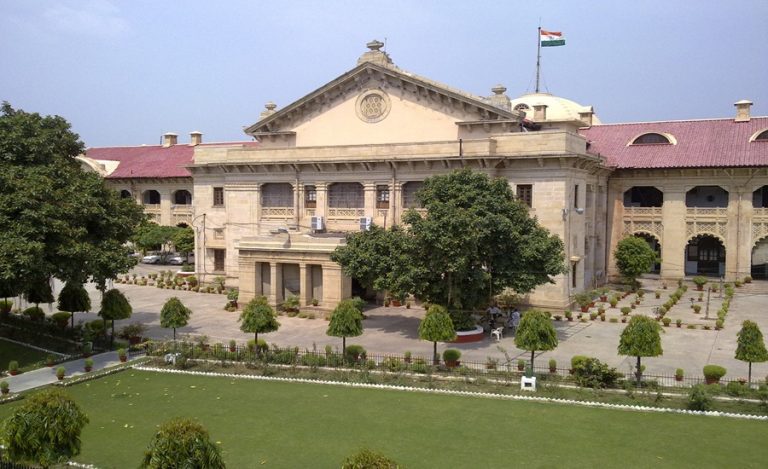
Coming from Prayagraj, Ms Upadhyay grew up in a family familiar with the legal system, with both her parents practising as lawyers at the Allahabad High Court. She completed her B.Com (Hons) from Delhi University and later pursued an MBA from ICFAI Business School, Hyderabad. Eventually, she chose the path of public service and cleared the UPPCS 2019 examination with Rank 55.
She is now serving as Assistant Commissioner, Industries, Government of Uttar Pradesh.
For Sweety Upadhyay, the journey was not only about clearing an examination. It also changed her understanding of people and society.
“Undoubtedly, it has changed me as a person too, as your perspective as a person broadens with respect to different aspects of life. Emotional intelligence is one thing that it helps to develop with time,” she shared in a conversation with Indian Masterminds.
Keeping Civil Services Preparation Simple
Ms Upadhyay believes that aspirants can easily complicate their preparation by collecting too many resources. Her own approach was straightforward: 80 per cent basic books and 20 per cent current affairs.
She began her day with a current affairs magazine and newspaper before spending the rest of the day studying standard books. Rather than studying one subject for several days at a stretch, she preferred keeping two subjects in rotation to avoid monotony.
Regular testing was another important part of her preparation. She used both coaching test series and previous-year papers to assess whether she was actually retaining what she had studied.
Her weekends were primarily reserved for revision, along with essay practice and reading useful quotes that could later strengthen written answers.
For her, one of the biggest mistakes aspirants make is constantly chasing new material while neglecting what they have already studied.
“The most common mistake is not revising already learned content. It must always be kept in mind that revision supersedes reading new content, no matter how enticing reading new content feels like,” she says.
She recommends keeping notes limited and useful. Instead of making separate, lengthy notes from every source, aspirants should prepare crisp notes from multiple resources, add their own opinions wherever required, and keep updating them with newspaper and current affairs material.
Most importantly, she says, the syllabus should remain the reference point throughout preparation. Current affairs should not be studied as isolated information; aspirants should continuously connect them to the syllabus and basic books such as NCERTs.
The Glass Ceiling Beyond Merit
As a woman in public service, Ms Upadhyay also speaks candidly about the expectations women continue to encounter despite working in a largely merit-based system.
She believes that while there may not always be obvious discrimination, women in different services can experience a glass ceiling. The form of that ceiling, she says, can change depending on the position and seniority one holds.
One example comes from her interactions with older industrialists in her professional capacity.
“Whenever I meet an industrialist who is older in age, they would always be very interested in my marriage prospects, as if that were the only thing that would complete me or give my position some more credibility,” she says.
Yet Sweety Upadhyay has chosen not to make herself smaller to fit conventional expectations.
She is vocal on social media and accepts that her opinions can attract both appreciation and criticism. She believes people are often less comfortable with opinionated women, but she does not want that discomfort to dictate how she expresses herself.
“I choose to hold my say unapologetically because I know there is somewhere a girl who might get inspired and become the best version of herself, and I will be honoured to do even a tiny bit of that,” she says.
At the same time, being in government service comes with responsibilities. There are issues she may want to speak about more openly, particularly in the social sector, but her position requires her to be careful and diplomatic with her words.
Why Mobility Matters to Her
For Sweety Upadhyay, independence is also closely connected with mobility. She has a particular fascination for machines, whether cars or bikes, because they offer a sense of freedom.
She points out an irony in Indian society: women are often gifted cars as part of marriage, while independent mobility should ideally be viewed as a means of agency much earlier in their lives.
“I feel the first machine that a person must learn to master is a car. Mobility is an underrated instrument of ‘agency’ that women of this age absolutely deserve and need. After all, the machine doesn’t discriminate,” she says.
For her, learning to drive and being able to move independently are not merely practical conveniences. They give women the ability to make choices, explore opportunities and navigate life on their own terms.
A Typical Day: Work, Fitness and Small Breaks
Sweety Upadhyay does not view work-life balance as something that must look identical every day. For her, it is more of a continuum. Some days demand greater professional attention, while on other days, personal priorities take more space.
“I can never be everything on a given day,” she says, describing her approach to balancing different aspects of life.
Her typical day begins with meditation and a protein-rich breakfast. She tries to fit in a workout, either yoga or a gym session, before heading to the office. Her working day involves meetings and routine responsibilities, while evenings may include meeting a friend over coffee for a quick break.
Before going to sleep, she makes it a point to read something.
Her work also gives her an opportunity to interact with people from different backgrounds every day. She particularly enjoys meeting new people and learning from their experiences, something she feels her current role provides in abundance.
Motivation Must Come From Within
For aspirants preparing for competitive examinations, Ms Upadhyay believes motivation cannot depend entirely on external factors. Praise, results and encouragement can provide temporary energy, but they cannot sustain someone through a long examination cycle.
She believes the most important question an aspirant should repeatedly ask is, ‘Why do I want to enter the services?’
“Internal motivation goes a long way. Your biggest reason is why you want to get into the services, and that you have to repeat again and again after every failure, after every downfall,” she says.
She also advises aspirants to keep a Plan B and Plan C ready. Competitive examinations are unpredictable, and failure in one should not be interpreted as a verdict on a person’s intelligence or ability.
The larger objective behind entering public service, she believes, can sometimes be achieved through other avenues as well.
Giving Women the Freedom to Make Mistakes
One of Sweety Upadhyay’s strongest messages is directed towards women and their right to experiment with life.
She believes women often grow up without being given enough room to make mistakes. The pressure to get things right, maintain an image and avoid failure can prevent them from trying unfamiliar paths.
According to her, women should allow themselves to meet new people, explore business ideas, take risks and step outside familiar spaces. Not every experiment will succeed, and that is part of the process.
“Going on an untravellable path and also owning the consequences that follow and taking responsibility is equally important. I guess that is the only ticket to true freedom; it’s never all goody-goody,” she says.
Her journey from an initially casual interest in competitive examinations to Rank 55 in UPPCS 2019 reflects that same idea. Her career was not born out of a predetermined plan. Instead, an experience made her question the system, preparation gave her a new perspective, and public service eventually gave her the opportunity to participate in that system herself.
For Sweety Upadhyay, the civil services are therefore not simply about clearing an examination. They are about understanding why one wants to serve, developing the emotional intelligence to understand people and having the courage to build a life beyond a single definition of success.