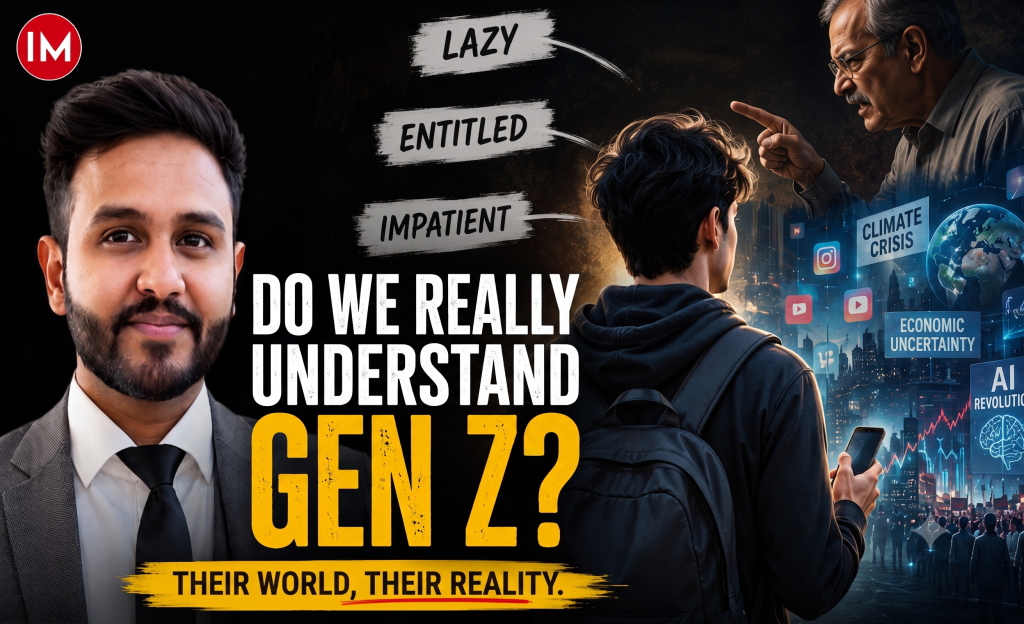
Gen Z has become one of the most debated generations of our time. Scroll through social media or attend a corporate leadership session, and the verdict often seems unanimous: Gen Z is stubborn, impatient, unwilling to work hard, constantly questioning authority, and too quick to leave jobs. They are portrayed as distracted by social media, obsessed with instant gratification, and lacking the resilience that previous generations supposedly possessed.
Yet, in the rush to define an entire generation through stereotypes, we often forget a simple truth, Generation Z is not a social phenomenon. They are human beings, shaped by the world they inherited rather than the one they chose.
One of the most curious aspects of this debate is the constant comparison between Millennials and Gen Z. It almost appears as though a single calendar year transformed human behaviour overnight. Someone born in 1996 is labelled a Millennial, while someone born a year later belongs to Generation Z. Can a difference of a few months really produce two fundamentally different mindsets?
Probably not.
The real difference lies not in age but in circumstances. Millennials witnessed the rise of the internet; Gen Z was born into it. One generation experienced technology as an innovation, while the other has never known a world without smartphones, high-speed internet, and unlimited access to information. Their worldview was inevitably going to be different.
Also Read – IPS Sumit Ramteke on the Cases That Changed His Career and Shook Organized Crime | Video Interview
For Millennials, information was something they searched for. For Gen Z, information arrives uninvited every minute of the day. News, opinions, wars, elections, financial markets, artificial intelligence, climate change, and global conflicts all compete for attention on the same screen. This unprecedented exposure has made today’s young people more informed than previous generations at the same age, but it has also made them more anxious, more cautious, and more aware of the uncertainties that define modern life.
This accessibility to information has also changed their relationship with authority. Previous generations were often expected to accept instructions without question because information was limited. Today, a young employee or student can verify facts, compare global practices, and access expert opinions within seconds. Naturally, they ask questions. What older generations sometimes interpret as defiance may simply be a generation that has grown up believing that curiosity and critical thinking are virtues rather than acts of rebellion.
Ironically, society itself encouraged this behaviour. Schools promoted analytical thinking. Universities celebrated questioning established ideas. Organisations spoke about innovation, creativity, and challenging the status quo. Yet when Gen Z entered workplaces and began asking why certain processes existed or whether better alternatives were possible, many found themselves labelled as difficult rather than thoughtful.
Another common criticism is that Gen Z does not believe in hard work. But perhaps the definition of hard work itself has changed. Earlier generations often measured dedication through long working hours and physical presence. Today’s workplace demands something different. Employees are expected to continuously upgrade their skills, adapt to rapidly changing technologies, learn artificial intelligence tools, manage constant digital communication, and remain productive in an environment where the pace of change is unprecedented.
The burden may no longer be physical, but it is undoubtedly mental.
Recent events across India illustrate another defining characteristic of this generation, they are willing to raise their voices. The protests at Delhi’s Jantar Mantar by students and job aspirants over examination irregularities and recruitment delays reflected more than political expression. They represented a generation seeking transparency, accountability, and fairness in institutions that directly shape their future. Whether one agrees with every protest or not, it is difficult to ignore that young people today are more engaged with public issues than they are often given credit for. Social media did not create this awareness; it merely gave it a platform.
History reminds us that this pattern is far from new. Every generation has been criticised by the one before it. Baby Boomers were once considered rebellious. Gen X was labelled cynical. Millennials were mocked for being entitled and overly idealistic. Today, Gen Z occupies that familiar position. Perhaps, a few decades from now, they too will question the habits and attitudes of the generation that follows them.
This recurring cycle reveals more about human nature than it does about any particular generation. We tend to romanticise our own struggles while overlooking the entirely different challenges faced by those who come after us.
Perhaps the more meaningful question is not why Generation Z behaves differently, but what kind of world has shaped them. They grew up through a global pandemic, economic uncertainty, climate anxiety, rapid technological disruption, and the emergence of artificial intelligence—forces that have fundamentally altered education, careers, and human relationships. They are expected to compete in a global economy while constantly adapting to technologies that barely existed a few years ago.
Would any previous generation have behaved differently if it had inherited the same world?
That question deserves greater attention than the stereotypes we casually repeat.
Instead of treating generations as rivals, we should recognise them as partners in progress. Millennials bring experience from a rapidly changing world, while Gen Z contributes adaptability, digital fluency, and fresh perspectives. One remembers life before the digital revolution; the other understands how to navigate the world it created.
Neither generation is superior. Both are products of their time.
Perhaps the greatest mistake we make is trying to determine which generation is right. History suggests that every generation eventually discovers that the next one thinks differently. Wisdom lies not in resisting that difference but in understanding it.
Generation Z does not need to be defended, nor does it deserve to be glorified. Like every generation before it, it deserves something far simpler “an opportunity to be understood”.