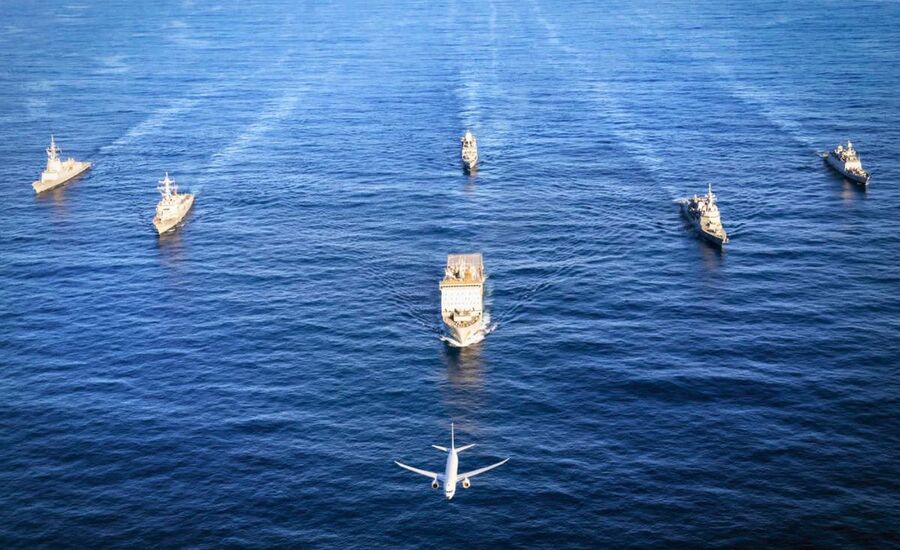
In a significant development for Indo-Pacific maritime security, Australia has officially joined the multinational maritime exercise known as Exercise Malabar 2025, partnering with India, Japan and the United States. Held in the West Pacific region between 10–18 November, the drill underscores the growing strategic alignment of key regional navies.
Background of Exercise Malabar 2025
Originally launched in 1992 as a bilateral naval exercise between India and the United States, Exercise Malabar has evolved through the years into a pivotal multilateral framework.
Japan became a permanent participant in 2015 and Australia began full participation in the Quad-context around 2020.
🇦🇺 🇮🇳 🇯🇵 🇺🇸 The @Australian_Navy has joined the @indiannavy, @JMSDF_PAO and the @USNavy in Guam for Exercise Malabar 2025.
— Defence Australia (@DefenceAust) November 14, 2025
This multilateral maritime training activity brings together regional partners to deepen interoperability through high end anti-submarine, air defence and… pic.twitter.com/qzLxhdzL7Q
Vice Admiral Justin Jones AO, CSC (Chief of Joint Operations, RAN) stated:
“Through Exercise Malabar, Australia and partner nations are strengthening Indo-Pacific security by tackling shared challenges, coordinating collective strength and closing gaps in global engagement.”
Commander Dean Uren, Commanding Officer of HMAS Ballarat, added:
“Training alongside regional partners ensures our people and platforms are ready to respond to any challenge and deter coercion in the Indo-Pacific.”
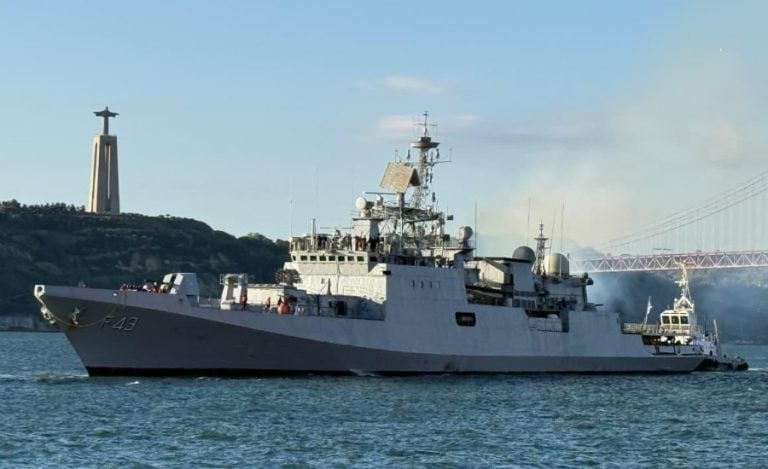
India’s contribution is visible via the indigenously built guided-missile stealth frigate INS Sahyadri, which deployed to Guam to participate in the exercise.
Importance of the Exercise Malabar 2025
Enhanced interoperability: The exercise involves advanced drills in anti-submarine warfare (ASW), air defence operations, replenishment at sea and joint fleet manoeuvres. These boost readiness among partner navies.
Regional security reinforcement: With evolving maritime challenges in the Indo-Pacific — including freedom of navigation concerns and increased submarine activity — the exercise helps signal collective resolve.
Strategic messaging: The growing participation of Quad nations underscores a larger cooperative framework beyond bilateral ties, emphasising a rules-based maritime order.
India’s role and self-reliance: Participation of INS Sahyadri highlights India’s indigenous ship-building (Aatmanirbhar Bharat) and its expanding reach into high-end maritime operations.
Key Challenges to Watch
Complex coordination: Multi-nation exercises bring logistical, communication and interoperability hurdles across different naval systems, doctrines and languages.
Regional sensitivities: While not explicitly aimed at any country, such exercises may raise geopolitical tensions — particularly with states wary of a military front in the Indo-Pacific.
Resource intensity: Large-scale naval drills require extensive support, deployment of vessels and aircraft, and coordination across long distances (Guam) which test operational endurance.
Ensuring continuity: Sustaining meaningful engagement beyond symbolism into actionable operational readiness remains a key task for partner nations.
Key Implications
- For India – The exercise further embeds India as a key maritime player in the Indo-Pacific, bolstering its two-ocean navy ambitions and long-range deployments.
- For Australia and the U.S – It reinforces Australia’s forward naval presence and the U.S.’s commitment to allied and partner-centric maritime architecture.
- For Japan – It continues to consolidate its maritime role in the Quad context, enhancing its naval-operational synchronisation with India, U.S. and Australia.
- For regional security architecture – It signals a shift from bilateral exercises to broader multilateral naval cooperation — a key factor amidst rising geopolitical competition at sea.
Way Forward
- Deepen logistics and communication protocols: Ensuring seamless command, control, communications, computers, intelligence, surveillance and reconnaissance (C4ISR) interlinkages across navies.
- Expand to new domains: Incorporation of unmanned maritime systems, cyber-naval drills and space-enabled maritime awareness will increase relevance.
- Broaden outreach: Including more partner navies from Southeast Asia, Pacific Island states could enhance maritime security networks and burden-sharing.
- Maintain transparency: Clear objectives and open dialogue with other regional actors reduce misperceptions and help sustain maritime stability.
- Link exercises to deployments: Translating training into forward deployments and real-world operations will deliver sustained value beyond the exercise window.