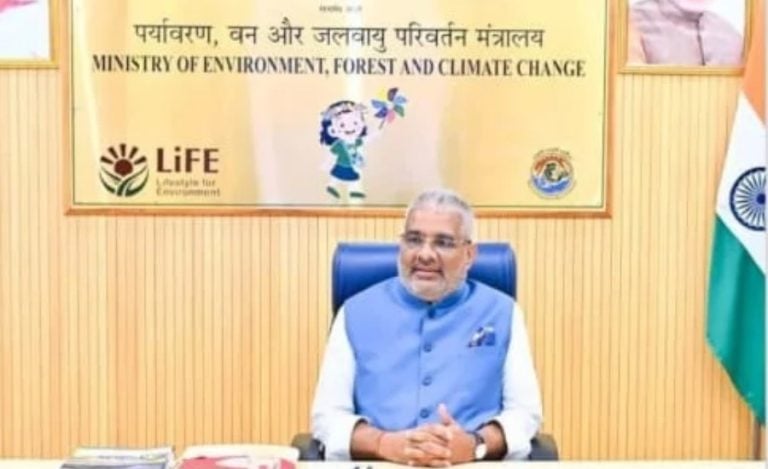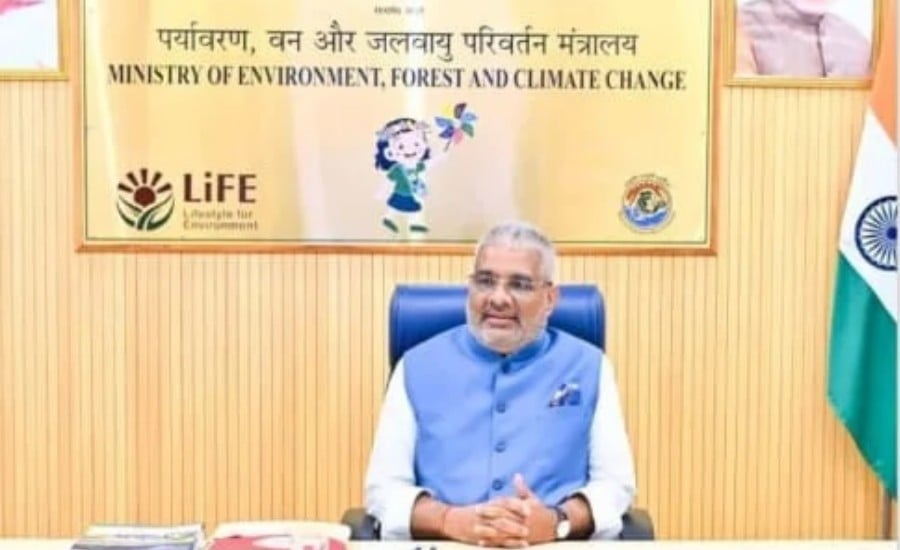
New Delhi: Union Environment, Forest and Climate Change Minister Bhupender Yadav on Thursday chaired the 27th meeting of the G.B. Pant Society of Himalayan Environment and Development and released four publications covering biodiversity conservation, glacial systems, digital biodiversity governance and wetlands in the Indian Himalayan Region.
During the meeting, Yadav emphasised the importance of access and benefit-sharing rights and People’s Biodiversity Registers (PBRs) in improving the livelihoods of communities living in the Himalayan region while supporting the conservation of its natural resources.
The meeting was attended by Narendra Bhooshan, Secretary, Ministry of Environment, Forest and Climate Change (MoEFCC); Santosh Tewari, Director General of Forests and Special Secretary in the ministry; senior officials; and members of the G.B. Pant Society.
Four Publications Highlight Himalayan Ecology and Conservation
The publications released at the meeting add to the institute’s knowledge resources on biodiversity, ecological systems and conservation governance in the Indian Himalayan Region.
The four publications are:
- Biodiversity and its Conservation Practices for Bhagirathi Eco-sensitive Zone — Covers biodiversity and conservation practices in the Bhagirathi Eco-sensitive Zone.
- Gangotri Glaciated System — Focuses on the glaciated system around Gangotri.
- E-PBR Governance for the Indian Himalayan Region — Examines digital governance relating to People’s Biodiversity Registers in the Himalayan region.
- Ramsar Wetlands of the Indian Himalayan Region — Documents Ramsar wetlands across the Indian Himalayan Region.
The publications address different aspects of the region’s ecological wealth, from biodiversity conservation and glacial systems to wetland protection and community-level biodiversity documentation.
Bhupender Yadav Highlights Access and Benefit-Sharing Rights
Yadav stressed the importance of access and benefit-sharing rights in ensuring that local communities can benefit from the sustainable use of biological resources.
He also highlighted the role of People’s Biodiversity Registers in documenting local biodiversity and associated knowledge. Such registers are intended to support biodiversity management and provide a record of biological resources and related traditional knowledge at the local level.
The minister underscored the importance of involving communities in biodiversity conservation, particularly in the Himalayan ecosystem, where local livelihoods and natural resources are closely connected.
Key themes highlighted during the meeting included:
- Access and benefit-sharing: Recognising the importance of benefit-sharing rights in relation to biological resources.
- People’s Biodiversity Registers: Strengthening local biodiversity documentation and governance.
- Community participation: Involving native communities in conservation efforts.
- Sustainable livelihoods: Linking biodiversity conservation with the welfare of people living in the Himalayan region.
Policy Focus on Ecological Security and Sustainable Growth
The minister said that, under Prime Minister Narendra Modi’s leadership, efforts have focused on developing a policy framework that balances ecological security with sustainable socio-economic growth in the Indian Himalayan Region by 2047.
The emphasis reflects the challenge of supporting development and livelihoods while protecting the region’s biodiversity and fragile ecological systems.
The Himalayan region contains diverse ecosystems, including forests, glaciers, rivers and wetlands. Conservation initiatives therefore involve multiple areas of environmental management, including biodiversity documentation, habitat protection and the sustainable use of natural resources.
G.B. Pant Society Meeting Reviews Himalayan Environment and Development
The 27th meeting brought together ministry officials and members of the G.B. Pant Society of Himalayan Environment and Development to discuss issues related to the Himalayan environment and sustainable development.
The release of the four publications was a key outcome of the meeting, contributing research and documentation on biodiversity conservation, the Gangotri glaciated system, digital biodiversity governance and Ramsar wetlands.
The meeting also reinforced the importance of connecting environmental protection with community participation and the welfare of people living in the Indian Himalayan Region.
Read Also: Bhupender Yadav Urges IFS Officers to Embrace AI, GIS and Leadership Beyond Regulatory Roles