New Delhi: In a major governance reform aimed at improving administrative efficiency, the Central Government has asked senior IAS, IPS and IFS officers to reduce unnecessary meetings, accelerate file movement and adopt more practical working methods to improve decision-making and public service delivery.
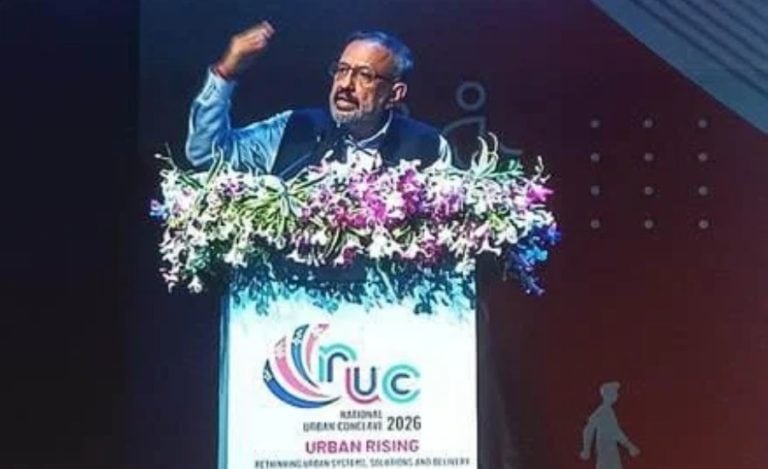
The advisory, issued by Cabinet Secretary Dr T.V. Somanathan, has been sent to the Chief Secretaries of all States and Union Territories as well as the Directors General of State Administrative Training Institutes (ATIs). The communication urges states to sensitise officers on improving their daily work practices, stressing that small behavioural and procedural changes can significantly enhance governance, reduce stress and improve administrative quality.
A Push for Practical Administrative Reforms
In his letter, Dr Somanathan noted that interactions with officers from various services revealed that, besides subject-specific training, there is a growing need for guidance on the routine processes and practical aspects of government functioning.
He observed that experienced officers often become accustomed to long-established work habits, making self-improvement less frequent over time.
The Cabinet Secretary encouraged officers to reflect on questions such as:
- Am I becoming a better administrator every year?
- Am I improving my working methods or merely repeating old practices?
He remarked that an officer nearing retirement may either possess 30 years of experience or simply repeat one year of experience 30 times, underlining the importance of continuous learning and adaptation.
New Guide on Conducting Government Meetings
As part of the reform initiative, the Cabinet Secretariat, in collaboration with the National Centre for Good Governance (NCGG), will periodically issue practical governance guides. The first such guide focuses on the effective conduct of government meetings.
According to the Centre, inefficient meetings are among the biggest reasons for delays in decision-making and implementation of government programmes.
The guide identifies several recurring issues in official meetings, including:
- Meetings starting late.
- Discussions extending far beyond the scheduled duration.
- Lack of a clearly defined agenda.
- No concrete conclusions despite lengthy deliberations.
- Delayed preparation of minutes.
- Weak follow-up on decisions taken.
The objective is to make meetings shorter, structured and outcome-oriented.
No Meetings Without a Clear Purpose
The new guidelines state that every meeting should have a clearly defined objective before it is convened.
If an issue can be resolved through email, telephone or video conferencing, officials have been advised to avoid calling physical meetings altogether.
The Centre believes this approach will save valuable administrative time, allowing officers to devote greater attention to policy implementation and public service delivery.
Agenda in Advance, Limited Participation
To improve productivity, the guidelines require departments to circulate the meeting agenda well in advance so that participants arrive fully prepared.
Only officers whose presence is essential should attend the meeting, thereby reducing unnecessary discussions and enabling quicker decision-making.
After every meeting, a detailed Minutes of Meeting (MoM) should be prepared, clearly recording:
- The decisions taken.
- The officer responsible for each task.
- Deadlines for implementation.
- The schedule for the next review.
The Centre believes this will improve accountability and make it easier to monitor pending matters.
Encouraging Participation and Innovation
The Cabinet Secretariat has also stressed that meetings should encourage open discussion, allowing junior officers to freely express their views, suggestions and even disagreements.
According to the advisory, such an environment will improve the quality of decision-making while promoting innovation and better administrative outcomes.
Separate guidelines have also been issued for meetings conducted through video conferencing, emphasising advance testing of technical systems, equal participation by all attendees and adherence to meeting discipline.
Faster Governance, Better Public Services
The Centre has linked the reforms directly to improved citizen service delivery.
It noted that decisions relating to roads, electricity, drinking water, education, healthcare, agriculture, industry, employment and welfare programmes are largely taken through government meetings. If these meetings become more efficient, implementation of schemes will be faster and citizens will receive services without unnecessary delays.
States Asked to Institutionalise Reforms
The Cabinet Secretary has requested Chief Secretaries to circulate the new guide among all officers working under their respective state governments.
State Administrative Training Institutes have also been asked to incorporate these practical governance reforms into the training curriculum for State Civil Service officers, ensuring that future administrators adopt efficient and result-oriented work practices from the beginning of their careers.
The initiative marks a broader effort by the Centre to modernise administrative processes, improve accountability and foster a culture of continuous learning within the civil services.