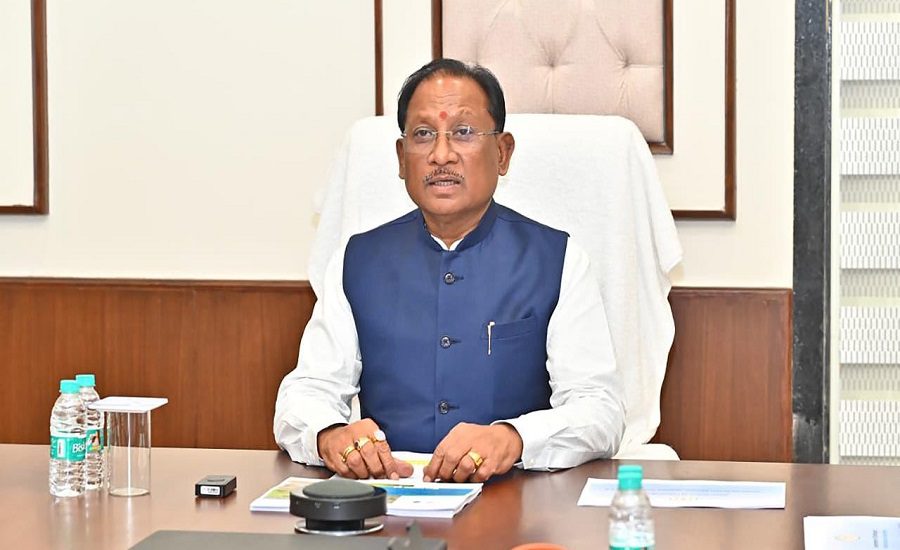
Raipur: Under the leadership of Chief Minister Vishnu Deo Sai, the Chhattisgarh government is set to take a major step towards strengthening good governance and ensuring that every eligible family receives the full benefit of welfare schemes. For this purpose, the state has launched the ‘Sughghar Chhattisgarh’ campaign, aimed at saturation of key government schemes across the state.
The initiative focuses on improving transparency, accessibility, and effective delivery of welfare programs to citizens, especially in rural and remote areas.
Campaign to Cover 23 Districts and 31 Key Welfare Schemes
The ‘Sughghar Chhattisgarh’ campaign will be implemented across 23 districts in four divisions—Raipur, Bilaspur, Durg, and Surguja.
The campaign aims to ensure saturation of 31 major beneficiary-oriented schemes, including those related to:
- Social security
- Housing and rural development
- Employment and livelihood
- Health and nutrition
- Education and skill development
- Women empowerment
- Agriculture and farmer welfare
- Basic civic services
Key schemes include PM Awas Yojana (Gramin), MNREGA, Ayushman Bharat, PM Kisan Samman Nidhi, National Rural Livelihood Mission, Jal Jeevan Mission, and various pension and insurance schemes.
Inspired by Success of ‘Niyad Nellanar’ Model
The campaign is based on the successful ‘Niyad Nellanar’ initiative launched in the Bastar region in 2024. That programme strengthened trust between the government and citizens by ensuring direct delivery of welfare services in remote and sensitive areas. Following its success, the model was expanded as Niyad Nellanar 2.0 in 10 districts. Now, the state is extending a similar convergence-based approach across the remaining 23 districts through the ‘Sughghar Chhattisgarh’ campaign.
Three-Phase Implementation Plan for Effective Delivery
The campaign will be executed in three structured phases:
Phase 1: Survey and Data Mapping
- Village-level baseline survey
- Identification of eligible families
- Creation of scheme-wise beneficiary database
Phase 2: Saturation Camps
- Organisation of gram, cluster, and block-level camps
- Direct linking of beneficiaries with schemes
- Documentation support and service delivery
Phase 3: Monitoring and Evaluation
- Continuous performance review
- Impact assessment
- Corrective action where required
Real-Time Monitoring Through CHiPS Digital Dashboard
A major highlight of the initiative is the development of a real-time digital monitoring system by the Chhattisgarh Infotech Promotion Society (CHiPS).
The ‘Sughghar Chhattisgarh Dashboard’ will provide:
- Real-time progress tracking
- Scheme-wise saturation data
- District, block, and village-level performance reports
- Percentage completion and beneficiary coverage
This system is expected to make governance more transparent, data-driven, and efficient.
Strong Administrative Structure for Implementation
The campaign will be implemented under a structured governance framework:
- District Collectors will oversee district-level execution
- Divisional Commissioners will conduct quarterly reviews
- A state-level committee headed by the Chief Secretary will monitor progress
The government will also use convergence of funds from departmental budgets, CSR contributions, District Mineral Foundation (DMF), and other institutional sources.
Focus on Inclusive Growth and Citizen-Centric Governance
Chief Minister Vishnu Deo Sai emphasized that the objective of the campaign is not just scheme implementation but ensuring real impact in people’s lives. He stated that development is meaningful only when every eligible family receives timely benefits without unnecessary delays or obstacles. The initiative aims to build a governance model where services reach citizens directly.
The ‘Sughghar Chhattisgarh’ campaign marks a significant step towards strengthening welfare delivery and ensuring complete saturation of government schemes across the state. By combining technology, administrative convergence, and grassroots-level implementation, the initiative is expected to enhance transparency, efficiency, and inclusiveness in governance.