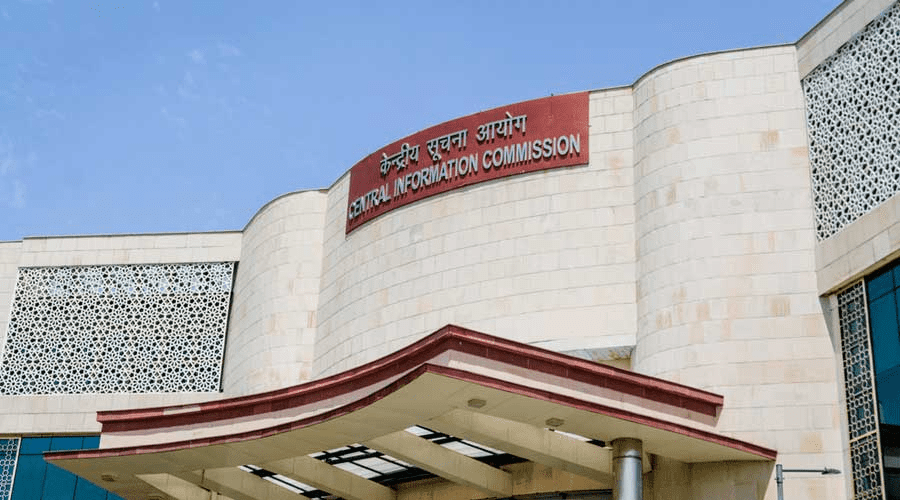
New Delhi: The Central Information Commission (CIC) has recommended that sub-caste details be included in the final lists of the Civil Services Examination (CSE), conducted by the Union Public Service Commission, to improve transparency and better assess the distribution of reservation benefits.
The recommendation has been made to the Department of Personnel and Training (DoPT), which is responsible for personnel management and service allocation in the central government.
Recommendation Emerges from RTI Appeal
The observation came while the CIC was disposing of a second appeal filed under the Right to Information (RTI) Act. The applicant had sought caste-wise details of candidates selected to the Indian Administrative Service through the 1995 Civil Services Examination.
During the proceedings, the DoPT informed the commission that service allocation data is maintained only at the level of broad social categories such as Scheduled Castes (SC), Scheduled Tribes (ST), and Other Backward Classes (OBC), and not at the sub-caste level.
DoPT Cites Data Limitations
The department further stated that records dating back to 1995 were not traceable. However, it clarified that data related to candidates allocated to services—along with their category—from CSE-2017 onwards is available on its official portal.
This highlights a shift towards greater digitisation and accessibility of records in recent years.
CIC Sees Scope for Greater Transparency
While acknowledging the absence of detailed historical data, the CIC noted that there is a “plausible scope” for including sub-caste information in future disclosures.
The commission also observed that final lists of candidates, along with their category classifications, are already available in the public domain for recent examinations.
Push for Better Policy Assessment
The CIC emphasised that including sub-caste details alongside broader caste categories could significantly enhance transparency. More importantly, it could help policymakers better evaluate how reservation benefits are distributed within larger caste groups.
Quoting its order, the commission stated that such a move would help ensure that “the benefits of reservation policies and affirmative action reach a broader and more diverse range of communities within larger caste categories.”
No Lapse Found Under RTI
Despite the recommendation, the CIC found no deficiency in the response provided by the authorities under the RTI Act in this particular case. Accordingly, the commission disposed of the appeal.
Implications Going Forward
If accepted, the recommendation could lead to more granular data disclosure in Civil Services Examination results, enabling deeper analysis of representation across sub-caste groups and potentially informing future policy decisions on reservation.
Read also: IPS Vishal Gunni Setback: Andhra Pradesh High Court Stays CAT Order, Suspension Continues | Know Him