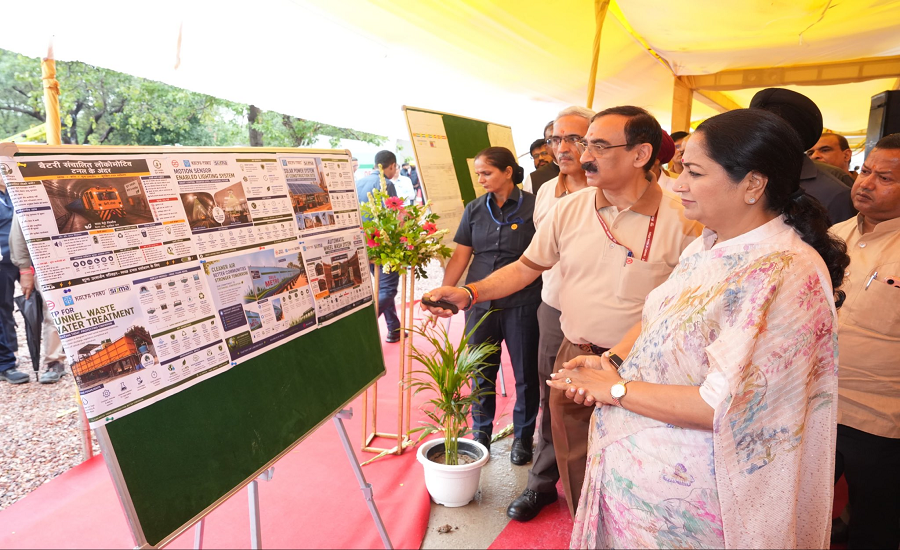
New Delhi: Delhi Chief Minister Rekha Gupta on Friday laid the foundation stone for the Inderlok-Indraprastha Corridor under Delhi Metro Phase IV, marking a major step towards expanding the capital’s public transport network.
The 12.377-kilometre fully underground corridor will strengthen connectivity between West Delhi and Central Delhi, making daily travel faster, safer, and more convenient for lakhs of commuters.
The Chief Minister said the project is an important milestone in strengthening Delhi’s modern infrastructure and will contribute significantly towards building a world-class public transportation system in the national capital.
New Metro Corridor to Add 10 Underground Stations
The Inderlok-Indraprastha Corridor will be developed as an extension of the Delhi Metro Magenta Line and will include 10 new underground stations.
The stations under the new corridor are:
- Inderlok
- Daya Basti
- Sarai Rohilla
- Ajmal Khan Park
- Jhandewalan Temple
- Nabi Karim
- New Delhi
- Delhi Gate
- Delhi Secretariat–IG Stadium
- Indraprastha
The construction work officially began with the start of diaphragm wall construction at Sarai Rohilla Metro Station, marking the first phase of the project.
Read also: CM Rekha Gupta Inaugurates ₹4 Crore Modern Health Upgrade at Lajpat Nagar Colony Hospital in Delhi
Magenta Line Set to Become Delhi Metro’s Longest Corridor
After completion of the Inderlok-Indraprastha extension, the Magenta Line will become the longest line in the Delhi Metro network, reaching nearly 89 kilometres in length.
The extension will also make the Magenta Line one of the most important corridors in the city, with the highest number of underground stations and multiple interchange facilities.
The project is expected to significantly improve passenger movement across central parts of Delhi.
Seven Interchange Stations to Improve Citywide Connectivity
The new corridor will provide seven interchange connections with existing metro lines, reducing travel time and the need for multiple transfers.
Key interchange points include:
- Inderlok Station: Connectivity with Red Line and Green Line
- Nabi Karim Station: Connection with existing Magenta Line network
- New Delhi Station: Interchange with Yellow Line and Airport Express (Orange Line)
- Delhi Gate Station: Connection with Violet Line
- Indraprastha Station: Connection with Blue Line
These interchanges will help commuters access different parts of Delhi more efficiently.
Major Landmarks to Get Direct Metro Connectivity
The corridor will directly connect several important locations, including:
- Sarai Rohilla Railway Station
- New Delhi Railway Station
- Delhi Secretariat
- Jhandewalan Temple
- Arun Jaitley Stadium
- Indira Gandhi Indoor Stadium
- Delhi Gate
- Kartavya Path
- India Gate
- National War Memorial
- Central Vista area
The project will also improve metro access to commercial and educational hubs around Karol Bagh and Desh Bandhu Gupta Road.
Sarai Rohilla Station to Become Key Metro Hub
Sarai Rohilla has been identified as one of the most important stations of the new corridor.
The project will bring several densely populated areas of Central Delhi, including Karol Bagh Market and Liberty Cinema area, into the metro network for the first time.
Residents of these areas will get direct underground connectivity to major destinations across Delhi.
Project to Reduce Traffic Congestion and Pollution
CM Rekha Gupta said the objective of expanding Delhi Metro is not only to increase network coverage but also to develop a reliable, affordable, and modern public transport system for every citizen.
She highlighted that the new corridor will help:
- Reduce traffic congestion
- Lower travel time
- Encourage people to shift from private vehicles to public transport
- Reduce fuel consumption
- Decrease carbon emissions
The project supports Delhi’s efforts towards cleaner and more sustainable urban mobility.
CM Rekha Gupta Highlights Delhi Metro’s Role in Developed Delhi Vision
Addressing the launch event, CM Rekha Gupta said Delhi Metro represents the foundation of a developed Delhi.
She recalled that former Prime Minister Atal Bihari Vajpayee’s vision for Delhi Metro continues to expand under the leadership of Prime Minister Narendra Modi, with cooperation between the central and Delhi governments.
She said the government is committed to making public transport the preferred choice for Delhi residents through modern infrastructure development.
Inderlok-Indraprastha Corridor Development Through Joint Efforts
The project is being developed through coordination between the Delhi Government, Government of India, and Delhi Metro Rail Corporation (DMRC).
With construction work now officially underway at Sarai Rohilla, the corridor is expected to transform connectivity across central Delhi and provide commuters with faster, safer, and environmentally friendly transportation options.
Once operational, the corridor will reduce dependency on road transport and make daily travel across the capital more seamless.
Read also: CM Rekha Gupta Launches Delhi EV Subsidy Portal Under EV Policy 2026, Offers Up to ₹1 Lakh Incentive