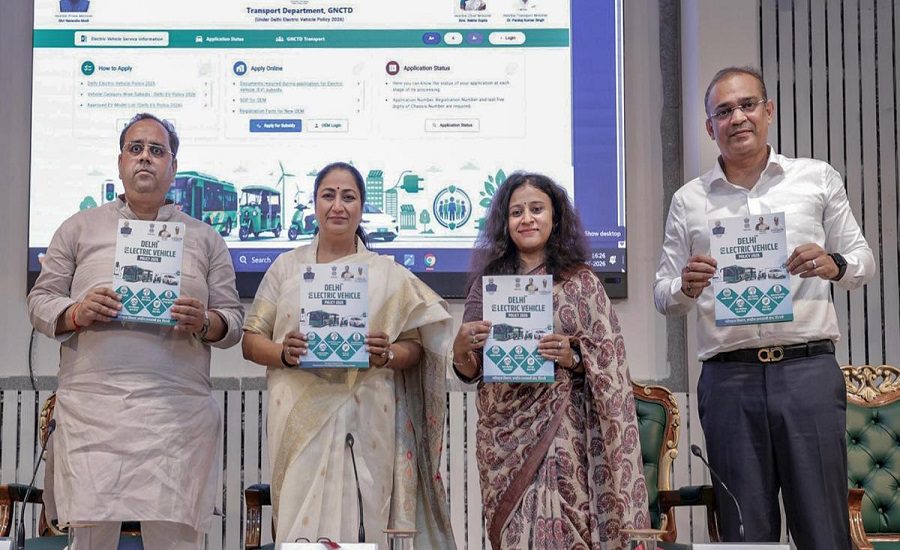
New Delhi: The Government of Delhi has officially launched a dedicated online platform for electric vehicle (EV) incentives under the Delhi EV Policy 2026, aiming to make the subsidy process faster, transparent, and fully digital. The new portal, evsubsidy.delhi.gov.in, enables eligible residents to apply for EV purchase incentives of up to ₹1 lakh and track their applications in real time.
EV Subsidy Portal Goes Live for Citizens and Institutions
The newly launched EV subsidy portal allows both individuals and institutions to apply online for benefits under the Delhi Electric Vehicle Policy 2026. Applicants can submit claims from home, upload required documents digitally, and monitor every stage of approval.
The government has positioned the platform as a single digital window for all EV-related incentives, including eligibility details, approved EV models, documentation requirements, and application procedures.
Direct Benefit Transfer (DBT) Within 60 Days
A key feature of the initiative is the Direct Benefit Transfer (DBT) system, which ensures that approved subsidy amounts are credited directly into beneficiaries’ bank accounts.
Officials have stated that:
- Applicants must apply within 30 days of purchasing an EV and receiving the Registration Certificate (RC)
- Subsidy payments will be processed and transferred within 60 days after verification
- The system is designed to reduce delays and eliminate manual processing
This approach is intended to improve efficiency and reduce corruption risks through full digitization.
Key Features: Paperless, Transparent and Real-Time Tracking
According to the government, the portal is built to be:
- Fully paperless and digital
- Transparent at every stage of processing
- Accessible from home without physical visits
- Equipped with real-time application tracking
Applicants can log in to check updates instantly, from submission to approval and final disbursal.
Documents Required for EV Subsidy Application
The portal supports secure digital uploads of essential documents. Required submissions include:
For Individual Applicants:
- Aadhaar Card
- Vehicle Registration Certificate (RC)
- Voter ID
For Institutional Applicants:
- GSTIN
- PAN Card
- Bank account details
All documentation is handled through encrypted online submission to ensure data security.
Policy Information and Approved EV Models Listed Online
The EV subsidy portal also functions as an information hub for the Delhi EV Policy 2026, offering:
- Eligibility criteria for different vehicle categories
- List of approved EV models
- Step-by-step application guide
- Subsidy structure and benefits
- Policy guidelines and updates
This is intended to simplify access to EV-related information for buyers and manufacturers.
Government Targets 32,000 EV Charging Points by 2030
During the launch, Chief Minister Rekha Gupta emphasized long-term infrastructure goals to support EV adoption. The government plans to develop over 32,000 public EV charging points across Delhi by 2030, ensuring widespread access to charging facilities.
She also urged stakeholders—including:
- Vehicle manufacturers
- Dealers
- Scrapping centres
- Power distribution companies
—to collaborate in expanding the EV ecosystem and improving availability of affordable electric models.
Clean Mobility Push Under Delhi EV Policy 2026
Officials highlighted that the EV subsidy portal is part of a broader strategy to transform urban transport and reduce air pollution in Delhi. The policy aims to promote clean mobility, encourage EV adoption, and build a more sustainable transport system.
With fully digital processing, DBT-based payments, and expanded charging infrastructure, the initiative marks a major step in the implementation of the Delhi Electric Vehicle Policy 2026.