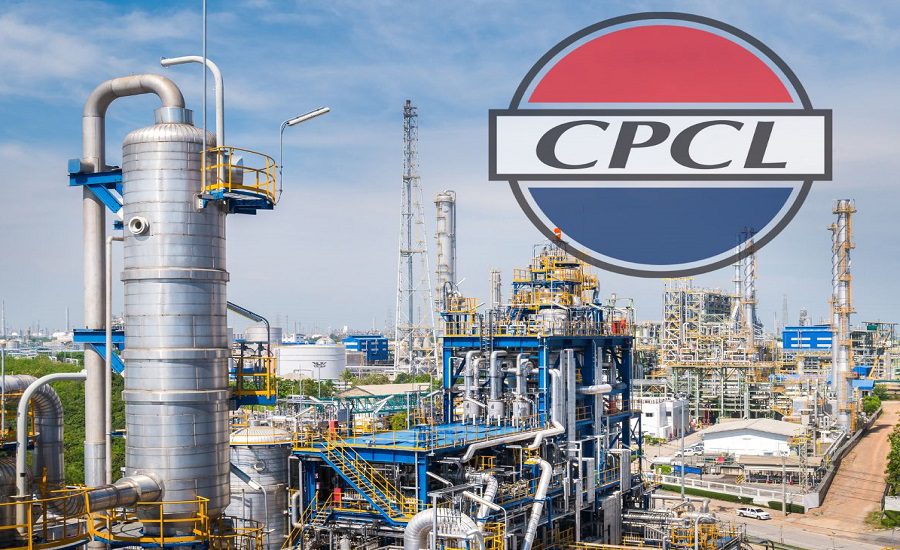
Chennai: Chennai Petroleum Corporation Limited (CPCL) has been upgraded to Navratna Central Public Sector Enterprise (CPSE) status by the Government of India, marking a major milestone in its corporate journey. The approval was granted by Union Finance Minister Nirmala Sitharaman and announced by the Department of Public Enterprises.
With this upgrade, CPCL becomes the 28th Navratna CPSE in India, strengthening its position among the country’s leading public sector enterprises.
Official Approval and Announcement
The elevation was formally cleared by the Finance Ministry, reinforcing the government’s push to empower high-performing PSUs with greater operational independence.
CPCL operates under the Ministry of Petroleum and Natural Gas and has demonstrated strong financial and operational performance, which contributed to its eligibility for Navratna status.
What Navratna Status Means
The Navratna classification, introduced in 1997, grants select CPSEs enhanced financial autonomy and strategic freedom.
Under this status, CPCL can:
- Invest up to ₹1,000 crore or 15% of its net worth in a single project without prior government approval
- Set up joint ventures and subsidiaries abroad
- Expand into new markets with faster decision-making
- Enter mergers, acquisitions, and strategic alliances
- Strengthen innovation through global technology partnerships
This autonomy is designed to make large PSUs more competitive in global markets.
Eligibility and Performance Criteria
To qualify for Navratna status, a CPSE must:
- Be classified as a Miniratna Category-I company
- Maintain a positive net worth
- Secure “Excellent” or “Very Good” MoU ratings in at least three of the last five years
- Score 60 or more points on key financial indicators such as profitability, net worth, and efficiency
CPCL met these benchmarks following consistent operational and financial improvements.
Financial Performance and Turnover
CPCL reported an annual turnover of approximately ₹59,400 crore in FY 2025–26, reflecting strong refining margins and operational efficiency.
The company’s performance has been a key driver behind its elevation from Miniratna-I to Navratna status.
History and Evolution of CPCL
Originally established as Madras Refineries Limited in 1965, CPCL began as a joint venture involving:
- Government of India
- AMOCO
- National Iranian Oil Company
Later, government equity was transferred to Indian Oil Corporation Limited, making CPCL a subsidiary in 2001.
From its inception as a grassroots refinery in 1969 with a capacity of 2.5 MMTPA, CPCL has evolved into a major refining hub in South India.
Refining Capacity and Operations
CPCL currently operates with an installed refining capacity of 10.5 million metric tonnes per annum (MMTPA).
Its Manali refinery is considered one of India’s most complex refining units, featuring:
- Fuel production units
- Lubes and wax processing facilities
- Petrochemical feedstock production systems
The refinery plays a critical role in meeting fuel demand across southern India.
Key Facilities and Products
CPCL’s product portfolio includes a wide range of petroleum and specialty outputs:
- Petrol and diesel
- LPG and kerosene
- Aviation Turbine Fuel (ATF)
- Lubricants and petrochemical feedstocks
- Specialty fuels including JP-5 for fighter aircraft and missile applications
The company has also developed a 5.8 million gallons per day seawater desalination plant, the first of its kind in the industry, helping meet refinery water requirements.
Shareholding Structure
Indian Oil Corporation Limited holds a 51.89% majority stake in CPCL, making it the parent company and strategic controlling shareholder.
About CPCL
Chennai Petroleum Corporation Limited is one of India’s leading public sector refining companies, headquartered in Chennai. With decades of operational expertise, advanced refining infrastructure, and strong backing from Indian Oil Corporation, CPCL plays a vital role in India’s energy security. Its elevation to Navratna status further strengthens its ability to expand, invest, and compete at a global level.