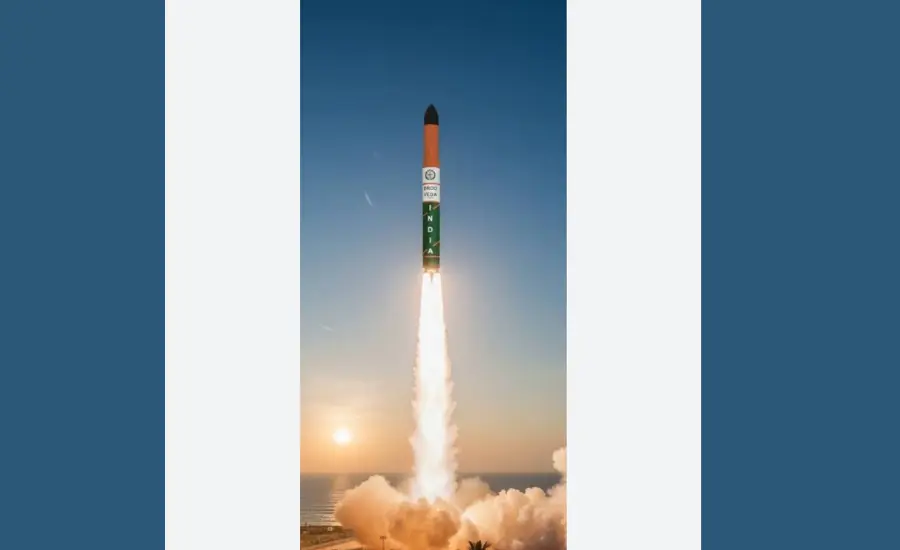
New Delhi: India’s Mobile Defence Satellite Launcher VEDA is emerging as a major step forward in the country’s defence and space capabilities. Developed by the Defence Research and Development Organisation (DRDO), Project VEDA aims to provide India with a rapid-response satellite launch system that can operate from multiple locations. The project is designed to strengthen national security, improve space resilience, and enhance India’s ability to respond quickly during conflicts or emergencies.
What Is Project VEDA
Project VEDA, short for Vehicle for Defence Application, is a new initiative focused on creating a dedicated defence satellite launch vehicle.
Read also: What Is India’s Nirbhay Cruise Missile? Features, Range, And Strategic Importance Explained
The system is being developed for defence-related space missions and is intended to support India’s growing need for secure and rapid access to space.
Unlike traditional launch systems that depend on fixed launch pads and lengthy preparations, VEDA is designed as a mobile, containerised launch platform that can be deployed from different locations.
Who Developed the Project VEDA
The project is being developed by DRDO through the Advanced Systems Laboratory (ASL) and Research Centre Imarat (RCI).
VEDA is expected to become India’s first operationally responsive launch system capable of supporting both space and counter-space missions. The initiative aligns with India’s broader efforts to strengthen defence preparedness and space-based surveillance capabilities.
What are Features of VEDA
Rapid Satellite Launch Capability
One of VEDA’s biggest advantages is its ability to launch satellites within a short timeframe. The system is designed to reduce launch preparation time significantly and could achieve launch readiness within 24 to 72 hours.
This capability is especially important during emergencies when damaged or disabled satellites need to be replaced quickly.
Mobile and Flexible Deployment
VEDA can be transported using heavy military vehicles and launched from different locations. This mobility makes it difficult for adversaries to identify and target launch infrastructure.
The launcher can operate from highways, remote regions, and rugged terrain, increasing operational flexibility.
Satellite Swarm Deployment
The platform is designed to launch multiple small satellites in a single mission. These satellite swarms can support communication, intelligence gathering, surveillance, reconnaissance, and battlefield monitoring. Such capabilities can improve real-time decision-making during military operations.
Counter-Space Operations
VEDA is also expected to support defensive and offensive counter-space missions.
The system may be used to deploy satellites that help protect critical space assets and maintain uninterrupted communication and surveillance capabilities.
How Project VEDA Strengthens India’s Defence
India increasingly relies on satellites for navigation, communication, intelligence gathering, and military operations. A rapid-response launch system helps ensure continuity if any satellite is damaged, disrupted, or disabled during a conflict.
By enabling quick satellite replacement, VEDA strengthens India’s strategic deterrence and operational readiness. The system could also support the Armed Forces with faster access to space-based information during crises.
Global Context
Several countries are investing in rapid satellite launch capabilities. China has developed mobile launch systems for quick deployment, while the United States is expanding responsive launch programs through government and private-sector partnerships.
With VEDA, India is moving towards joining this group of nations capable of rapid military satellite deployment.
Read also: Can AD-1, AD-2 And Project Kusha Protect India From Future Missile Threats? Here’s What We Know