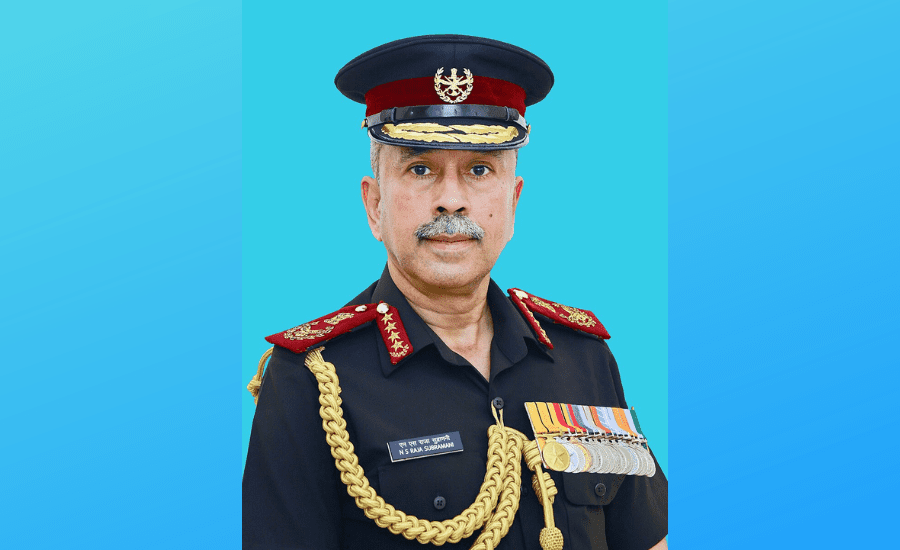
New Delhi: During a national security event in New Delhi, CDS said modern warfare has changed dramatically due to technology, cyber threats, information warfare, and economic pressure. According to the CDS, India must adopt a whole-of-nation approach to security and move beyond traditional military preparedness to actively shape the strategic environment.
Why CDS NS Raja Subramani Called For Strategic Shaping
Speaking at a defence and security event in New Delhi, General NS Raja Subramani highlighted that the line between peace and war is becoming increasingly blurred.
Read also: CDS Raja Subramani Theatre Command Plan Explained: Key Changes, Three Commands, and Next Steps
He said adversaries today use cyber-attacks, information warfare, technological denial, economic coercion, maritime pressure, and proxy conflicts to achieve their goals without engaging in conventional warfare. Because of these evolving threats, India must prepare not only for wars but also for continuous competition across multiple domains.
What Does Strategic Shaping Mean
Strategic shaping refers to influencing the security environment before conflicts arise. Instead of focusing only on preparing for a future war, nations must actively work to deter threats, manage escalation, build partnerships, and secure favorable outcomes.
The CDS stressed that armed forces should play a larger role in shaping the strategic environment rather than remaining limited to wartime operations.
Whole-Of-Nation Security Approach
General Subramani emphasized a “whole-of-nation” approach to national security. This means closer coordination among the military, government agencies, defence industries, technology companies, start-ups, academic institutions, and civil society. Such cooperation is essential for addressing modern security challenges that span multiple sectors.
CDS NS Raja Subramani Saya Technology Is Changing The Battlefield
The CDS said technology has fundamentally transformed warfare. Today, commercially available technologies and affordable unmanned systems are accessible to many countries and even non-state actors. As a result, smaller groups can create security challenges that were once possible only for major military powers.
Technology Alone Is Not Enough
While advanced technology is important, General Subramani cautioned that simply acquiring sophisticated systems does not guarantee military advantage. The real advantage comes from how quickly a country can integrate technology into military operations and convert it into practical capabilities.
According to him, speed of adaptation and effective implementation are now more important than technology ownership alone.
Need For Decision Superiority
The CDS said future military success will depend on achieving “decision superiority.” This means understanding a rapidly changing battlefield, making better decisions, and executing them faster than adversaries. He explained that modern conflicts require forces to process information quickly and respond with speed and accuracy.
Importance Of Integrated Military Operations
General Subramani called for an integrated “system-of-systems” approach. Instead of relying on isolated platforms or individual service capabilities, future operations should combine land, air, sea, cyber, and space assets into a unified combat architecture. This approach would improve operational effectiveness across multiple fronts simultaneously.
Multi-Domain Warfare Is The Future: CDS NS Raja Subramani
The CDS warned that future conflicts are likely to extend across land, air, sea, cyber, and space. This makes joint operations and inter-service coordination more important than ever. Modern military planning must therefore focus on seamless integration between different domains.
Operational Jointness Is Critical
India’s armed forces must strengthen operational jointness to address emerging threats. A coordinated structure will enable faster responses, better resource utilization, and improved mission outcomes.
National Resilience And Defence Self-Reliance
General Subramani placed strong emphasis on defence self-reliance. He said India must create a robust ecosystem capable of developing and rapidly deploying technologies needed for future warfare. This includes collaboration among defence companies, start-ups, MSMEs, research institutions, and academia.
Strengthening National Security Architecture
The CDS stated that national resilience should remain at the center of India’s future security framework. A strong domestic industrial and technological base will help India respond effectively to evolving security challenges.
Artificial Intelligence And Future Warfare
Artificial Intelligence (AI) and emerging technologies are expected to play a major role in future conflicts. However, the CDS noted that technology alone will not decide victory.
Success will depend on India’s ability to combine technology, military capabilities, industrial strength, and national power into a unified security architecture.
Read also: Unmanned, Unstoppable: How India Is Reshaping Modern Warfare With Hi Tech Drones
FAQs
Technology enables faster decision-making, improved surveillance, autonomous systems, cyber operations, and better battlefield awareness, making it a key factor in future conflicts.
Strategic shaping means actively influencing the security environment, deterring threats, and securing favorable outcomes before conflicts occur instead of focusing only on war preparedness.
Decision superiority refers to the ability to understand changing situations faster, make better decisions, and execute actions more quickly than an adversary.