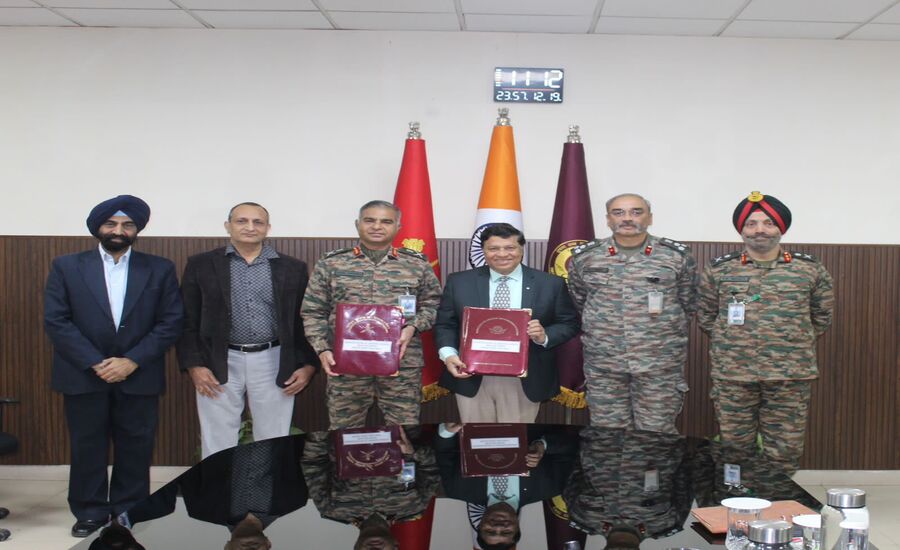
New Delhi: In a landmark move to accelerate technological innovation and bolster defence capabilities, the Indian Army has formally entered into a strategic collaboration with the Netaji Subhas University of Technology (NSUT), Delhi, to co-develop Artificial Intelligence (AI) and software solutions tailored for modern military applications.
The partnership aims to harness academic expertise, catalyse research in emerging defence technologies, and establish a deeper integration between India’s military apparatus and its premier educational institutions.
Indian Army and NSUT MoU: Signals Strategic Shift in Defence Innovation
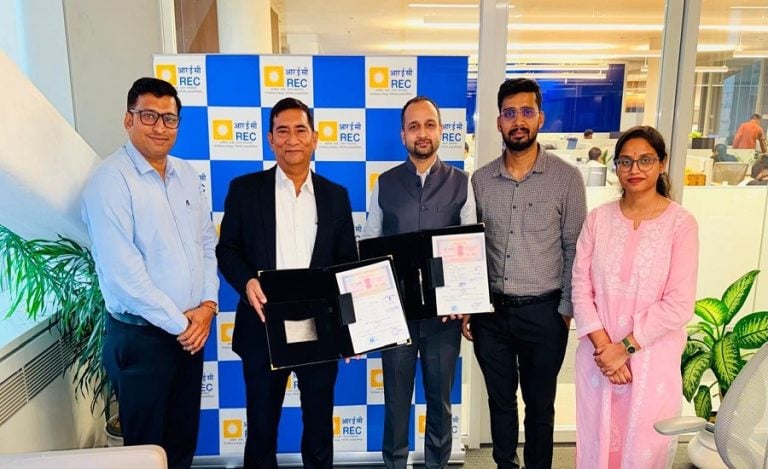
The collaboration was formalised through a Memorandum of Understanding (MoU) signed on December 22, 2025, and announced by the Additional Directorate General of Public Information (ADGPI) of the Indian Army.
Under the agreement, NSUT’s students and faculty will engage directly with real-world military challenges by participating in live problem-solving projects identified by the Army, offering a rare opportunity for academia to work on active defence requirements.
Key Agendas of the Indian Army and NSUT MoU
- Joint development of AI-driven software and digital tools customised for defence operations.
- Capacity building programmes, including Faculty Development Programmes (FDPs) and specialised training for Army personnel.
- Integration of academic research with military operational needs, with an emphasis on indigenous innovation and technological self-reliance.
According to the officials, NSUT will also provide tailor-made training modules and workshops aimed at improving the Army’s technical expertise, particularly in AI, automation, and advanced decision-support frameworks.
Bridging Academia and the Armed Forces
This collaboration marks a significant step in the Indian Army’s broader strategy to embed advanced technology expertise within the force. By integrating academic research with defence projects, the initiative aims to close the longstanding gap between theoretical innovation and operational implementation.
The Indian Army has signed a Memorandum of Understanding (MoU) with Netaji Subhas University of Technology (NSUT) to collaborate in the development of software and AI-based solutions for the Indian Army.
— ADG PI – INDIAN ARMY (@adgpi) December 22, 2025
Under the MoU, the students and the faculty of NSUT will participate in… pic.twitter.com/CMdQ8ncezK
Officials have stressed that involving students and faculty in real problem sets not only accelerates the innovation pipeline but also helps cultivate a new generation of defence technologists with practical experience — a necessary edge in an era where conflicts increasingly involve cyber, autonomous systems, and AI-enabled decision loops.
Academic Empowerment Meets Operational Realities
Under the MoU, NSUT will facilitate a series of academic programmes tailored for military users, including:
- Faculty and personnel training in cutting-edge technologies.
- Joint research labs and project centres, focusing on defence-specific computing, machine learning, and AI applications.
- Workshops, certifications, and professional development courses aimed at upskilling Army technical cadres.
The collaboration is not an isolated effort. It reflects a broader trend in the Indian defence ecosystem where institutions such as Delhi Technological University (DTU) and Indian Institutes of Technology (IITs) have previously signed similar agreements to promote research in AI, cyber security, robotics, and geospatial analytics for defence uses.
Context: A Larger Defence Modernisation Drive
The Army’s partnership with NSUT comes against the backdrop of its ongoing modernisation push aimed at technological superiority and self-sufficiency in defence production.
India’s defence modernisation strategy continues to prioritise indigenous innovation, cutting-edge technologies, and collaboration across sectors.
Contemporary themes in India’s defence strategy include:
- Atmanirbhar Bharat (Self-reliant India) — reducing dependence on foreign suppliers and fostering domestic capabilities.
- AI and Decision Support Systems — integrating machine intelligence in battlefield operations, tactical planning, and autonomous systems.
- Advanced Unmanned Systems — including loitering munitions and drone fleets set for expedited procurement to strengthen tri-service operations.
Beyond NSUT, similar collaborations with academic and research institutions seek to advance capabilities in cyber security, robotics, data science, and automatic control systems — all fields critical to future combat scenarios.
Strategic Implications of Indian Army and NSUT MoU for National Security
Experts believe that bridging the divide between academia and military research is essential to enhance India’s capability to respond to emerging threats. With global adversaries rapidly investing in AI, machine learning, and autonomous systems, such partnerships can provide India with:
Faster innovation cycles in defence technologies.
- Enhanced mission-critical capabilities in intelligence, surveillance, reconnaissance, and command systems.
- A more resilient, tech-savvy defence workforce.
- Increased integration of civilian research expertise into defence solutions.
Officials also underline that these academic linkages support India’s evolving geopolitical posture in the Indo-Pacific and beyond, enabling the security architecture to keep pace with disruptive technologies shaping future warfare.
Read also: From Guns to Smart Guns: Indian Army Evaluates Oerlikon Skyshield for Modern Drone & Missile Threats