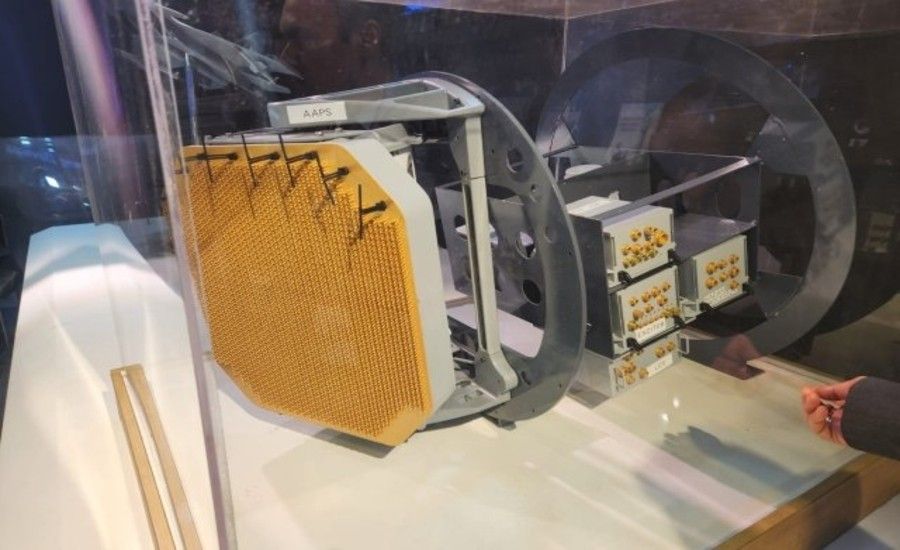
New Delhi: The Indian Army has issued a request for proposals (RFP) seeking to induct an advanced next-generation Active Electronically Scanned Array (AESA)-based Multimode Multifunction Weapon Locating Radar (MMLR) designed to transform battlefield awareness and integrated threat detection.
The move reflects a decisive effort to modernize military sensors in response to increasingly complex aerial and ground threats across diverse terrains.
Background of AESA Multimode Radar Acquisition
The MoD questionnaire released on 6 November 2025 outlines stringent performance and operational criteria.
Prospective Indian and global vendors must demonstrate capabilities such as:
1. Rapid Multi-Threat Detection
The MMLR is expected to detect and distinguish between aerial and ground threats in real time, reducing dependence on separate battlefield surveillance and weapon-locating radars.
2. Operational Flexibility Across Terrains
Designed for mountains, deserts, jungles, and plains, the radar must deploy and retract quickly — with setup and teardown times under five minutes — critical to countering counter-battery fire or aerial strikes.
3. High Mobility and Ruggedness
Mounted on an all-terrain military vehicle with rugged hardware built to MIL-STD-810G standards, the radar will empower artillery and air defence units to stay agile.
4. Integrated Navigation and Communication
With support for GPS, GLONASS, and India’s NavIC (IRNSS), along with wireless encrypted links to battlefield networks and surveillance centres, the radar aligns with India’s growing digital battlefield architecture.
What are the Features of AESA Multimode Radar
The Ministry of Defence questionnaire probes deep into technical specifics, including:
- Electronic Counter-Counter Measures (ECCM) for resilience against jamming
- Low Probability of Intercept (LPI) operations
- AI-assisted detection and data prioritization
- Simultaneous multi-projectile tracking in dense fire environments
- Interoperability with Battlefield Management Systems (BMS)
Vendors are also expected to detail physical ergonomics, remote control capability up to 100 metres, and indigenous content goals consistent with the Defence Acquisition Procedure (DAP) 2020.
Importance of AESA Multimode Radar
Conventional battlefield radars are typically mission-specific — separate systems are used to track artillery, mortars, ground vehicles, and aerial threats.
Indian Army planners, however, recognize that future battlefields will demand multi-mission detection from a single sensor suite capable of simultaneously tracking:
- Incoming artillery rounds
- Rocket and mortar fire
- Unmanned aerial systems (UAS)
- Helicopters and fixed-wing aircraft
- Ground threats across varied terrain
This need has intensified as unmanned systems and aerial swarms, including hostile drones and low-signature threats, become increasingly prevalent in theatres across South Asia and beyond.
Integrated sensors such as AESA radars provide faster beam steering, superior target resolution, and simultaneous multi-mode operation essential for real-time situational awareness.
1.Alignment With India’s Defence Modernization Agenda
The procurement falls under the “Make” category of DAP 2020, encouraging participation by Indian OEMs, system integrators, and start-ups with proven R&D capability and manufacturing infrastructure.
Emphasis on indigenous technologies such as locally developed AESA modules—potentially from DRDO’s LRDE—supports Atmanirbhar Bharat and reduces reliance on foreign components.
2. Integration With Overall Sensor Network
This initiative complements other Indian defence radar programs including:
- Ashwini Low-Level Transportable Radars for air surveillance procured from Bharat Electronics Ltd.
- 3D Central Acquisition Radars (3D-CAR) supporting high-altitude surveillance.
With India confronting high-end aerial surveillance systems from neighbouring powers, such as China’s long-range radar networks and advanced drone threats, enhancing indigenous radar capabilities is strategically vital.
Operational Impact of AESA Multimode Radar
Once inducted, the MMLR radar is expected to:
- Enhance sensor fusion across artillery, air defence, and ISR domains
- Deliver near real-time threat assessments
- Improve command decision cycles with better target classification
- Bridge gaps in current multi-layered detection networks
The system will thus play a central role in network-centric warfare and future integrated defence operations, ensuring the Army’s artillery regiments remain responsive, agile, and survivable in high-threat environments.
Read also: Defence Breakthrough: Indian Army Cuts Import Dependence with 91% Ammunition Made Locally