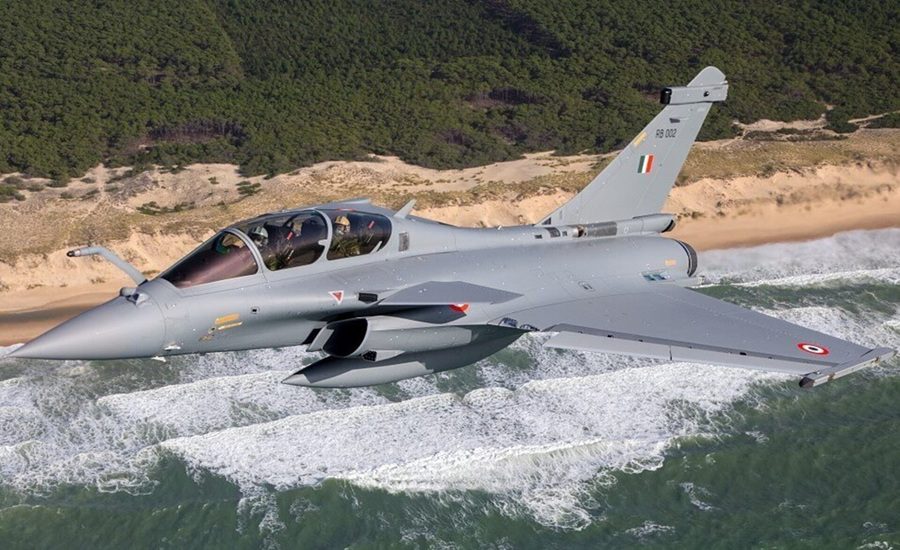
New Delhi: NAMIB electronic warfare system has successfully completed its first collaborative flight with the Rafale F4 fighter jet, marking a major step in next-generation air combat technology. Developed jointly by Dassault Aviation and Harmattan AI, the new system allows unmanned aircraft to detect enemy radar emissions and securely share targeting information with the Rafale. The successful demonstration highlights how artificial intelligence, drones, and electronic warfare can work together to improve battlefield awareness and mission effectiveness.
What is the NAMIB Electronic Warfare System
The NAMIB electronic warfare system is a lightweight electronic warfare payload designed for unmanned aerial vehicles (UAVs). It can detect, identify, and accurately locate electromagnetic signals, especially those coming from enemy air defence radar systems.
The system is flexible enough to be carried by both small tactical drones, including quadcopters, and larger fixed-wing unmanned aircraft.
NAMIB Electronic Warfare System: Successful Flight Test With Rafale F4
According to the official announcement from Dassault Aviation and Harmattan AI, a Rafale F4 fighter flew together with an unmanned aircraft carrying the NAMIB payload.
During the test, NAMIB detected a radar located several dozen kilometres away. It accurately identified the radar’s position and transmitted the location data to the Rafale F4, which then carried out a simulated strike on the target.
Why This Test Is Important
Modern air warfare increasingly depends on teamwork between manned fighter jets and autonomous drones. Instead of exposing the fighter aircraft to enemy air defence systems, drones equipped with electronic warfare payloads can move ahead, locate hostile radar systems, and send real-time information to combat aircraft. This improves pilot safety while increasing mission success.
Partnership Between Dassault Aviation and Harmattan AI
The development of NAMIB began in January 2026 as part of the strategic partnership between Dassault Aviation and Harmattan AI. The partnership aims to integrate advanced autonomous technologies, artificial intelligence, and collaborative combat capabilities into future air combat systems.