New Delhi: The CBSE three-language policy remained in force after the Supreme Court refused to grant an interim stay on its implementation for the 2026-27 academic session. Hearing petitions challenging the policy, the Court said that learning an additional language is beneficial and postponed the detailed hearing to next week. However, the bench also directed the Union government to file its response within 10 days while continuing to examine concerns raised about teachers, textbooks and the policy’s implementation.
CBSE 3-Language Policy Case: Supreme Court Declines Interim stay
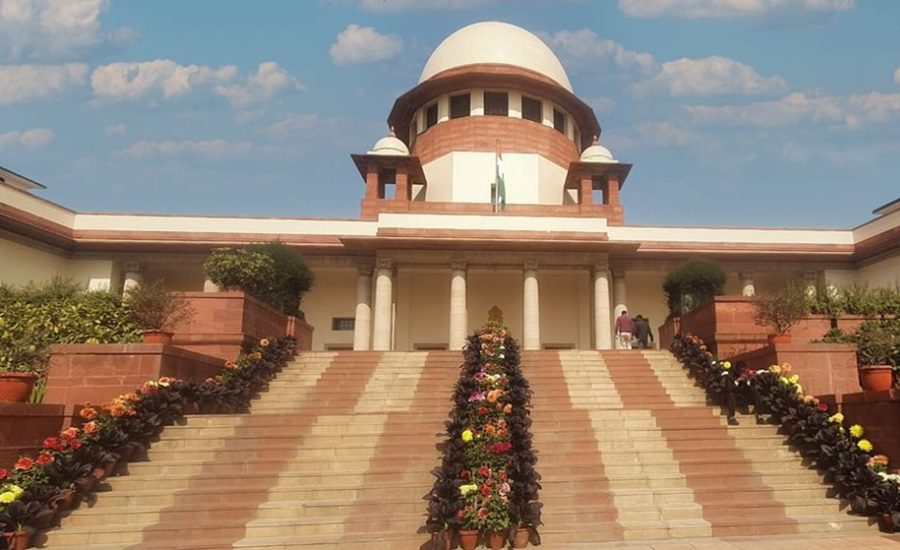
The Supreme Court, led by Chief Justice of India Surya Kant, along with Justices Joymalya Bagchi and V. Mohana refused to stay the CBSE three-language policy introduced for the 2026-27 academic year.
Read also; Navy Recruitment Rules 2026: Supreme Court Seeks Government’s Response on Promotion Dispute
The Court issued notice on fresh petitions but decided not to suspend the policy immediately. Instead, it fixed the matter for a detailed hearing next week.
Why Was the Policy Challenged
Several petitioners argued that the policy forces Class 9 students to change languages they have studied for years. According to the petitions:
- Students may have to drop English or foreign languages in some cases.
- Schools do not have enough language teachers.
- Many textbooks are still unavailable.
- The policy has been implemented earlier than expected under the National Education Policy (NEP) 2020.
CBSE 3-Language Policy Case: Senior Advocates Raise Practical Concerns
Senior Advocate Anand Grover argued that only NCERT has the authority to frame such academic requirements and questioned whether CBSE could issue the circulars.
Senior Advocate Gopal Sankaranarayanan said only three language textbooks were available on the NCERT website despite the need for many more. He also warned that schools lacked trained teachers for several Indian languages.
Senior Advocate Shyam Divan argued that although CBSE later relaxed some requirements through its June 29 circular, important issues remained unresolved.
Senior Advocate Mukul Rohatgi highlighted the difficulties faced by students already studying foreign languages such as French, saying schools may struggle to arrange teachers for newly introduced Indian languages.
CBSE 3-Language Policy Case: Supreme Court’s Observations
During the hearing, the Chief Justice remarked:
“Learning a language never goes to waste.”
When concerns were raised that teachers could lose their jobs because of the policy, the CJI replied that if teachers were dismissed, the Court could order their reinstatement if necessary.
Centre seeks more time
Additional Solicitor General Aishwarya Bhati, appearing for the Union Government, requested two weeks to file a response. The Supreme Court, however, directed the Centre to submit its reply within 10 days.
What is the CBSE three-language policy
Under CBSE’s revised language scheme:
- Class 9 students must study three languages.
- At least two languages must be Indian languages.
- A foreign language can generally be studied as the third language if the first two are Indian languages.
- The third language will be assessed internally by schools, with no separate Class 10 board examination for it during the transition period.
- Schools facing teacher shortages may temporarily use flexible arrangements, including resource sharing and virtual teaching support.
Read also: Supreme Court Wants Better-Trained Lawyers, Calls for National Legal Academy