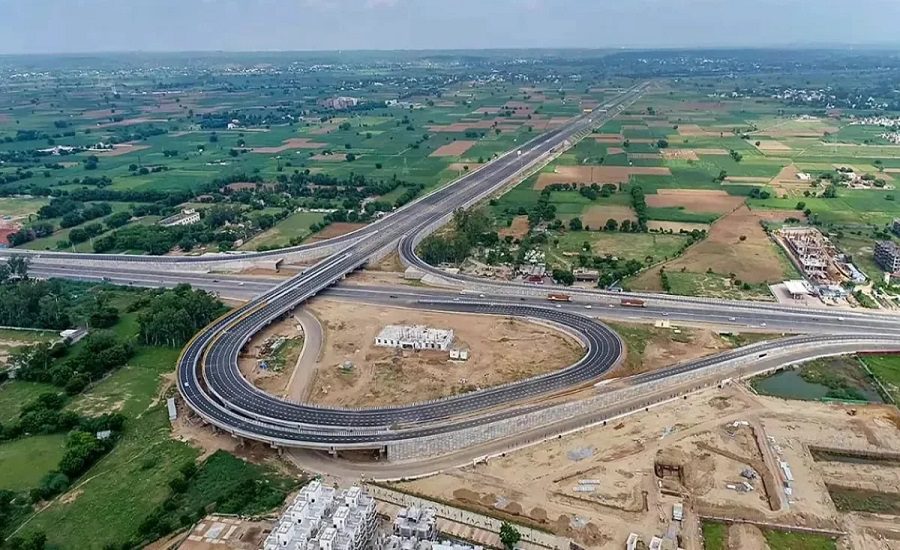
New Delhi: In a major infrastructure push aimed at easing traffic congestion in Delhi-NCR, the government has approved the first phase of a ₹12,000 crore Elevated Ring Road project. The ambitious corridor is designed to improve high-speed connectivity across key parts of the capital and reduce travel time significantly.
The project is part of the broader decongestion plan for Delhi and is expected to transform traffic movement across north, north-east, and south-east Delhi.
80 km Elevated Corridor from Metcalfe House to DND Flyway
The proposed elevated corridor will connect Metcalfe House in North Delhi to the DND Flyway near Ashram, covering a total length of approximately 80 kilometres, including ramps, loops, and connecting roads.
The project will be executed over the existing Ring Road, also known as Mahatma Gandhi Marg, which is one of the busiest arterial routes in the capital.
Read also: Delhi Govt Issues Flood Control Order 2026 Ahead of Monsoon to Prevent Waterlogging and Flooding
Yamuna River Bridges to Improve Connectivity
A key highlight of the project is the construction of two new bridges over the Yamuna River. These bridges will be built between Metcalfe Junction and Salimgarh Fort, significantly improving connectivity between North Delhi and the DND corridor.
Currently, Delhi already has over 20 bridges on the Yamuna, but rising traffic pressure has made additional infrastructure essential.
Phase-Wise Construction and Key Segments
According to officials, the elevated corridor will be constructed in six sections and two phases.
First Phase Includes:
- 7 km stretch from Azadpur Chowk to Metcalfe House Junction
- 5 km stretch from Majnu Ka Tila to Salimgarh Fort
- Extension from Salimgarh Fort to DND Flyway
The first phase will cover approximately 25 km in total.
The feasibility study and Detailed Project Report (DPR) have already been prepared and are currently under review before being sent to the Unified Traffic and Transportation Infrastructure Planning and Engineering Centre (UTTIPEC) for final approval.
Expected Impact on Traffic and Pollution
The Ring Road currently handles nearly five lakh vehicles daily, with peak-hour speeds dropping to around 23.79 km/h.
Once completed, the project aims to:
- Increase average traffic speed to around 45 km/h
- Reduce congestion on major city routes
- Lower travel time across key corridors
- Improve air quality by reducing emissions
Authorities estimate that around 39% of Ring Road traffic is through-traffic, which will benefit the most from the elevated corridor.
Improved Safety and Reduced Accidents
At present, the corridor witnesses more than 150 fatal accidents annually and generates approximately 2.1 lakh tonnes of carbon emissions each year.
Officials believe that the elevated structure will help reduce accidents by separating through traffic from local traffic, ensuring smoother and safer vehicle movement.
Better Urban Mobility with New Interchanges
The project will include:
- 15 major interchange junctions
- 23 approach roads
- Dedicated routes for local and through traffic
This design will improve accessibility to key areas across Delhi while ensuring faster long-distance travel.
Approval and Next Steps
The feasibility study and Detailed Project Report (DPR) for the project have already been prepared. The plan is currently under review before being sent to the Unified Traffic and Transportation Infrastructure (Planning and Engineering) Centre (UTTIPEC) for further approvals.
The Public Works Department (PWD) has confirmed that implementation will begin after all necessary clearances are obtained.
The ₹12,000 crore Elevated Ring Road project marks a significant step toward transforming Delhi’s urban mobility. With improved traffic flow, reduced congestion, and lower pollution levels, the project is expected to deliver long-term benefits for commuters and the environment.
Read also: Delhi Launches Jan Kalyan Camps Across 42 Locations to Boost Access to 21 Government Welfare Schemes