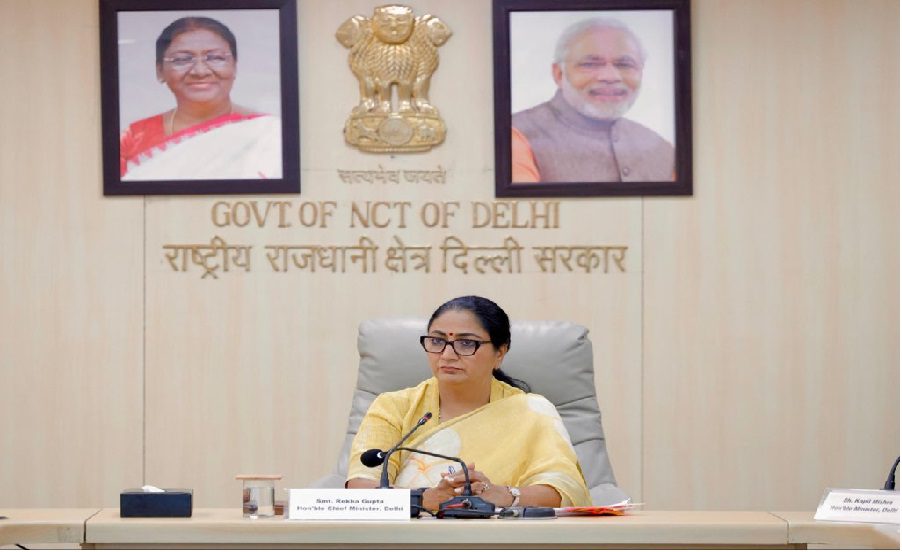
Delhi: Delhi Chief Minister Rekha Gupta has said that the city’s development is gaining momentum under the “double-engine government,” with major focus on improving public transport, road infrastructure, healthcare, and urban services across the capital.
She made the remarks during a press briefing marking 12 years of governance under Prime Minister Narendra Modi, highlighting large-scale central assistance for Delhi’s infrastructure and welfare projects.
Public Transport Expansion to Reduce Traffic Pressure in Delhi
The Chief Minister said Delhi’s public transport system has long faced challenges, including inadequate metro connectivity and insufficient bus availability.
Key highlights:
- Delhi requires over 11,000 buses, but currently has around 6,000 buses
- Plan to procure over 6,000 electric buses in the next two years
- Strengthening metro expansion to ease road congestion
She emphasized that improving public transport is essential to address rising traffic pressure in the city.
Major Boost to Electric Bus Fleet Under Central Schemes
According to CM Rekha Gupta, the central government has significantly supported Delhi’s transition to electric mobility:
- 4,550 electric buses provided under the FAME scheme
- 6,130 additional buses to be received under the PM e-Drive scheme
These efforts aim to modernize Delhi’s transport system and reduce pollution levels.
Metro Network Expansion and New Corridors
Delhi’s metro system has expanded to nearly 400 km, with:
- 180 km of new metro lines under construction
- Multiple new corridors in planning stages
Officials said the metro expansion is a key part of long-term efforts to improve connectivity across the National Capital Region.
Massive Road Infrastructure Investment of ₹1.25 Lakh Crore
The Chief Minister said that over the last 12 years, Delhi has received approximately ₹1.25 lakh crore for road infrastructure projects under the central government.
Major completed and ongoing projects include:
- Delhi–Meerut Expressway
- Dwarka Expressway
- Delhi–Mumbai Expressway
- Eastern Peripheral Expressway
- Western Peripheral Expressway
- Urban Extension Road–2
- Delhi–Dehradun Expressway
Several additional road projects are currently under construction to further improve connectivity and reduce traffic congestion.
Focus on Sewage, Clean Water and Yamuna Rejuvenation
Under the AMRUT-2 scheme, around ₹3,000 crore was allocated for improving sewage infrastructure in unauthorized colonies and preventing untreated water from entering the Yamuna.
The Chief Minister stated that progress is now being accelerated to improve implementation and strengthen environmental outcomes.
Swachh Bharat and Urban Cleanliness Initiatives
Under the cleanliness mission, Delhi has received:
- ₹1,550 crore for waste management and garbage mountain reduction
- ₹821 crore additional support for infrastructure development in the current financial year
These funds aim to improve sanitation systems and urban cleanliness across the city.
Healthcare Expansion and Ayushman Bharat Benefits
The government also highlighted improvements in healthcare services:
- 43,000 people treated free of cost under the Ayushman Bharat scheme in one year
- 370 Ayushman Arogya Mandirs established
- Target of 1,100 health centres in total
- 11 integrated health laboratories under development
- ₹200 crore trauma centre being built at GTB Hospital
These initiatives are aimed at strengthening Delhi’s public healthcare system.
Employment and Skill Development Gains
Under skill development programmes:
- 78,000 people employed through training initiatives
Officials said this reflects growing opportunities for youth under government-backed employment schemes.
₹35,000 Crore Projects to Decongest Delhi
Central Minister of State and Delhi BJP President Harsh Malhotra said that infrastructure projects worth ₹35,000 crore are underway to reduce traffic congestion in the capital.
Key projects include:
- Road link from Sarai Kale Khan to Jewar Airport
- Axle improvements across major corridors
- Completed upgrades on routes such as Akshardham–Badarpur, Punjabi Bagh–Tikri Border, and INA–Mahipalpur
These developments are expected to significantly ease traffic congestion in Delhi.
Delhi’s infrastructure landscape is undergoing rapid transformation with major investments in metro expansion, electric buses, road networks, healthcare, and sanitation systems. The government says these initiatives, supported by central assistance, are aimed at making the capital more connected, cleaner, and less congested in the coming years.