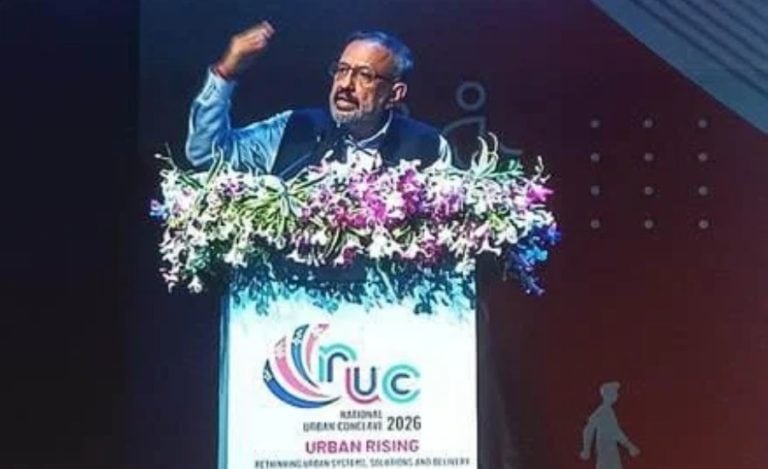
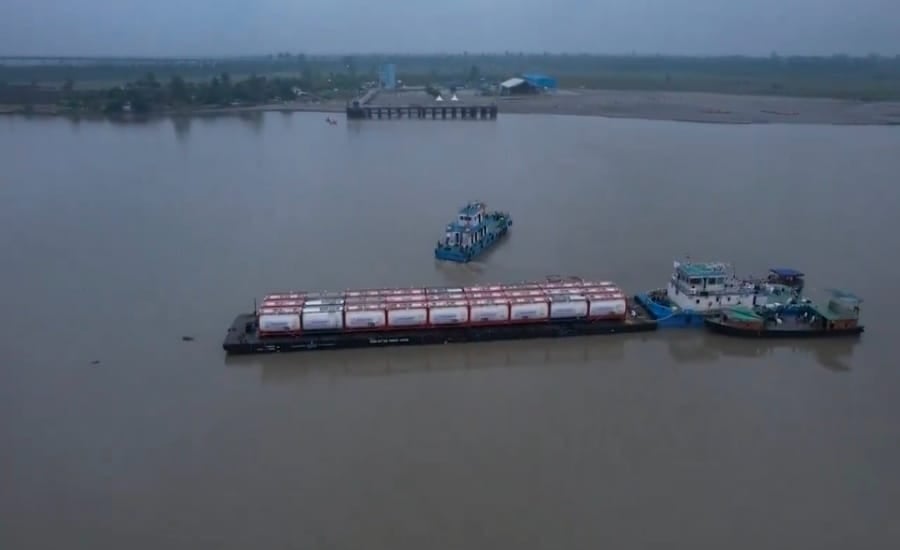
New Delhi: Assam’s River Trade Enters a New Chapter,Dibrugarh has marked a major milestone in Assam’s river-based trade after a barge carrying 540 metric tonnes of methanol set sail from Bogibeel Terminal for Dhaka, Bangladesh. The shipment, flagged off by Union Minister Sarbananda Sonowal on October 5, is being described as the first cargo from upper Assam to a foreign port since Independence.
Assam Chief Minister Dr Himanta Biswa Sarma joined the flag-off ceremony virtually. The methanol, produced by state-owned Assam Petro-Chemicals Ltd. (APCL) at Namrup, will travel through the Brahmaputra before entering the Indo-Bangladesh Protocol Route for its onward journey to Bangladesh.
The voyage is also testing the potential of the Brahmaputra as an international freight corridor that could connect Assam and the wider Northeast with overseas markets.
1,300-Km Journey From Assam to Dhaka
The vessel DLB Patkai, pushed by the tug Kushal Konwar, began its journey from Bogibeel. It will cover around 768 km on National Waterway-2 (NW-2) along the Brahmaputra to reach the India-Bangladesh border.
From there, the vessel will continue through the Indo-Bangladesh Protocol Route, covering approximately 1,300 km in total from Bogibeel in Dibrugarh to Narayanganj in Dhaka.
The cargo is bound for Pangaon Port in Dhaka, marking an important step in expanding waterways-based trade between India’s Northeast and neighbouring countries.
Regular methanol shipments to Bangladesh are also planned, indicating that the present voyage could become the beginning of a sustained cargo movement on the route.
Why the Brahmaputra Route Matters
The movement of cargo by river could provide an alternative to road and rail transportation for industries in the Northeast. It can help move bulk commodities over long distances while potentially reducing pressure on highways and fuel consumption.
Union Minister Sarbananda Sonowal said the shipment represented the beginning of a larger revival of Dibrugarh’s river-based economy.
The journey has become possible after customs and immigration facilities were recently established at Bogibeel and Dhubri, allowing international cargo movement to operate through the waterway.
The Ministry of Ports, Shipping and Waterways has also been expanding infrastructure and services on India’s national waterways. Cargo movement through national waterways increased from 18 million metric tonnes in 2013-14 to 218 million metric tonnes in 2025-26, according to the ministry.
Dibrugarh’s Lost River-Port Legacy
The latest voyage also revives a chapter from Dibrugarh’s commercial history.
The town was once an important river port in eastern India. Government steamers reached Dibrugarh from Calcutta, now Kolkata, as early as the 19th century. The Dibru-Sadiya Railway began operations from the Dibrugarh steamer ghat in 1882, while regular steamer services later carried tea, timber and passengers along the Brahmaputra.
However, the Partition of 1947 disrupted Assam’s traditional trade routes. The 1950 earthquake also altered the riverbed around Dibrugarh. Regular bookings from Dibrugarh Ghat stopped in 1954, and the ghat eventually closed on October 15, 1956.
Cross-border river trade was further affected by the 1965 India-Pakistan war.
India and Bangladesh later signed a river trade protocol in 1972, providing the foundation for renewed waterways connectivity between the two countries.
From National Waterway to International Freight Corridor
The 891-km stretch of the Brahmaputra from Sadiya to Dhubri was declared National Waterway-2 in 1988. However, regular cargo services on the waterway took several decades to develop.
A major step came in December 2017, when cement began moving between Pandu and Dhubri.
Since then, activity on the route has gradually expanded. Tata Steel barges reached Pandu through Bangladesh in 2022, while the MV Ganga Vilas river cruise travelled from Varanasi to Dibrugarh through Bangladesh in 2023.
The Bogibeel passenger and cargo terminal, whose foundation stone was laid in July 2023, became operational in February 2024. The Jalvahak cargo incentive programme, launched in December 2024, has further supported cargo movement through waterways.
Investment in Northeast Waterways
The Centre is also investing heavily in the region’s inland water transport network.
More than ₹6,800 crore is being invested in waterways infrastructure across the Northeast, including the development of National Waterway-2, a ship repair facility at Pandu and last-mile connectivity to Pandu Port.
The latest Dibrugarh-Bangladesh shipment could strengthen the economic case for these investments by demonstrating how the Brahmaputra can support commercial cargo movement beyond India’s borders.
For Assam’s industries, the route could eventually offer another way to access markets in Bangladesh and other parts of the region.
A New Gateway for the Northeast
The Dibrugarh shipment carries significance beyond the 540 tonnes of methanol on board. It brings together Assam’s industrial production, the Brahmaputra’s waterways network and an international trade route with Bangladesh.
Sonowal described the voyage as the first step rather than the final destination, while Sarma called it a proud moment for Assam, highlighting that a product made in Namrup was travelling to an international market on Assam’s own river.
If regular cargo services expand, the Brahmaputra could play a larger role in connecting the Northeast with regional and overseas markets. For Dibrugarh, the voyage represents the revival of a river-port legacy that had remained dormant for decades.