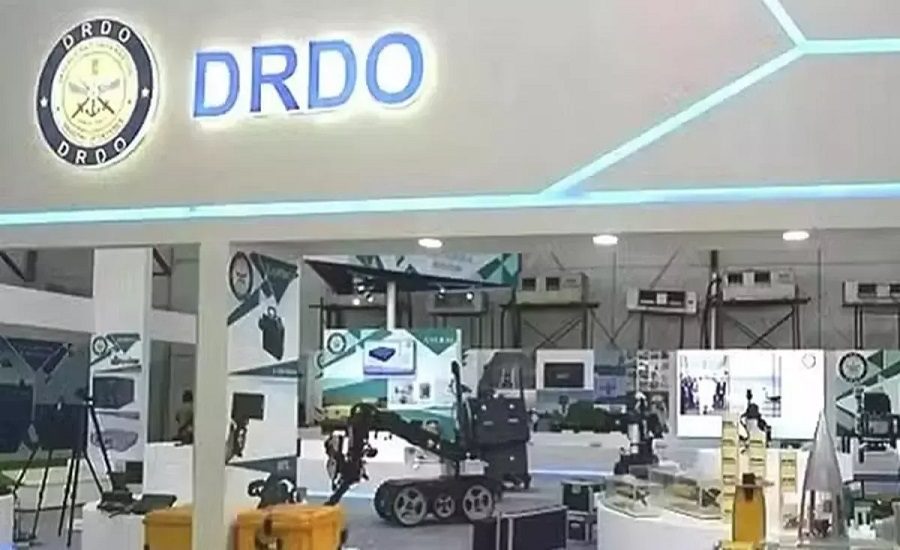
New Delhi: India is rapidly strengthening its futuristic warfare capabilities with the development of a 300 kW Directed Energy Weapon (DEW) by the Defence Research and Development Organisation (DRDO).
The new DRDO Directed Energy Weapon project is designed to intercept drone swarms, missiles, and aerial threats with extreme precision and at a much lower operational cost than traditional missile systems.
The project is being led by DRDO’s Centre for High Energy Systems and Sciences (CHESS), Hyderabad, which has already demonstrated success with its Mk-II(A) laser-based DEW systems.
What is DRDO Directed Energy Weapon?
A Directed Energy Weapon uses highly focused laser energy instead of physical ammunition to destroy or disable enemy targets. Unlike missiles or bullets, laser weapons strike targets at the speed of light.
The proposed 300 kW scalable DEW is expected to be significantly more powerful than DRDO’s already tested 30 kW Mk-II(A) laser weapon system. Defence experts say such high-energy laser systems can eventually neutralise:
- Drone swarms
- Loitering munitions
- Cruise missiles
- Enemy surveillance systems
- Low-flying aircraft
- Electronic sensors and radars
The system is part of India’s broader push toward advanced and indigenous defence technologies under the “Aatmanirbhar Bharat” initiative.
Details of DRDO Directed Energy Weapon
The Centre for High Energy Systems and Sciences (CHESS), a DRDO laboratory in Hyderabad, is the key organisation behind India’s high-energy laser weapon research.
CHESS has been working on:
- High-power laser systems
- Beam control technologies
- Optical tracking systems
- Laser materials and stabilisation systems
Bharat Electronics Limited (BEL) has also signed technology transfer agreements with CHESS for manufacturing critical laser weapon components in India.
How the DRDO Directed Energy Weapon Works
The Directed Energy Weapon detects targets using radar and electro-optical systems. Once locked onto a target, it fires an extremely concentrated laser beam.
The laser:
- Heats the target rapidly
- Damages structural components
- Burns sensors and electronics
- Causes system failure within seconds
Because the weapon uses electrical power instead of expensive interceptor missiles, the cost per shot is extremely low.
According to DRDO-linked reports, a few seconds of laser firing may cost only as much as a few litres of fuel.
Why Drone Swarms Are a Big Threat
Modern warfare has changed rapidly because of cheap drones and swarm attacks.
Countries across the world are now developing anti-drone technologies because:
- Drone swarms can overwhelm traditional air defence systems
- Small drones are difficult to detect
- Missile-based interception is expensive
- Drones can carry explosives or surveillance equipment
Recent global conflicts, including the Russia-Ukraine war, have shown how dangerous drone warfare can become.
India’s laser-based DEW system is being designed as a cost-effective answer to these growing aerial threats.
India Already Tested a 30 kW Laser Weapon
In April 2025, DRDO successfully demonstrated the indigenous Mk-II(A) Laser Directed Energy Weapon at the National Open Air Range in Kurnool, Andhra Pradesh.
The system reportedly:
- Destroyed fixed-wing drones
- Countered coordinated drone attacks
- Neutralised enemy sensors and antennae
- Worked with high precision within seconds
The successful trial placed India among a small group of nations with advanced laser weapon capabilities, including the United States, China, and Russia.
Why the 300 kW Upgrade Matters
The planned 300 kW scalable system represents a major jump in power and operational capability.
Higher laser power could allow:
- Longer engagement ranges
- Faster target destruction
- Improved performance against missiles
- Better swarm neutralisation capability
- Continuous battlefield operation
Defence analysts believe scalable laser systems may eventually be deployed on:
- Military trucks
- Naval warships
- Air defence platforms
- Future combat aircraft
Such systems could dramatically reduce reliance on expensive conventional air-defence ammunition.
What is the Importance of DRDO Directed Energy Weapon
The development of advanced Directed Energy Weapons is strategically important for India because of evolving security challenges along the borders.
Laser weapons provide several advantages:
- Precision targeting
- Minimal collateral damage
- Silent operation
- Instant engagement
- Lower operational cost
- Unlimited ammunition potential with sufficient power supply
Experts believe these systems could become critical for defending:
- Border regions
- Strategic military bases
- Naval assets
- High-value infrastructure
The technology may also strengthen India’s export potential in the future defence market.
Read also: Indian Navy 2035 Vision: Inside the 200 Warships Induction Under Atmanirbhar Bharat Plan