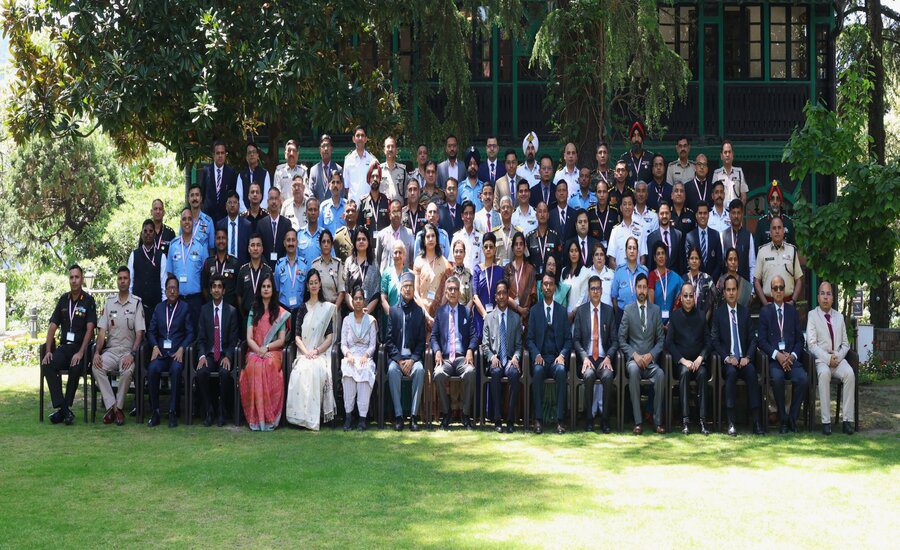
New Delhi: The Joint Civil-Military Programme on National Security has officially begun at India’s premier training institute, bringing together top civil and military officers to strengthen coordination.
The 32nd edition of this high-level programme commenced at the Lal Bahadur Shastri National Academy of Administration (LBSNAA) on April 20, 2026.
This two-week initiative focuses on improving civil-military synergy, enhancing strategic understanding, and building a unified approach to national security challenges in India.
What is the Joint Civil-Military Programme?
The Joint Civil-Military (JCM) Programme is a structured training initiative designed to bring together officers from civil services and the armed forces. It aims to build mutual understanding between two key pillars of governance—administration and defense.
The 32nd programme is scheduled from April 20 to May 1, 2026, making it a focused two-week engagement. This programme is conducted at LBSNAA, Mussoorie, which is India’s top academy for training IAS officers and other civil servants.
What is the Importance of 32th Joint Civil-Military Programme
India’s security environment is becoming more complex.
Challenges today include:
- Border tensions
- Cyber threats
- Internal security issues
- Disaster management
To handle these, coordination between civil and military leadership is critical.
The JCM programme plays a key role in:
- Building joint decision-making skills
- Improving communication between institutions
- Aligning strategic priorities
This ensures faster and more effective responses during crises.
Key Objectives of the 32th Joint Civil-Military Programme
According to official sources, the programme focuses on:
1. Strengthening Civil-Military Synergy
Participants learn how both systems function and how to work together effectively.
2. Shared Strategic Understanding
Officers gain insights into national security strategies and defense policies.
3. Collaborative Security Frameworks
The programme promotes joint approaches to security planning and crisis management.
4. Practical Exposure
Sessions often include case studies, simulations, and expert lectures.
Role of LBSNAA in Capacity Building
The Lal Bahadur Shastri National Academy of Administration (LBSNAA) plays a central role in shaping India’s administrative leadership.
The 32nd Joint Civil-Military (JCM) Programme on National Security commenced at LBSNAA on 20 April, 2026. The 2-week programme aims to strengthen civil-military synergy and shared strategic understanding, while fostering informed perspectives on collaborative security frameworks. pic.twitter.com/ytqa68jy58
— LBSNAA (@LBSNAA_Official) April 20, 2026
It regularly conducts:
- Mid-career training programmes
- Specialized governance workshops
- Joint training with armed forces
The JCM programme is part of its broader mission to create future-ready officers who can handle complex governance and security challenges.
Growing Importance of Civil-Military Cooperation in India
India has been increasingly focusing on jointness in governance and defense.
Recent reforms highlight this trend:
- Creation of integrated defense structures
- Emphasis on inter-agency coordination
- Focus on national security strategy alignment
Programs like JCM support these reforms by training officers early in their careers.
Strategic Impact on Governance
The long-term impact of the programme is significant.
It helps in:
- Faster decision-making during emergencies
- Better coordination during disasters
- Stronger national security planning
Ultimately, it leads to a more integrated governance system.
Conclusion
The launch of the 32nd Joint Civil-Military Programme on National Security at LBSNAA reflects India’s strong focus on building a coordinated and resilient security framework.
By bringing civil and military leaders together, the programme ensures that India is better prepared to face modern security challenges with a unified approach.