https://indianmasterminds.com

ADVERTISEMENT
ADVERTISEMENT

Mission Karmayogi Expansion: Administrative Capacity Building Programme Targets Scientists and Academic Leaders

India introduces a first-ever Administrative Capacity Building Programme for Scientists under Mission Karmayogi to equip academia leaders with governance and leadership skills.
Administrative Capacity Building Programme for Scientists
Indian Masterminds Stories

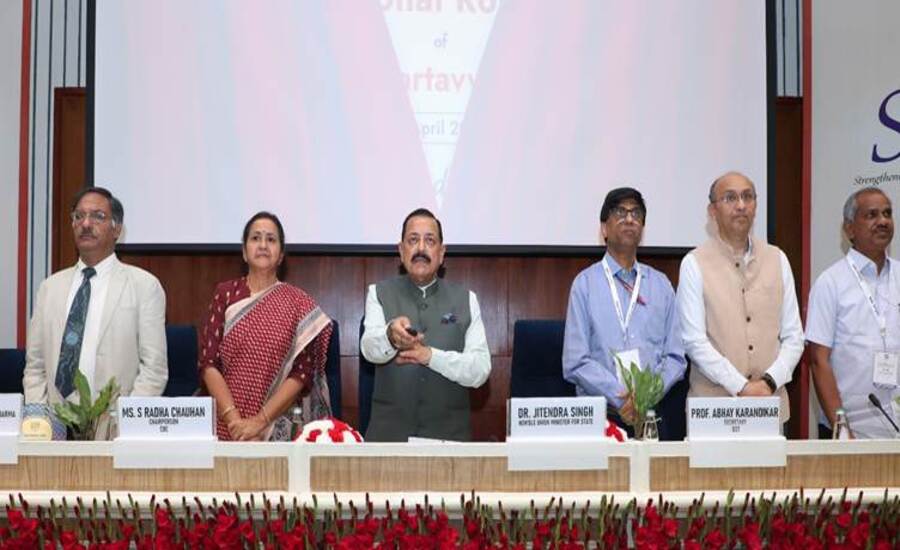
New Delhi: India has taken a major step to strengthen governance skills in the scientific community with the launch of the Administrative Capacity Building Programme for Scientists under Mission Karmayogi. Announced by Dr Jitendra Singh, this initiative focuses on equipping scientists and academicians with administrative and decision-making abilities. 

The programme aims to bridge the long-standing gap between scientific expertise and governance responsibilities, ensuring that leaders in academia can effectively contribute to policy-making and institutional management.

What is the Administrative Capacity Building Programme for Scientists

The newly launched programme is the first-of-its-kind structured administrative training initiative designed specifically for scientists and academicians in India.

Read also: Himachal Pradesh Makes ‘Karmayogi’ Course Mandatory for IAS, IPS, & IFS Officers to Boost Skill Development

Key Objectives:

  • Build governance and leadership skills
  • Improve decision-making capabilities
  • Prepare scientists for administrative roles
  • Align academic leadership with national policy frameworks

This programme is part of the broader Mission Karmayogi, which focuses on civil services reform and capacity building.

Why Administrative Capacity Building Programme for Scientists Program is Important

According to official statements, scientists and academicians often take leadership roles without formal administrative training.

Major Challenges Identified:

  • Lack of structured governance training
  • Limited exposure to administrative systems
  • Dependence on self-learning methods
  • Difficulty adapting to leadership roles

This initiative directly addresses these issues by offering formal and structured training modules.

Role of Capacity Building Commission (CBC)

The Capacity Building Commission (CBC) will play a central role in designing and implementing the programme.

Key Developments:

  • Development of specialized training modules
  • Focus on answering Parliamentary Questions
  • Orientation programmes for Assistant Secretaries
  • Short-term governance training for early-career officials

These steps aim to strengthen procedural understanding and governance efficiency.

Shift from Rule-Based to Role-Based Governance

One of the major highlights of the announcement was the push towards role-based governance.

What This Means:

  • Moving beyond rigid rules
  • Encouraging adaptability and innovation
  • Promoting cross-domain decision-making
  • Breaking administrative silos

The government emphasized that “the age of silos is over”, and collaboration is now essential.

Integration of Technology and AI

The programme also focuses on adapting to modern technologies.

Key Focus Areas:

  • Use of Artificial Intelligence (AI) in governance
  • Balancing technology with human judgment
  • Preparing institutions for rapid technological change

This ensures that governance systems remain future-ready.

Strengthening Institutional Ecosystem

Several complementary initiatives were also launched to support this programme.

Important Announcements:

  • Revamped UNNATI Portal for capacity building
  • National rollout of Karmayogi Karyakram
  • MoU between CBC and Research and Information System (RIS)
  • Focus on global knowledge partnerships

These efforts aim to create a robust and collaborative training ecosystem.

Making Governance More Inclusive and Adaptive

Officials highlighted the need to make public institutions:

  • More adaptive
  • More humane
  • More technology-driven

There is also a strong focus on:

  • Expanding access to training
  • Improving collaboration across institutions
  • Scaling up capacity-building efforts

What This Means for India

This programme is expected to:

  • Improve leadership in scientific institutions
  • Enhance policy implementation
  • Strengthen governance systems
  • Build globally competitive administrative capabilities

It marks a significant step towards modernizing India’s administrative framework.

Read also: From Rule-Based to Role-Based: Mission Karmayogi Presents AI Capacity Building Model

Indian Masterminds Stories
Join our WhatsApp Channel
ADVERTISEMENT
ADVERTISEMENT
Related Stories
ADVERTISEMENT
ADVERTISEMENT
NEWS
Mumbai Meet Proposals
CM Mohan Yadav Announces ₹1,550 Crore Investment Proposals for Gwalior Telecom Manufacturing Zone at Mumbai Meet
Gwalior Telecom Manufacturing Zone
CM Mohan Yadav Invites Telecom Investments in Madhya Pradesh, Gwalior Telecom Manufacturing Zone to Create 10,000 Jobs
ONGC deepwater Rig Tender
ONGC Q1 FY27 Results: Standalone Net Profit Surges 112% to ₹17,034 Crore, Consolidated Profit Drops 43% 
Shibu Soren Statue
CM Hemant Soren Unveils 14-Foot Statue of Dishom Guru Shibu Soren in Ramgarh on First Death Anniversary
CAPFs
Supreme Court Issues Notice on Pleas Challenging CAPF Act 2026 Over IPS Deputation; Seeks Centre's Response
IAS Rinkoo Singh Rahee
IAS vs Lawyers: Jalaun Bar Boycotts Revenue Courts Over SDM Rinkoo Singh Rahee’s Working Style
DCI Dredging Corporation of India
Dredging Corporation of India Q1 FY27 Results: Revenue Surges 46.7% YoY to ₹355 Crore, Returns to Profit
SECI CEEW MoU
SECI, CEEW Sign MoU to Accelerate India's Clean Energy Transition Through Next-Generation Renewable Energy 
ADVERTISEMENT
ADVERTISEMENT
Videos
Sumit Ramteke tn
IPS Sumit Ramteke on the Cases That Changed His Career and Shook Organized Crime | Video Interview
How NAFED is Strengthening Farmers, Markets and Food Security
Piyusha Jagtap
How IFS Piyusha Jagtap Is Changing Conservation Through Stories, Communities and Compassion | Video Interview
ADVERTISEMENT
UPSC Stories
sandeep sahu
Why Sandeep Kumar Sahu Believed in Plan B Before Chasing Plan A
Working full-time for nine years, supporting his family and preparing through self-study, Sandeep Kumar...
Deepak Bhagel UPSC
The UPSC Strategy That Changed Everything for AIR 602 Deepak Baghel
UPSC CSE 2025 AIR 602 Deepak Baghel shares how self-study, simplifying preparation, learning from setbacks,...
Abhay Raghav UPSC IFS 2025
How an IIT-BHU Graduate and Former NVIDIA Engineer Abhay Raghav Turned a 3-Mark Setback into Success
Read how Abhay Raghav, an IIT-BHU graduate and former NVIDIA engineer, secured AIR 19 in UPSC IFS 2025...
CSR NEWS
GRID-INDIA ALIMCO
GRID-INDIA Signs MoU with ALIMCO to Provide Assistive Devices to Persons with Disabilities
The CSR partnership aims to promote accessibility, independence and social inclusion by providing assistive...
Project Poshit
WCL Signs MoU with Zilla Parishad Gadchiroli to Launch Project Poshit for Maternal Nutrition 
Western Coalfields Limited has partnered with Zilla Parishad, Gadchiroli, to implement an Anganwadi-based...
wcl
Western Coalfields to Provide ₹2 Crore CSR Aid for Sevanand School Development in Koradi 
Western Coalfields Limited has signed an MoU with Shri Mahalakshmi Jagdamba Sansthan to strengthen educational...
ADVERTISEMENT
ADVERTISEMENT
ADVERTISEMENT
Latest
Mumbai Meet Proposals
CM Mohan Yadav Announces ₹1,550 Crore Investment Proposals for Gwalior Telecom Manufacturing Zone at Mumbai Meet
Gwalior Telecom Manufacturing Zone
CM Mohan Yadav Invites Telecom Investments in Madhya Pradesh, Gwalior Telecom Manufacturing Zone to Create 10,000 Jobs
ADVERTISEMENT
ADVERTISEMENT
ADVERTISEMENT
ADVERTISEMENT
ADVERTISEMENT
ADVERTISEMENT
ADVERTISEMENT
Videos
Sumit Ramteke tn
How NAFED is Strengthening Farmers, Markets and Food Security
Piyusha Jagtap
ADVERTISEMENT
ADVERTISEMENT