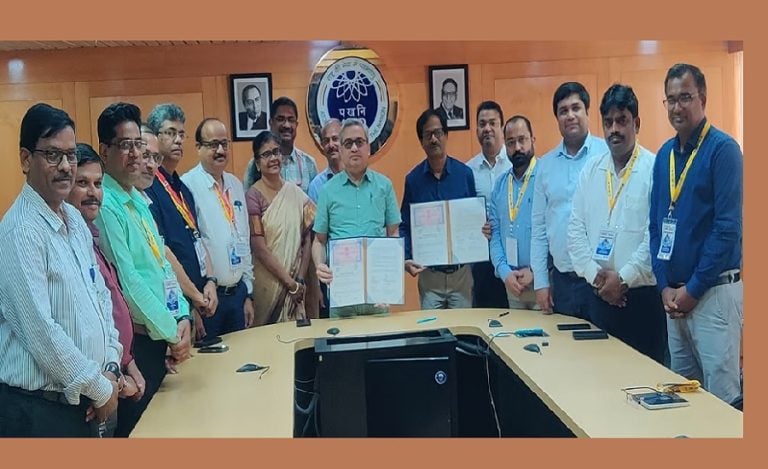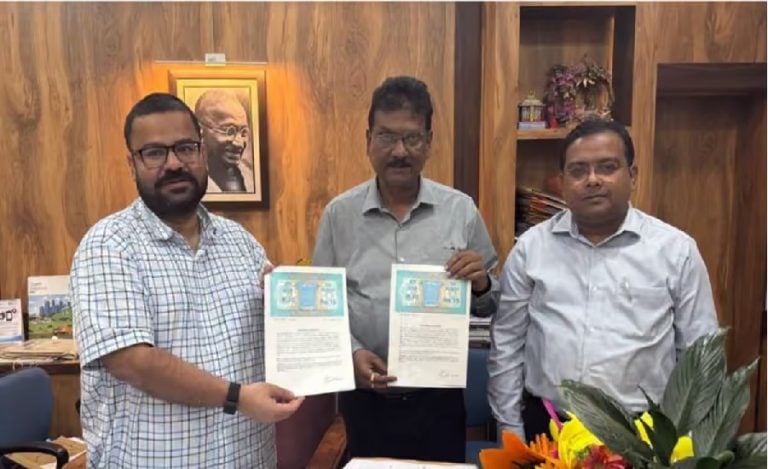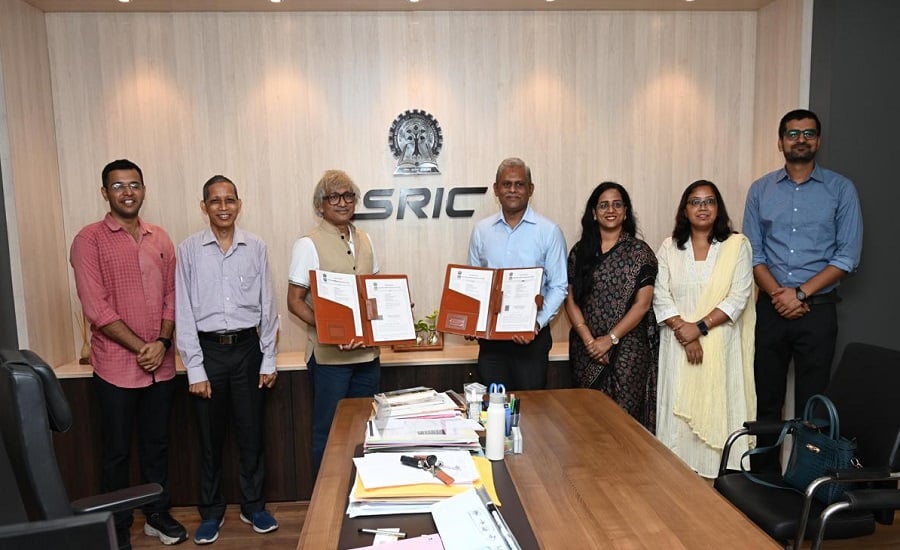
New Delhi: GRID-INDIA’s Northern Regional Load Despatch Centre (NRLDC) and IIT Kharagpur have signed a Memorandum of Understanding (MoU) to undertake research aimed at strengthening power-system stability amid the growing integration of renewable and inverter-based energy resources.
The MoU was signed on September 3, 2026, for an R&D project titled “Online Inertia Estimation and Adaptive/Synthetic Inertia Requirement for Stability Improvement of Low-SCR Power Systems with Protection Performance Evaluation.”
The collaboration brings together NRLDC’s expertise in real-time grid operation and IIT Kharagpur’s research capabilities to address emerging challenges associated with low-inertia and low-system-strength power networks.
NRLDC and IIT Kharagpur Join Hands for Grid Stability Research
The research project focuses on the changing requirements of India’s power system as the share of renewable energy and inverter-based resources continues to increase.
The MoU was signed by:
- Sajan George, Executive Director, NRLDC
- Prof. Surjya Kanta Pal, Dean (R&D), IIT Kharagpur
The partnership is aimed at developing practical tools and methodologies that can help grid operators assess and improve system stability under evolving operating conditions.
Read also: GRID-INDIA Signs MoU with ALIMCO to Provide Assistive Devices to Persons with Disabilities
Project to Focus on Low Short-Circuit Ratio Power Systems
A key focus of the project is the operation of power systems under low Short-Circuit Ratio (SCR) conditions.
SCR is commonly used as an indicator of system strength. As more inverter-based renewable generation is connected to the grid, some areas can experience lower system strength, creating additional challenges for stable grid operation.
The research will examine how available and synthetic inertia can be assessed across different SCR levels and how grid protection systems perform under such conditions.
Online Inertia Estimation and Synthetic Inertia to Be Studied
The project will develop tools for online inertia estimation and assessment of adaptive and synthetic inertia requirements.
Key areas of research include:
- Online estimation of power-system inertia
- Assessment of synthetic inertia requirements
- Analysis across different low-SCR conditions
- Study of Grid-Forming (GFM) inverters
- Study of Grid-Following (GFL) inverters
- Evaluation of protection algorithms under low-inertia conditions
- Assessment of protection performance in low-SCR systems
These studies are expected to help improve understanding of system stability as renewable and inverter-based generation becomes more prominent.
Grid-Forming and Grid-Following Inverters Under Study
The research will cover both Grid-Forming (GFM) and Grid-Following (GFL) inverter technologies.
This is significant because inverter-based resources are increasingly becoming an important part of modern power systems. Understanding their behaviour under different system-strength and inertia conditions can support more reliable grid planning and operation.
The project will also examine the interaction between low inertia, low SCR conditions and protection performance.
Research to Address Renewable Energy Integration Challenges
The growing contribution of renewable energy is transforming traditional power-system operating conditions. Unlike conventional generation technologies, inverter-based renewable resources have different characteristics related to inertia and system strength.
The NRLDC-IIT Kharagpur collaboration is therefore expected to contribute to the development of methods for assessing stability and protection requirements in an increasingly inverter-dominated grid.
The research could support:
- Better assessment of grid stability
- Improved understanding of system inertia
- Evaluation of synthetic inertia requirements
- More effective protection-system assessment
- Greater preparedness for higher renewable-energy integration
GRID-INDIA and IIT Kharagpur Combine Operational and Research Expertise
The MoU combines GRID-INDIA’s practical experience in grid operation and system management with IIT Kharagpur’s academic and research capabilities.
The collaboration is expected to help develop practical tools that can be used to address emerging stability challenges and support the reliable operation of India’s evolving power system.
With renewable and inverter-based generation continuing to expand, research into inertia, system strength, protection and stability is becoming increasingly important for building a future-ready electricity grid.
About GRID-INDIA
Grid Controller of India Limited (GRID-INDIA) is responsible for critical functions related to the operation and management of India’s power grid. Its regional load despatch centres play an important role in maintaining grid reliability, coordinating power flows and supporting the secure operation of the national electricity system.