Mumbai: The Gujarat government has expanded the financial powers of district collectors and District Development Officers (DDOs) for government land allotments, a move aimed at allowing more cases to be decided at the district level instead of being referred to the state government in Gandhinagar.
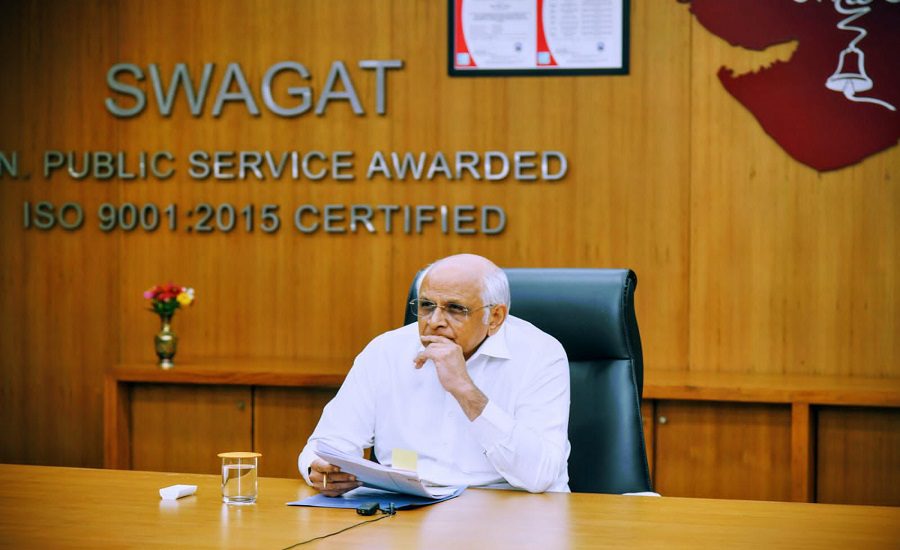
Under the revised policy announced by Chief Minister Bhupendra Patel, district collectors can now approve certain government land allotment proposals valued at up to Rs 1 crore, a significant increase from the earlier ceiling of Rs 15 lakh.
The financial powers of DDOs for allotment of village-site, or gamtal, land have also been increased. For individual residential plots, the ceiling has been raised from Rs 20,000 to Rs 1 lakh, with corresponding increases for cooperative housing societies and certain rural institutions.
The changes are expected to reduce the number of cases requiring state-level approval. However, retired administrators say the real impact will depend on how district administrations use their enhanced authority and whether procedural safeguards remain intact.
Why Gujarat Increased Collectors’ Financial Powers
The revision comes against the backdrop of a straightforward administrative problem: land values have risen substantially over the years, while the financial limits governing district-level decision-making had remained comparatively low.
As a result, proposals that could otherwise be examined and processed within a district often had to be sent to Gandhinagar simply because the monetary value of the land crossed the collector’s delegated financial ceiling.
Retired IAS officer CR Kharsan, who served as District Magistrate of Valsad, described the revision as overdue.
According to Kharsan, the change does not fundamentally alter the nature of a collector’s responsibilities. Instead, it increases the value of cases that can be resolved at the district level without requiring approval from the state government.
“When the value of land keeps increasing but the delegation of financial powers remains at an old level, increasingly even routine cases have to be sent to the higher authority,” Kharsan said.
The revised limits therefore seek to bring the financial delegation more in line with present-day land values.
Read also: Gujarat Shuffles Senior IAS Officers; Rajkumar Beniwal Moves to Surat Municipal Corporation
Collector’s Ceiling Raised From Rs 15 Lakh to Rs 1 Crore
One of the most significant changes concerns government land allotted to state boards and corporations.
Previously, district collectors could decide proposals up to Rs 15 lakh. The ceiling has now been increased to Rs 1 crore.
The collectors’ financial authority has also been enhanced for land allotments involving Central Government departments, individuals and cooperative housing societies.
The higher ceilings mean that a larger number of proposals can potentially be disposed of within the district administration.
Instead of completing the required district-level scrutiny and then sending the file to Gandhinagar merely because the land value exceeded Rs 15 lakh, collectors can now take decisions on cases falling within the revised Rs 1 crore limit.
This could reduce file movement between district offices and the state secretariat.
However, retired administrators caution that the change should not be interpreted as an automatic relaxation of the conditions governing government land allotment.
More Financial Power Does Not Mean Fewer Checks
Every government land allotment still requires scrutiny on several fronts.
Officials have to examine land records, valuation, the purpose for which the land is sought, eligibility of the applicant or institution, availability of land and applicable government resolutions and rules.
Kharsan pointed out that much of this groundwork is carried out at the district level regardless of which authority ultimately takes the final decision.
“There is a difference between scrutiny and the movement of a file,” he said.
In his view, the verification process itself does not disappear simply because the collector now has greater financial powers. Previously, once a proposal crossed the collector’s financial threshold, the file had to move to the state government even after much of the necessary groundwork had already been completed at the district level.
The new system could therefore reduce administrative movement without necessarily eliminating substantive scrutiny.
Will Fewer Referrals Mean Faster Land Allotments?
The central objective of the policy is to enable more cases to be resolved locally.
But whether fewer referrals to Gandhinagar will automatically translate into faster land allotments remains to be seen.
The time taken to process a land proposal depends not only on the level of approval but also on the quality of land records, valuation exercises, verification of eligibility and compliance with existing government rules.
Kharsan also cautioned against portraying every state-level referral as an unnecessary delay.
When valuable government land is involved, additional scrutiny can serve an important purpose. Government land is a public asset, and decisions involving its allotment can have long-term financial and administrative consequences.
Therefore, the revised policy is essentially a delegation of decision-making power, rather than a removal of safeguards.
DDOs Also Get Higher Powers for Gamtal Land
The government has simultaneously increased the financial powers of District Development Officers for village-site, or gamtal, land.
The most notable change is for individual residential plots, where the DDO’s clearance ceiling has increased from Rs 20,000 to Rs 1 lakh.
The financial limits have also been proportionately increased for cooperative housing societies and specific rural institutions.
The change is particularly relevant to routine village-site land matters that are handled through the rural administrative and Panchayati Raj machinery.
Retired IAS officer Punamchand Parmar, who previously served as DDO of Mehsana, said the earlier Rs 20,000 ceiling itself demonstrated why a revision was necessary.
“When the financial delegation remains so low, an officer may have the administrative machinery and local information necessary to process a case, but cannot take it to its logical conclusion simply because the monetary value crosses their authority,” Parmar said.
What Could Change at the District Level?
According to Parmar, the higher ceiling could streamline routine gamtal matters because the district panchayat, taluka and village administrations already possess much of the information required to process such cases.
Under the earlier system, even relatively small-value cases could encounter another level of approval if their assessed value exceeded the DDO’s delegated financial authority.
The revised limit gives district-level administration greater room to dispose of such cases without automatically escalating them.
But Parmar stressed that the higher ceiling should not be mistaken for unrestricted authority.
A DDO cannot simply allot a plot because its value falls below Rs 1 lakh. The proposal must still satisfy requirements relating to eligibility, purpose, availability of land, valuation and existing government resolutions.
The principal change is that smaller-value cases can now be finally resolved at the district level.
Promotion of Decentralised Decision-Making
The policy represents a broader move towards administrative decentralisation.
By giving district collectors and DDOs greater financial authority, the state government is effectively allowing officials closer to the ground to take decisions on a larger share of land-allotment cases.
The logic is that district administrations are already responsible for examining the local circumstances of such proposals. Giving them adequate financial powers could reduce unnecessary movement of files between district offices and the state capital.
This could potentially improve administrative efficiency, particularly in routine cases where the substantive groundwork has already been completed locally.
At the same time, decentralisation places greater responsibility on district-level officers.
Greater Power Also Brings Greater Accountability
The expanded authority means district officials will have to exercise greater care in decisions involving government land.
Kharsan emphasised that delegation of power should not result in dilution of procedure.
Government land is a public asset, and its valuation, records and allotment must be capable of withstanding scrutiny, including audit.
Objective valuation is particularly important because land prices can vary considerably between locations and because government land allotments can have significant financial implications.
The higher financial ceiling therefore needs to be accompanied by strong documentation and transparent decision-making.
Risk of Different Interpretations Across Districts
One of the potential challenges of decentralising decision-making is ensuring that similar cases are treated similarly across different districts.
Kharsan pointed to the possibility that comparable proposals could receive different treatment if district administrations interpret the rules differently.
“When powers are decentralised, accountability must travel with them,” he said.
The concern is that greater discretion at the district level could create variations in how government resolutions, eligibility requirements, valuation principles or other conditions are applied.
Uniform guidelines and effective monitoring will therefore remain important even as more authority is delegated to district officials.
What the Change Does Not Mean
The revised policy does not mean that collectors or DDOs can allot government land solely on the basis of the revised financial ceilings.
The higher limits determine which authority can take the financial decision; they do not eliminate the substantive conditions attached to an allotment.
Land records still need to be verified. The purpose of allotment must remain permissible. The applicant or institution must meet the relevant eligibility criteria. Valuation must be undertaken appropriately, and applicable government orders and resolutions must continue to be followed.
In other words, the change is primarily about where a decision can be taken and the value of cases that can be decided there, rather than about relaxing the underlying rules for government land allotment.
The Bigger Test: Speed With Safeguards
For Gujarat’s district administrations, the policy could bring a meaningful reduction in the number of land-allotment files that have to travel to Gandhinagar.
Collectors now have authority to decide proposals worth up to Rs 1 crore in the specified categories, compared with the earlier Rs 15 lakh ceiling. DDOs have similarly received greater authority over smaller-value gamtal land cases.
The potential benefit is clear: decisions could be taken closer to the people and institutions seeking the land, while reducing administrative movement between district offices and the state government.
But the ultimate success of the policy will depend on what happens after the financial powers are delegated.
As Parmar put it, speed alone cannot be the measure of success.
For the revised system to work effectively, faster decisions will need to go hand in hand with accurate records, objective valuation, proper eligibility checks, transparent procedures and consistent interpretation of rules across districts.
The Gujarat government’s decision therefore represents more than an increase in financial limits. It is a test of whether greater decentralisation can make government land administration more efficient without weakening the safeguards required when dealing with a valuable public asset.
Read also: Gujarat Honours 40 Outstanding Teachers with State Best Teacher Awards 2026