New Delhi: Experts, policymakers, scientists, forest officials and industry leaders have called for the accelerated adoption of carbon farming in India, highlighting its potential to support the country’s climate commitments while improving farmers’ incomes, soil health and sustainable land management.
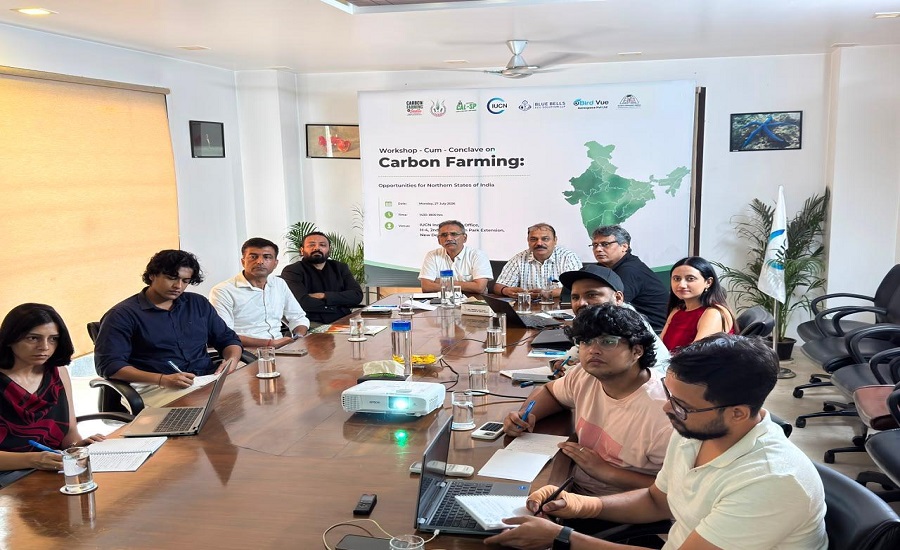
The call was made at the Workshop-cum-Conclave on Carbon Farming in India–2026, organised in New Delhi on 28 July 2026 by the Foundation for Agricultural Resources Management and Environmental Remediation (FARMER) in association with IUCN India, Climate Action & Leadership – Sustainable Partnership (CAL-SP), Blue Bells Eco Solutions LLP, Bird Vue Aerospace Pvt. Ltd. and Agro Organic India International Pvt. Ltd.
The conclave brought together experts from government, science, forestry, agriculture, environment and industry to discuss the opportunities and challenges associated with carbon farming and India’s emerging carbon market ecosystem.
Carbon Farming Seen as Key to Climate Action and Rural Development
The workshop focused on the growing role of carbon farming in helping India address climate change while creating additional economic opportunities for farmers.
Experts highlighted the potential of carbon farming to improve soil health, increase carbon sequestration, restore degraded landscapes, conserve biodiversity and generate additional income for farmers through carbon credit mechanisms.
The discussions also explored how sustainable agricultural practices and nature-based climate solutions can contribute to India’s long-term climate goals while strengthening rural livelihoods.
Experts Discuss India’s Carbon Credit Trading Scheme
A major focus of the conclave was India’s evolving carbon market and the Carbon Credit Trading Scheme (CCTS).
Participants discussed how carbon markets can encourage industries and institutions to reduce greenhouse gas emissions while creating new opportunities for climate finance and carbon credit generation.
Experts emphasised the need to develop robust Measurement, Reporting and Verification (MRV) systems to ensure that carbon reduction and sequestration claims are scientifically measurable and credible.
The discussions also highlighted the importance of strengthening institutional capacities, improving scientific carbon accounting and using advanced technologies to monitor carbon farming projects.
Technology to Strengthen Carbon Monitoring
Experts highlighted the growing role of technology in monitoring and verifying carbon farming and environmental restoration initiatives.
The technologies discussed during the conclave included:
- Remote sensing
- Drone-based monitoring
- Geographic Information Systems (GIS)
- Artificial Intelligence (AI)
- Digital monitoring platforms
- Digital Twin technologies
The adoption of these technologies can help improve the accuracy and transparency of carbon measurement while supporting the development of reliable carbon credit projects.
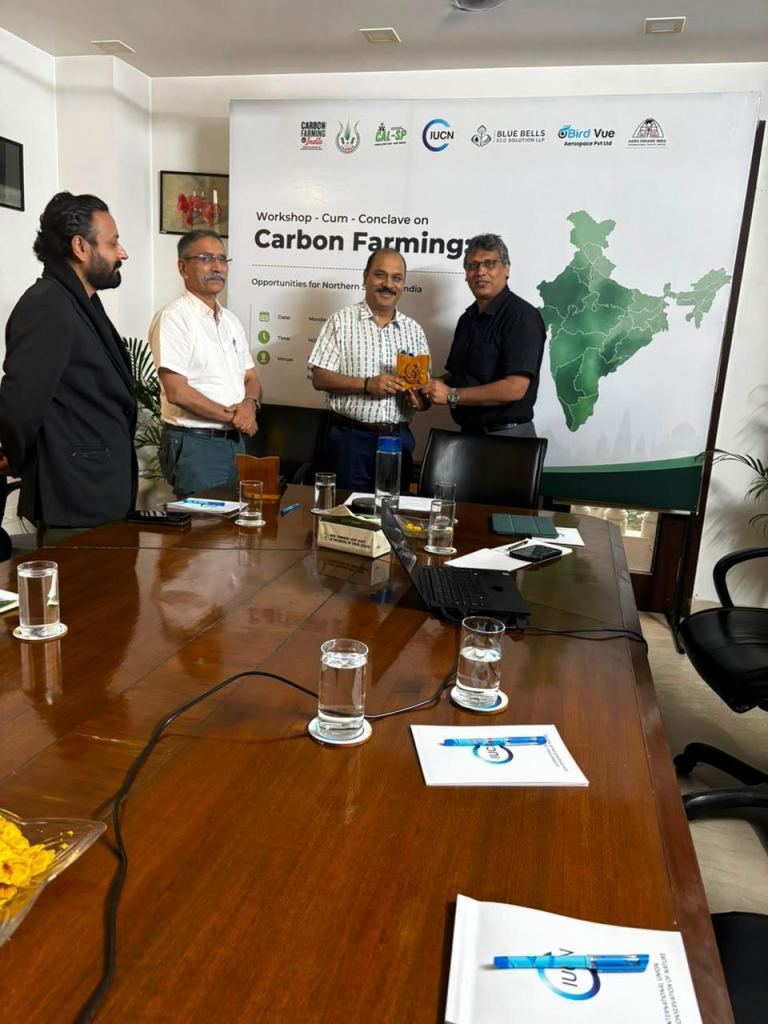
Dr Pradeep Monga Highlights Global Potential of Carbon Markets
Addressing the gathering, Dr. Pradeep Monga, former Deputy Executive Secretary of the United Nations Convention to Combat Desertification (UNCCD), highlighted the growing global significance of carbon markets.
He emphasised that India has considerable potential to emerge as a global leader in nature-based climate solutions through sustainable agriculture, agroforestry and ecosystem restoration.
The discussions underlined the opportunity for India to combine climate action with sustainable land management and rural economic development.
Focus on Forests, Landscape Restoration and India’s Climate Commitments
Dr. Vivek Saxena, IFS, Principal Chief Conservator of Forests, Government of Haryana and former Country Representative of IUCN, discussed the growing importance of India’s Carbon Credit Trading Scheme and its potential role in supporting emissions reduction and carbon finance.
Mr. Amit Anand, IFS (AGMUT:2010), Deputy Inspector General of Forests (DIGF), Ministry of Environment, Forest and Climate Change, Government of India, underlined the critical role of forests and landscape restoration in achieving India’s Nationally Determined Contributions (NDCs) and Net Zero commitments.
He also highlighted the importance of strengthening ecological resilience through sustainable land management and restoration initiatives.
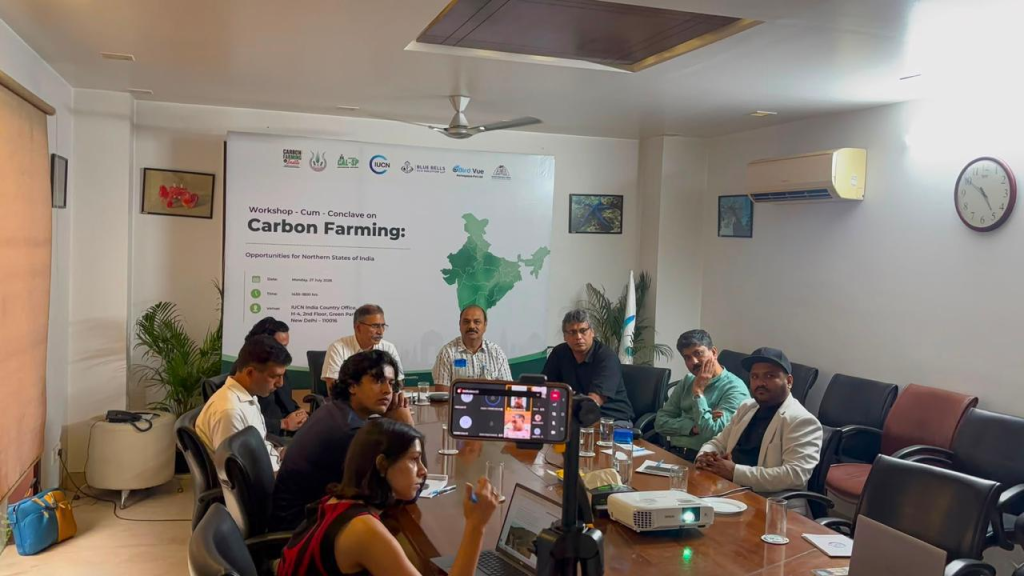
IUCN India Calls for Collaborative Climate Action
Dr. Yashveer Bhatnagar, Country Representative, IUCN India, stressed the importance of collaborative action involving governments, research institutions, civil society organisations and private-sector stakeholders.
He highlighted the need to scale up climate-resilient land-use practices and biodiversity conservation through coordinated efforts among different stakeholders.
The conclave emphasised that large-scale adoption of carbon farming will require cooperation across government agencies, farmers, research institutions, businesses and environmental organisations.
Capacity Building and Public-Private Partnerships Key to Carbon Farming
Sanjeev Kr. Chaudhary, Advisor, Corporate Partnership, CSR & ESG Projects, FARMER, emphasised the need to create greater awareness among industries, corporates, Farmer Producer Organisations (FPOs), forest departments and farmers about carbon markets, ESG compliance and carbon finance.
He noted that capacity building and public-private partnerships will be essential to accelerate the adoption of carbon farming across India.
Greater awareness and training can help farmers and other stakeholders understand carbon credit opportunities while enabling industries and corporates to participate more effectively in climate-focused initiatives.
Technical Sessions Explore Carbon Farming and Regenerative Agriculture
The technical sessions at the conclave covered a wide range of topics related to carbon farming, sustainable agriculture and climate finance.
Key areas discussed included:
- Carbon farming and regenerative agriculture
- Agroforestry-based carbon sequestration
- Carbon credit project development
- India’s Carbon Credit Trading Scheme (CCTS)
- ESG and corporate sustainability
- Biodiversity conservation
- Remote sensing and drone-based monitoring
- Digital Twin technologies
- Nature-based climate solutions
- Public-private partnerships for climate finance
The sessions focused on practical implementation models that can help convert carbon farming from a concept into scalable projects with measurable environmental and economic outcomes.
Experts Call for Multi-Stakeholder Carbon Farming Projects
Participants at the conclave unanimously agreed on the need to establish multi-stakeholder collaborations for pilot carbon farming projects.
The participants called for stronger policy support, greater capacity building for farmers and the development of scalable models that can deliver measurable environmental, social and economic benefits.
The discussions also highlighted the importance of developing credible carbon accounting and monitoring mechanisms to build trust in India’s emerging carbon market ecosystem.
Carbon Farming Can Support Farmers and Biodiversity
The conclave highlighted carbon farming as a potential pathway to achieve multiple benefits simultaneously.
By promoting practices that improve soil health and increase carbon sequestration, carbon farming can contribute to climate resilience while supporting sustainable agricultural production.
Agroforestry and ecosystem restoration can further help restore degraded land, improve biodiversity and strengthen ecological resilience. At the same time, carbon credit mechanisms can potentially create additional revenue opportunities for farmers and rural communities.

Conclave Reaffirms Commitment to India’s Emerging Carbon Market
The Workshop-cum-Conclave on Carbon Farming in India–2026 concluded with a shared commitment to promote carbon farming as a transformative pathway for sustainable agriculture, climate resilience, biodiversity conservation and rural prosperity.
The organisers also announced plans to continue conducting technical workshops, policy dialogues and capacity-building programmes to support the development of India’s emerging carbon market ecosystem.
The event reinforced the view that coordinated action, scientific monitoring, technology adoption, policy support and stronger partnerships will be critical to scaling up carbon farming and nature-based climate solutions across India.
Key Experts and Stakeholders at the Conclave
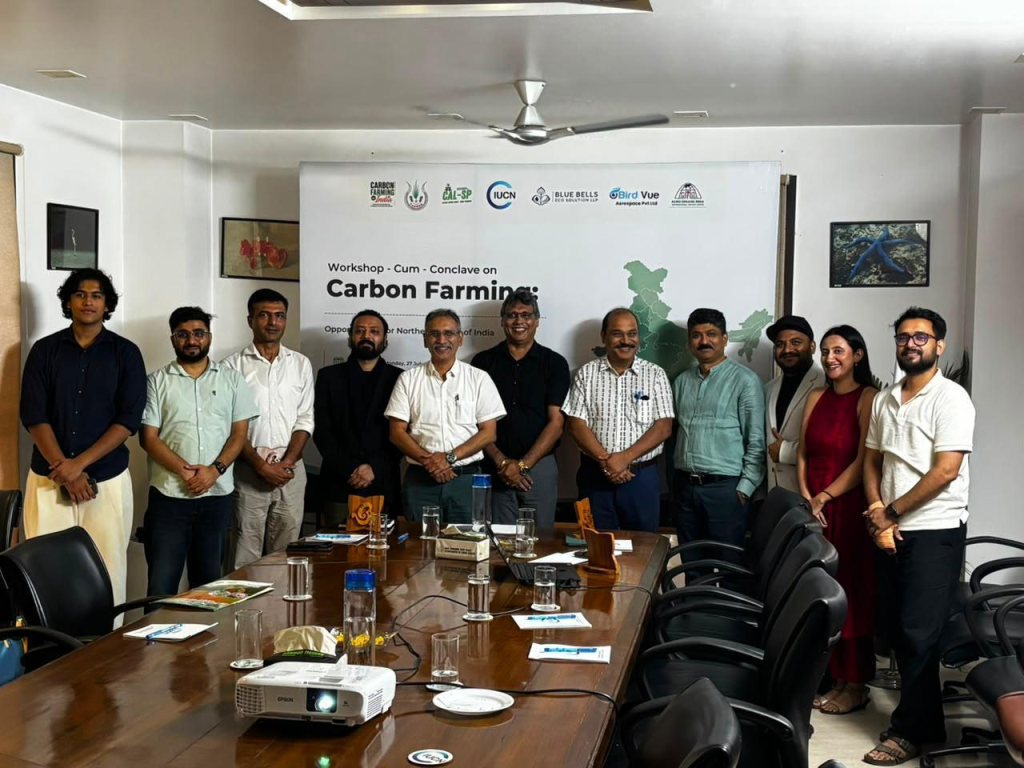
The event witnessed the participation of several experts and representatives from government, forestry, agriculture, environment and sustainability sectors, including:
- Dr. Vivek Saxena, IFS, Principal Chief Conservator of Forests, Government of Haryana and former Country Representative, IUCN
- Dr. Pradeep Monga, Former Deputy Executive Secretary, UNCCD
- Dr. Yashveer Bhatnagar, Country Representative, IUCN India
- Mr. Sanjeev Kr. Chaudhary, Advisor, Corporate Partnership, CSR & ESG Projects, FARMER
- Mr. Amit Anand, IFS (AGMUT:2010), Deputy Inspector General of Forests, Ministry of Environment, Forest and Climate Change
- Mr. Sameem Singla, Punjab Forest Department
- Mr. Atul Chaudhary, Himachal Pradesh Forest Department
- Mr. Kunal Prakesh Jha, Head, CAL-SP and Climate Research Fellow
- Dr. Riyaz, Scientist, FARMER
- Mr. Jagpal Singh, Secretary, FARMER
- Mr. Santosh Gupta, CEO, Indian Social Responsibility Network (ISRN)
- Mr. Anubhav and Mr. Naveen Sharma, Bird Vue Aerospace Pvt. Ltd.
- Members of the IUCN India team and professionals from the environment, forestry, agriculture and sustainability sectors
About FARMER
The Foundation for Agricultural Resources Management and Environmental Remediation (FARMER) is a national organisation working to promote sustainable agriculture, natural resource management, climate resilience, environmental conservation, rural development and innovative climate solutions. The organisation focuses on research, technology, partnerships and capacity building to support sustainable development and environmental protection.