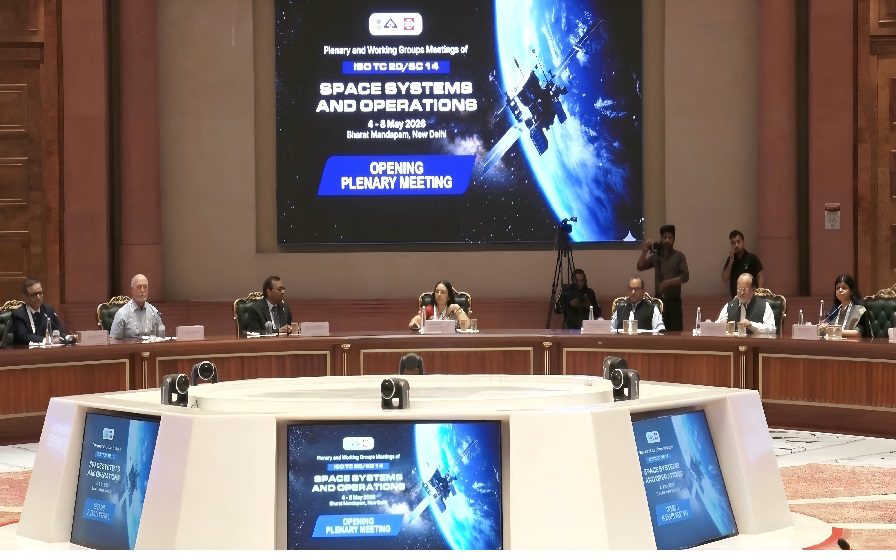
New Delhi: India has signalled its intent to play a more influential role in shaping global norms for the rapidly expanding space industry, as international experts convened in the national capital for a major International Organization for Standardization (ISO) meeting.
The discussions come at a time when global attention is increasingly focused on space safety, sustainability, and the integration of private players into space exploration and services.
Global Space Standards Meeting Held in New Delhi
The Bureau of Indian Standards (BIS) is hosting the 35th Plenary and Working Groups meetings of ISO’s Technical Committee 20/Subcommittee 14, which deals with Space Systems and Operations.
The high-level event has brought together:
- 131 international delegates
- Representatives from 13 countries
- Experts from national standards bodies
- Officials from space agencies
- Industry stakeholders and academic institutions
The meeting positions India as a key participant in ongoing global discussions on space governance and technical standardisation.
India Positioned at Forefront of Space Transformation
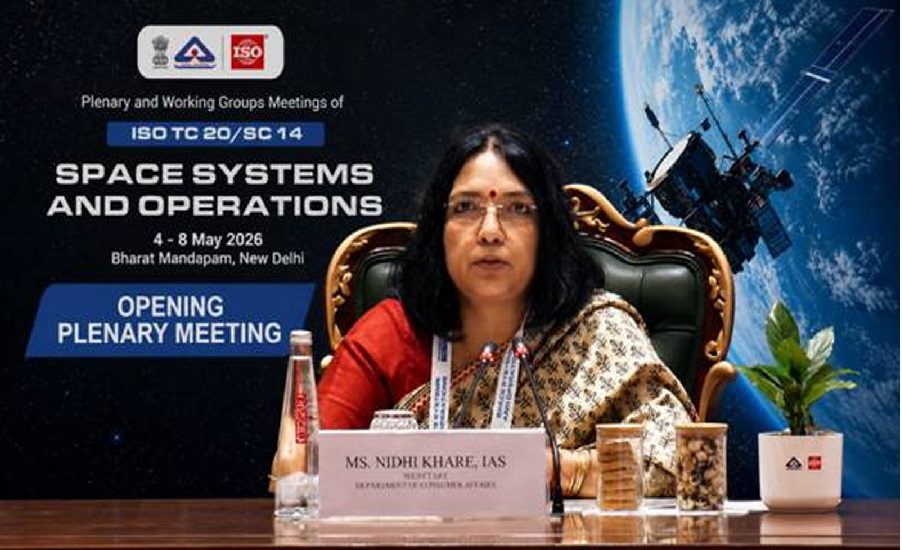
Speaking at the inaugural session, Consumer Affairs Secretary Nidhi Khare, a 1992-batch Indian Administrative Service (IAS) officer of the Jharkhand cadre, said India is now “at the forefront of global space transformation”.
She highlighted key policy reforms and institutional developments, including the creation of IN-SPACe, which promotes private sector participation in India’s space ecosystem.
According to the official statement, these reforms have helped open the sector to innovation and wider industry involvement.
Focus on Global Alignment of Space Standards
BIS Director General Sanjay Garg said India is actively working to align its domestic standards with global frameworks.
He noted that hosting the meeting in New Delhi provides Indian experts direct exposure to international standard-setting processes, strengthening collaboration and technical convergence.
The subcommittee plays a critical role in developing standards across the entire lifecycle of space systems, including:
- Design and development
- Manufacturing and production
- Launch operations
- In-orbit management and safety
Key focus areas include interoperability, safety, and sustainability of space operations.
IN-SPACe Emphasises Need for Strong Standards
IN-SPACe Chairman Pawan Goenka stressed that robust international standards are essential for driving innovation and ensuring India’s deeper integration into the global space economy.
He underlined that standardisation will play a crucial role in enabling both public and private sector participation in future space missions and services.
Space Debris and Sustainability High on Agenda
The discussions also covered emerging global concerns such as:
- Space debris mitigation
- Long-term sustainability of orbital operations
- Safe and responsible use of outer space
These issues are becoming increasingly important as satellite launches grow rapidly worldwide and commercial space activity expands.
India, with its growing private space industry and achievements of organisations like ISRO, is seeking a more active role in shaping global responses to these challenges.
India’s Strategic Push in Global Space Governance
The New Delhi meeting reflects India’s broader ambition to move beyond being a major space-faring nation to becoming a rule-shaper in global space governance, particularly in standards that will define the future of commercial and scientific space operations.