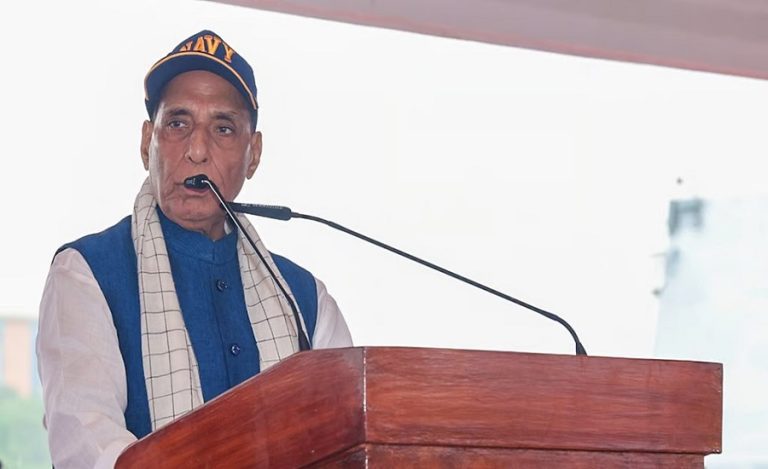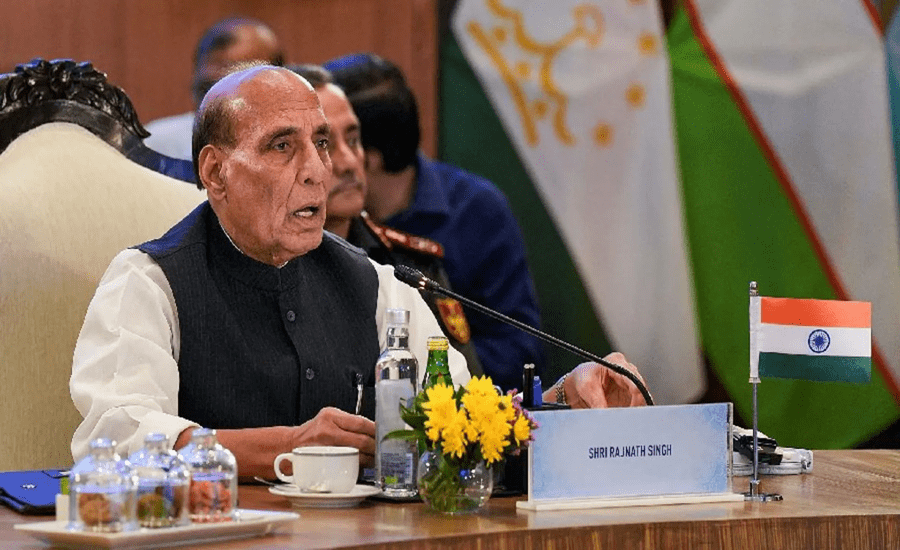
New Delhi: India nuclear blackmail warning took center stage as Defence Minister Rajnath Singh made a firm statement during his visit to Seoul. Within a short span of diplomatic talks, India clearly stated it will not accept any form of nuclear coercion.
The statement came after high-level defence discussions with South Korea, signaling India’s strong global stance on security, peace, and strategic independence in the Indo-Pacific region.
India Nuclear Blackmail Warning: Key Highlights of the Defence Minister Speech
- India will not tolerate nuclear blackmail in any form
- Statement made by Defence Minister Rajnath Singh in Seoul, South Korea
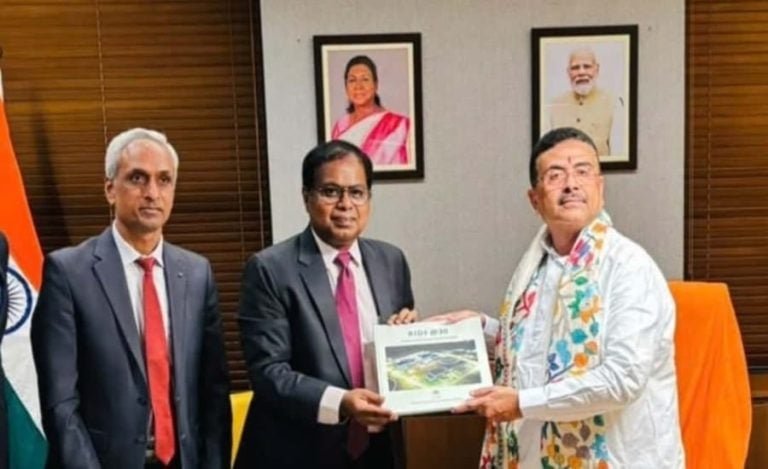
- India and South Korea signed key defence cooperation agreements
- Focus areas:
- Cybersecurity
- Military training
- Maritime security
- Joint defence production
- Agreements involve companies like L&T (India) and Hanwha (South Korea)
- India reaffirmed its No First Use nuclear policy
What Rajnath Singh Said
- India is a responsible nuclear power
- The country follows a strict No First Use (NFU) policy
- However:
- India will respond strongly to any threat
- Nuclear blackmail will not be accepted under any circumstances
He also highlighted that Operation Sindoor reflects India’s growing strength and ability to fight terrorism effectively.
India’s Defence Policy Stand
- No First Use Policy: India will not use nuclear weapons first
- But:
- Strong retaliation if attacked
- Zero tolerance for threats or coercion
This balanced approach shows:
- Responsibility
- Strength
- Strategic clarity
India Nuclear Blackmail Warning: Global Message from India
India’s statement sends a clear signal to the world:
- India supports peace and diplomacy
- But will defend its sovereignty strongly
- Rejects any form of nuclear intimidation
Read also: Explained: Why Indian Navy Is Shifting to Nuclear SSNs and AIP Submarines for Indo-Pacific Dominance