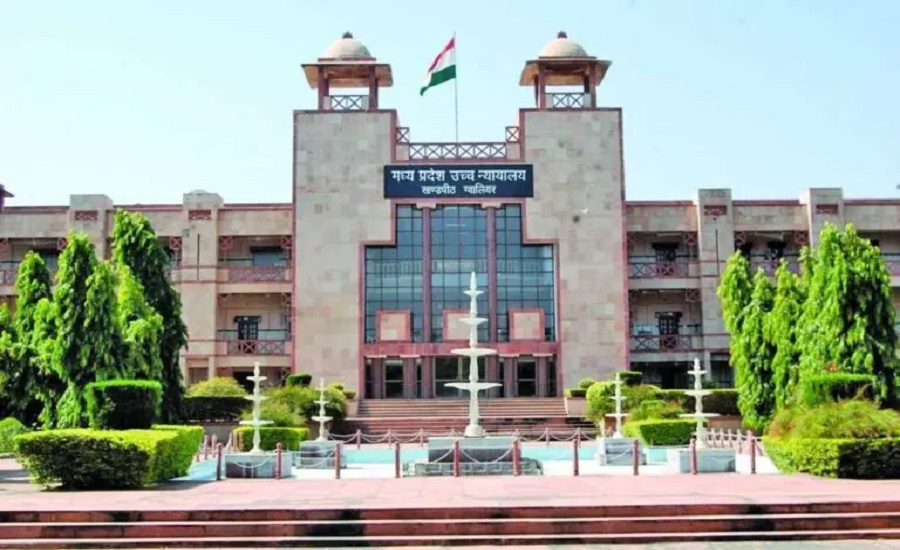
Bhopal: In a scathing development that underlines deep concerns over road-safety enforcement in Madhya Pradesh, the Madhya Pradesh High Court (MP HC) has summoned the Commissioner of Police of Indore by video-conferencing for a hearing scheduled on November 19 at 3:30 pm. The escalation comes after a speeding truck entering a residential zone caused 3 deaths and injured 35 persons, exposing serious gaps in preventive policing and traffic regulation enforcement.
Background of Indore Truck Rampage
On an evening that turned tragic, a heavy vehicle drove through a restricted “no-entry” residential corridor in Indore during peak hours, colliding with pedestrians and multiple vehicles over a stretch of approximately 2 kilometres from Kalani Nagar Square to Bada Ganpati Square. The incident was fatal for three and left 12 persons grievously injured among the 35 wounded.
Reacting to media reports and video-footage of the crash, the High Court took suo-motu cognizance of the tragedy under WP No 37620 / 2025, issuing notice to the State and the Police Commissioner and asking for an affidavit detailing preventive measures.
Importance of the Indore Truck Rampage Case
This case signals a turning point in accountability for traffic enforcement and public-safety compliance. The High Court’s intervention underscores that mere regulations are insufficient if not backed by active implementation, surveillance and deterrence. The involvement of apex judicial oversight raises the stakes for vehicle-entry control, monitoring of “no-entry” zones for heavy vehicles, and stricter curbs on drunk driving and negligent behaviour.
Challenges Exposed
- Implementation Gap: The court observed that “despite orders passed … sufficient action was not taken by the Police Authorities to prevent similar incidents”.
- Regulation Breach: A heavy truck was allowed to traverse a restricted zone during peak traffic hours with little deterrence or interception.
- Enforcement & Monitoring: The Amicus Curiae highlighted failures such as lack of reflective signage, inadequate CCTV coverage in identified spots and weak community-based alert systems.
- Accountability & Response: The suspension of nine police officers, removal of senior traffic officer and the requirement of state affidavit reflect the deep accountability vacuum.
Implications
- For Traffic Enforcement: The court’s move may trigger stricter enforcement of “no-entry” zones, heavy vehicle movement restrictions and real-time monitoring through CCTV and check-points.
- For Public Safety Policy: The incident could push the State to adopt technology-enabled policing such as vehicle-entry sensors, automatic alarms and live feeds to control rooms.
- For Legal Precedent: Judicial oversight in traffic regulation may increase, setting a precedent for courts intervening in enforcement-failures that lead to mass-casualty accidents.
- For Public Confidence: The trauma of the accident and slow responses erode confidence in civic safety; swift visible action is thus needed to restore trust.
Way Forward
1. Strengthening Entry-Control: Deploy reflective and illuminated signage, physical barriers and sensor-based alerts at all “no-entry” zones for heavy vehicles.
2. Enhanced Surveillance Infrastructure: Install CCTV cameras at all identified high-risk locations (the Amicus list notes 19 spots in Indore) and link them to traffic-police control rooms.
3. Rapid Response Protocol: Establish quick-reaction units when heavy vehicles attempt to breach restricted zones, including physical interception and unambiguous penalties.
4. Community-enabled Monitoring: Encourage local residents to report suspicious heavy-vehicle movement, integrating mobile alert-systems with traffic-police monitoring.
5. Periodic Audits & Transparency: The State government should publish periodic audits on enforcement of safety directives (helmet use, wrong-lane driving, vehicle-entry violations) per the Supreme Court of India’s earlier directions.
6. Accountability Mechanism: Immediate disciplinary action (suspensions, removals, chargesheets) must follow enforcement lapses, to send a clear message that negligence won’t be tolerated.