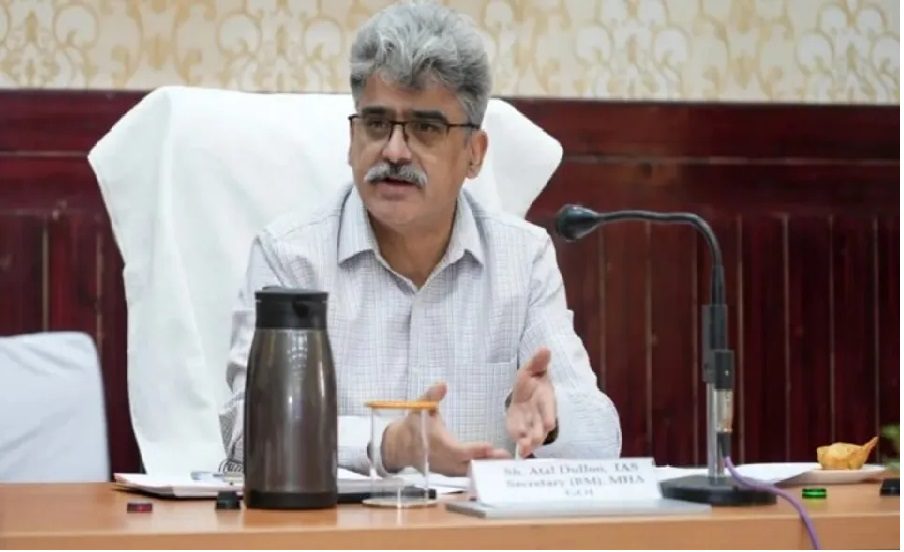
Jammu: In a major step towards strengthening digital governance and improving public service delivery, Jammu and Kashmir Chief Secretary Atal Dulloo, an IAS officer of 1989 batch, chaired a high-level meeting to review the proposed Data Management Strategy and Action Plan, which aims to establish a secure, interoperable and citizen-centric data ecosystem across government departments.
The proposed initiative seeks to transform the way government departments collect, manage and share data by creating an integrated framework that enables secure exchange of authenticated information through authorised digital platforms. The strategy is designed to reduce duplication of records, improve coordination among departments and ensure that citizens receive government services more efficiently without repeatedly submitting the same documents.
Building a Citizen-Centric Digital Governance Framework
During the review meeting, the Chief Secretary stressed that effective governance in the digital era depends on the availability of authentic, reliable and secure data. He observed that while government departments generate vast volumes of valuable information, its true potential can only be realised when it is managed within a common governance framework and shared securely across departments.
Read Also: Odisha Chief Secretary IAS Anu Garg Reviews DISCOMs, Pushes Renewable Energy and Smart Meter Rollout
Dulloo emphasised that the government’s objective is to make public service delivery simpler and more citizen-friendly by ensuring that people are not required to furnish the same information repeatedly while availing benefits under different government schemes.
He said the vision is to establish an integrated digital governance ecosystem where authenticated information, once available with the government, can be securely accessed by authorised departments while maintaining the highest standards of privacy, confidentiality and data protection.
Focus on Secure Data Sharing and Interoperability
The proposed strategy seeks to create a unified framework for secure data sharing and harmonisation across government departments. Instead of collecting identical documents multiple times, departments will be able to access verified information through authorised digital platforms.
The initiative is expected to deliver several governance benefits, including:
- Improved inter-departmental coordination and collaboration.
- Elimination of duplicate records and repetitive documentation.
- Faster and more transparent delivery of welfare schemes and public services.
- Better planning and evidence-based policy formulation.
- Enhanced efficiency in monitoring government programmes.
Five Strategic Pillars of the Data Management Strategy
During the meeting, the Planning Department made a detailed presentation outlining the five core pillars of the proposed Data Management Strategy and Action Plan.
These include:
- Data Governance and Standards
- Base Registries and Unique Identifiers
- Interoperability and Harmonisation
- Data Security and Privacy
- Institutional Capacity and Coordination
Officials explained that these pillars will create a robust governance framework that supports secure data exchange while ensuring accountability, privacy and consistency across departments.
Towards a ‘Single Source of Truth’
One of the key objectives of the strategy is the creation of a “Single Source of Truth” for government data.
Under this framework, original departmental datasets will continue to remain with the respective departments, while authorised users will be able to securely access authenticated information through API-based data exchange mechanisms. This approach is expected to facilitate evidence-based governance, improve planning processes and strengthen monitoring of developmental programmes across Jammu and Kashmir.
Chief Secretary Directs Departments to Ensure Standardisation
Reviewing the proposed framework, Atal Dulloo directed all administrative departments to extend full cooperation in implementing the strategy.
He instructed departments to standardise their datasets in accordance with the prescribed data governance framework to ensure interoperability and seamless exchange of information across government systems.
The Chief Secretary reiterated that while technology would play a key role in modernising governance, protecting citizens’ privacy and ensuring data security would remain central to the initiative.
With the proposed Data Management Strategy, the Jammu and Kashmir government aims to build a modern digital governance architecture that promotes transparency, improves administrative efficiency and delivers citizen services through a secure, integrated and technology-driven ecosystem.