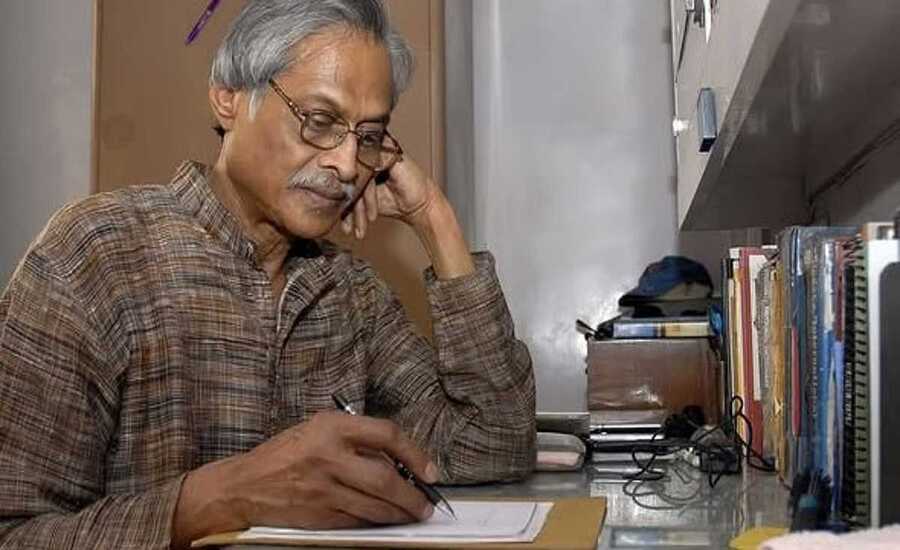
Bhubaneswar: Odisha’s literary and cultural fraternity suffered an irreparable loss with the passing of eminent poet, novelist, playwright, art historian and former IAS officer Dr. Jagannath Prasad Das (JP Das). The celebrated literary figure breathed his last at his residence in Bhubaneswar on June 3, 2026, at the age of 90 due to age-related ailments.
Widely regarded as one of the most influential voices in modern Odia literature, JP Das left behind a remarkable legacy that spanned literature, theatre, art history, public administration and cultural scholarship. His death marks the end of a distinguished journey that seamlessly blended administrative excellence with extraordinary literary achievement.
A Literary Luminary Who Defined Modern Odia Writing
Born on April 26, 1936, in Odisha’s Puri district, JP Das emerged as one of the foremost literary voices of post-independence India. Known for his intellectual depth, innovative narrative style and humanistic outlook, he played a pivotal role in shaping contemporary Odia literature.
His literary journey began during his teenage years, and he soon gained recognition in literary circles during the early 1950s. However, his creative aspirations temporarily took a backseat when he pursued higher education and later joined the Indian Administrative Service.
Despite a demanding bureaucratic career, literature remained his lifelong passion. After a gap of nearly fifteen years, he returned to creative writing and published “Prathama Purusha” (Pratham Purush) in 1971, a poetry collection that revolutionized modern Odia poetry through its emotional honesty, colloquial language and contemporary sensibility.
Distinguished Career in the Indian Administrative Service
JP Das joined the Indian Administrative Service (IAS) in 1958 after completing his studies. During his administrative career, he served in several important positions and earned widespread respect for his integrity and people-centric governance.
One of the most notable chapters of his bureaucratic career came when he served as Collector of Kalahandi during the devastating drought and famine period between 1963 and 1966. His compassionate handling of relief operations and commitment to public welfare earned national recognition.
After serving the country for over two decades, Das took premature retirement from the IAS in 1984, choosing to devote himself entirely to literature, art history and cultural research.
Masterpieces That Transformed Odia Literature
JP Das authored numerous acclaimed works across multiple genres, including poetry, novels, short stories, drama and literary criticism.
His landmark historical novel “Desha Kaala Patra” is considered one of the finest works in Odia literature. The novel offers a profound portrayal of Odisha’s transformation during the colonial era and remains a significant contribution to Indian historical fiction. The work was later translated into several Indian languages, further enhancing its reach and impact.
Among his celebrated poetry collections were:
- Prathama Purusha
- Parikrama
- Ahnika (Ahinik)
His dramatic works also left a lasting impression on Indian theatre. Plays such as “Suryasta Purbaru” (Before the Sunset) and “Sundara Das” received critical acclaim and were translated into multiple languages for performances across the country.
As a short story writer, he gained recognition for his psychological insight, narrative sophistication and exploration of human emotions.
Scholar of Art, Culture and Heritage
Beyond literature, JP Das made substantial contributions to the preservation and study of Odisha’s artistic traditions.
Holding a PhD in Art History from the University of Allahabad and a Master’s degree in Political Science, he authored important scholarly works including:
- Puri Paintings
- Chitra-Pothi
- Palm-Leaf Miniatures
His research helped document and promote Odisha’s rich artistic heritage for future generations.
He also translated literary works into English and edited several important anthologies, bridging regional literature with wider audiences.
A Writer Guided by Principles
One of the defining aspects of JP Das’s life was his unwavering commitment to personal principles.
In 1991, his poetry collection “Ahnika” was selected for the prestigious Sahitya Akademi Award, but he chose not to accept the honour. The decision reflected his independent intellectual outlook and earned widespread respect within literary circles.
Interestingly, despite his refusal, the Sahitya Akademi later published the work in Hindi, Bengali, Assamese and English, acknowledging its literary significance.
Awards and Recognition
Throughout his distinguished career, JP Das received numerous honours for his contributions to literature and culture.
Among the most notable recognitions were:
- Saraswati Samman (2006)
- Odisha Sahitya Akademi Award
- Sarala Samman
- Several national and international literary recognitions
He also played an important role in nurturing literary talent through the Poetry Society (India), where he served as president for nearly fourteen years.
Final Wish: Body Donated for Medical Research
Even in death, JP Das continued to serve society.
Honouring his final wish, his family decided to donate his body to AIIMS Bhubaneswar for medical education and research. The gesture reflected the same spirit of public service and social commitment that defined both his administrative and literary life.
Tributes Pour In
The passing of JP Das has triggered an outpouring of tributes from political leaders, writers, artists and scholars across the country.
Odisha Chief Minister and several prominent public figures described his death as an immense loss to literature and culture. Former Chief Minister Naveen Patnaik termed it an “irreparable loss” to the literary world.
For generations of readers, writers and scholars, JP Das will be remembered not only as a literary giant but also as a rare intellectual who successfully bridged governance, culture and creative expression.
His writings, scholarship and public service continue to inspire, ensuring that his legacy remains alive in India’s literary and cultural landscape for years to come.