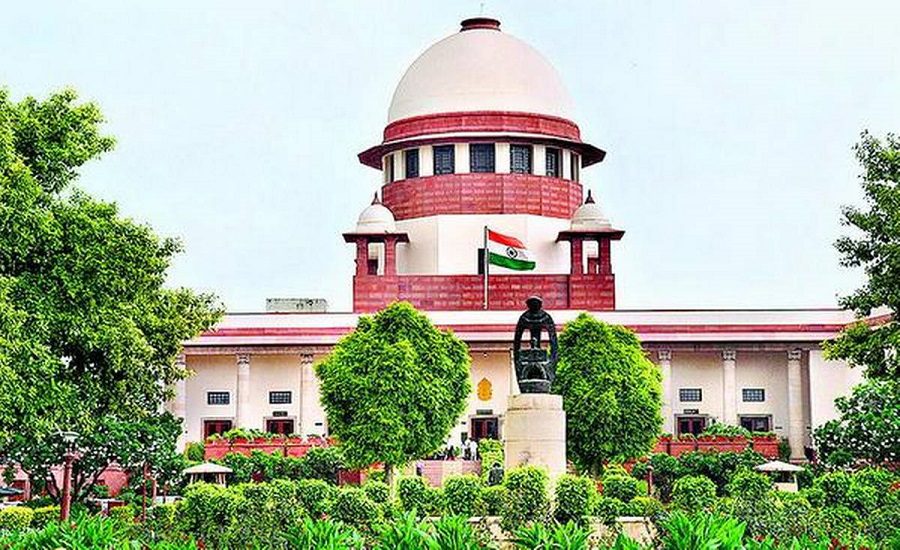
New Delhi: Disabled military cadets welfare has once again come under the Supreme Court’s scrutiny.
The Court strongly criticized the Central Government for not properly reconsidering welfare recommendations for military cadets who were discharged from training after suffering injuries or disabilities.
The Court observed that its earlier directions had not been fully followed and asked the government to hold a proper review meeting and place the outcome on record.
Disabled Military Cadets Welfare Row: Supreme Court Questions Centre’s Response
The Supreme Court bench comprising Justice B.V. Nagarathna, Justice R. Mahadevan and Justice D.K. Upadhyaya expressed dissatisfaction with the Centre’s affidavit in the ongoing suo motu case concerning disabled military cadets.
Read also: Why Did The Supreme Court Refuse The Centre’s Plea In The Great Nicobar Project Case?
The Court noted that there was no clear evidence showing that the recommendations made by the Sabharwal Committee had been reconsidered after the Court’s earlier directions. According to the judges, merely referring to earlier decisions was not sufficient compliance with the Court’s orders.
Justice Nagarathna reportedly questioned the government’s approach and emphasized that the issue deserved serious attention because these cadets suffered disabilities while preparing to serve the nation.
Details of the Disabled Military Cadets Welfare Row
The matter concerns cadets who were discharged from institutions such as:
- National Defence Academy (NDA)
- Indian Military Academy (IMA)
- Officers Training Academy (OTA)
Many of these cadets suffered injuries or disabilities during training and were later discharged. As a result, they lost the opportunity to continue their military careers.
Several of them do not qualify for benefits available under the Rights of Persons with Disabilities Act, 2016 because their disability percentage is below the benchmark level of 40%. This has left many without adequate rehabilitation support or employment assistance.
Disabled Military Cadets Welfare Row: Court’s Earlier Directions
In its order dated August 4, 2026, the Supreme Court directed government departments to reconsider recommendations made by the Sabharwal Committee.
The Court expected a favorable review aimed at improving the lives of disabled and boarded-out cadets. It also appreciated the decision to extend lifelong ECHS medical benefits to invalidated cadets but said more steps were needed. The Court further highlighted differences in benefits received by officer cadets and regular recruits and stressed the need for fair treatment.
Centre’s Stand Before The Court
The Central Government informed the Court that granting Ex-Serviceman status and disability pension to such cadets was not feasible under existing policies. Additional Solicitor General Aishwarya Bhati told the Court that the issue of pension benefits could be examined by the 8th Central Pay Commission.
The government also stated that proposals for disability pension and Ex-Serviceman status had been considered earlier but were not accepted under current policy frameworks.
Government Proposes Skill Development Courses
As part of its rehabilitation efforts, the government proposed job-oriented training programs for affected cadets.
Proposed Training Areas
- Cyber Security
- Data Analytics
- Logistics Management
- Industrial Automation
- Banking And Financial Services
- Drone Operations
- Retail Management
- Human Resources
- Technical Trades
These courses are expected to run for around 8 to 10 weeks and are intended to improve employability after discharge from military training. However, the government clarified that completing these courses would not guarantee employment.
Court Wants Educational Support Too
The Supreme Court suggested that educational expenses for diploma-level courses should also be covered. The judges observed that many disabled cadets need additional educational support to build new careers after leaving military training. Such assistance could improve their future employment opportunities and help them reintegrate into civilian life.
Reservation Benefits For Disabled Cadets
In a significant order issued earlier, the Supreme Court directed States and Union Territories to consider reservation benefits for cadets who suffered 40% or more disability during training. The Court also stated that such cadets should be considered under the Ex-Military Personnel quota and receive benefits available under Section 34 of the Rights of Persons with Disabilities Act, 2016. For cadets with disabilities below 40%, the Court asked the Centre to explore a separate welfare scheme.
FAQs
They are cadets from military training institutions such as NDA, IMA, and OTA who suffer injuries or disabilities during training and are discharged before commissioning.
The Court said the government had not properly reconsidered welfare recommendations for disabled military cadets despite earlier judicial directions.
The Court has supported reservation benefits for eligible cadets, welfare schemes for those with lower disability levels, educational support, rehabilitation measures, and continued medical coverage.