New Delhi: The CEC Act controversy has taken a new turn after the Supreme Court agreed to examine a plea seeking recall of its September 23 split verdict related to the appointment of the Chief Election Commissioner and Election Commissioners. The development comes amid concerns raised over possible bias involving one of the judges who was part of the earlier bench.
The matter is significant because it concerns the independence of the Election Commission of India (ECI), one of the country’s most important constitutional institutions. The Supreme Court’s next decision could influence how top election officials are selected in the future.
What Is The Latest Development In The CEC Act Controversy
The Supreme Court agreed to examine an application seeking recall of its September 23 split verdict on petitions challenging the Chief Election Commissioner and Election Commissioners (Appointment, Conditions of Service and Term of Office) Act, 2023.
Read also: Supreme Court Says It Did Not Approve Modified Form 6, Seeks ECI Records in SIR Case
The plea was mentioned before a bench headed by Chief Justice of India (CJI) Surya Kant along with Justices Joymalya Bagchi and V. Mohana. Senior advocate Gopal Sankaranarayanan informed the court about the application and requested consideration of the matter.
Responding to the request, CJI Surya Kant stated that the court would examine the application and then decide on the next course of action.
Why Has The Recall Plea Been Filed
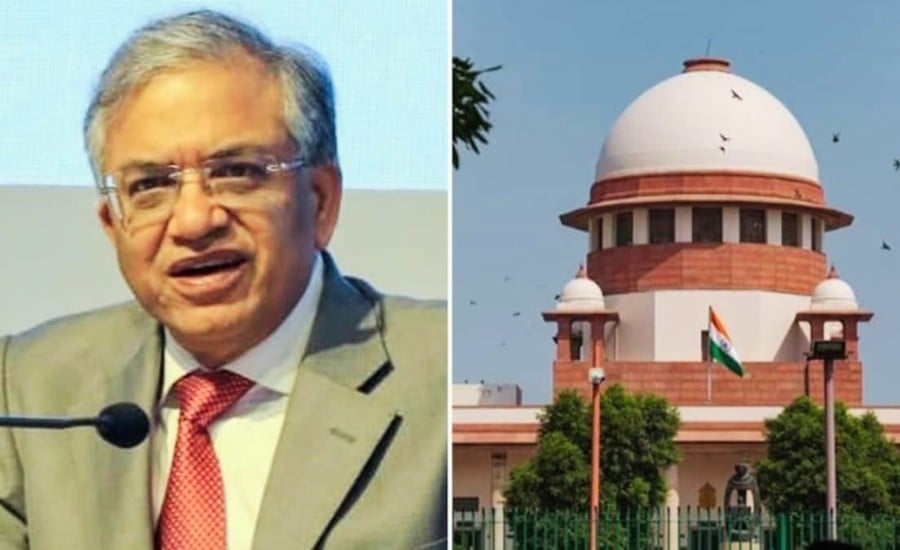
The recall plea has been filed following concerns regarding Justice Satish Chandra Sharma, who was part of the bench that delivered the split verdict.
The application points to apprehensions of bias after it emerged that Justice Sharma’s son serves as standing counsel for the Election Commission of India before the Madhya Pradesh High Court. The plea argues that these circumstances require the Supreme Court to revisit the earlier judgment.
What Is A Recall Plea
A recall plea is a legal request asking a court to reconsider or withdraw an earlier order or judgment due to specific concerns, procedural issues, or newly discovered facts. In this case, the petitioner wants the Supreme Court to reconsider the split verdict delivered on September 23.
What Was The September 23 Split Verdict
The September 23 judgment came in petitions challenging the constitutional validity of the 2023 law governing the appointment of the Chief Election Commissioner and Election Commissioners.
The two judges on the bench delivered different opinions regarding the future course of the case. Justice Dipankar Datta held that referring the matter to a larger bench was not necessary. Justice Satish Chandra Sharma, however, supported sending the matter to a larger bench for consideration. Because of these differing views, the matter was ultimately referred to a five-judge Constitution Bench. The case was also placed before the Chief Justice of India for further administrative directions.
CEC Act Controversy: Why Is The 2023 CEC Act Being Challenged
The challenge revolves around the process used to appoint the Chief Election Commissioner and Election Commissioners.
The 2023 law changed the selection mechanism for these constitutional positions. Before the law was enacted, the Supreme Court’s 2023 judgment in the Anoop Baranwal case had created an interim appointment process. Under that arrangement, the selection committee consisted of:
- The Prime Minister
- The Leader of the Opposition
- The Chief Justice of India
However, the 2023 law removed the Chief Justice of India from the selection committee.
What Does The Current Law Provide?
Under the current law, the selection committee includes:
- The Prime Minister of India
- A Union Cabinet Minister nominated by the Prime Minister
- The Leader of the Opposition in the Lok Sabha
Critics argue that removing the Chief Justice of India may reduce institutional balance in the appointment process. Supporters of the law say Parliament has the authority to define the appointment mechanism through legislation.
FAQs
The plea was filed due to concerns regarding possible bias involving a judge who was part of the bench that delivered the September 23 split verdict.
The CEC Act row refers to the legal challenge against the 2023 law governing the appointment of the Chief Election Commissioner and Election Commissioners in India.
The law removed the Chief Justice of India from the selection committee and replaced the position with a Union Cabinet Minister nominated by the Prime Minister.