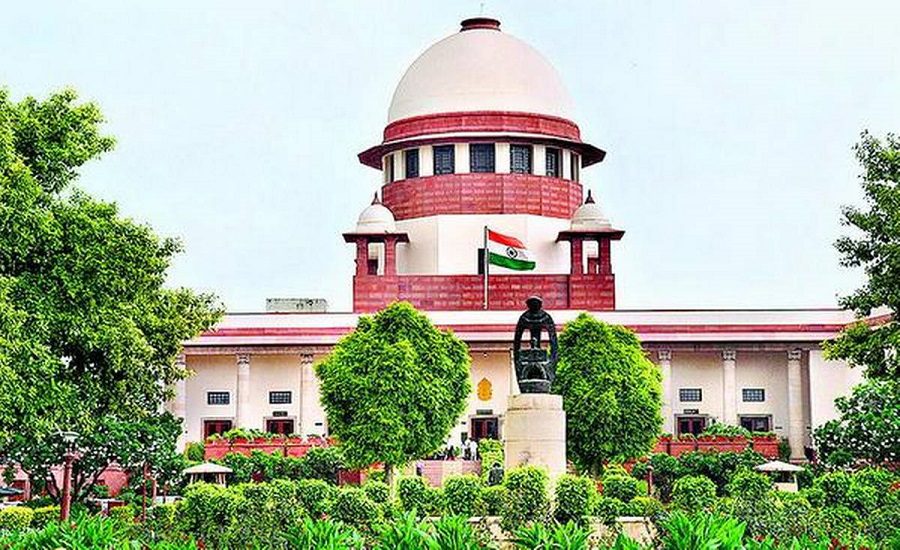
New Delhi: The District judges retirement age issue has reached the Supreme Court of India, with the court seeking the views of the Central Government, all States, Union Territories, and High Courts on whether the retirement age of district judges should be increased from 60 years to 61 or 62 years. The move comes while hearing the long-pending All India Judges Association case and could have a major impact on India’s judicial system if implemented.
District Judges Retirement Age: Supreme Court Issues Notice
A bench headed by Chief Justice of India Surya Kant, along with Justice Joymalya Bagchi and Justice V. Mohana, issued notices to the Union Government, States, Union Territories and High Courts to submit their views on the proposal. The court is examining whether increasing the retirement age can help strengthen the judiciary and reduce the shortage of experienced judges.
Interim Relief for Judges Turning 60
As an interim measure, the Supreme Court directed that judicial officers who are due to retire after reaching 60 years of age will continue in service until 61 years, unless they have already been officially relieved from duty. This temporary order ensures that eligible officers do not retire while the matter remains under judicial consideration.
Why Is the District Judges Retirement Age Issue Important
India’s district courts handle the largest number of civil and criminal cases. Supporters of increasing the retirement age believe that experienced judges can continue serving the justice system for a longer period, helping reduce case backlogs and improving judicial efficiency.
They also argue that extending service could reduce the shortage of trained judicial officers in many states.
Background of the Case
The matter is being heard in the long-running All India Judges Association vs Union of India case. Earlier, the Supreme Court had passed a similar interim order allowing a judicial officer from Uttar Pradesh to continue in service after turning 60 years. The present hearing expands the issue to all States and Union Territories.
Madhya Pradesh Example
During the hearing, the Chief Justice referred to an earlier order in the Madhya Pradesh matter, where the Supreme Court had observed that there was no legal obstacle to increasing the retirement age of judicial officers from 60 to 61 years. Justice Joymalya Bagchi also noted that Madhya Pradesh later increased the retirement age to 61 years, while another petition is now seeking an increase to 62 years.
Arguments Presented Before the Court
Senior Advocate Vikas Singh pointed out that court staff in many places retire at 62 years, whereas judges retire earlier. The court acknowledged that the issue should be examined in a broader national context so that a uniform policy can be considered across the country.