https://indianmasterminds.com

ADVERTISEMENT
ADVERTISEMENT

Supreme Court Explains When Courts Can Interfere in Exam Results and Answer Key Disputes

The Supreme Court has clarified the principles governing judicial review in examination disputes, saying courts should not replace expert academic opinions and should interfere only in rare cases.
Principles of Judicial Review in Exam Evaluation Disputes
Indian Masterminds Stories

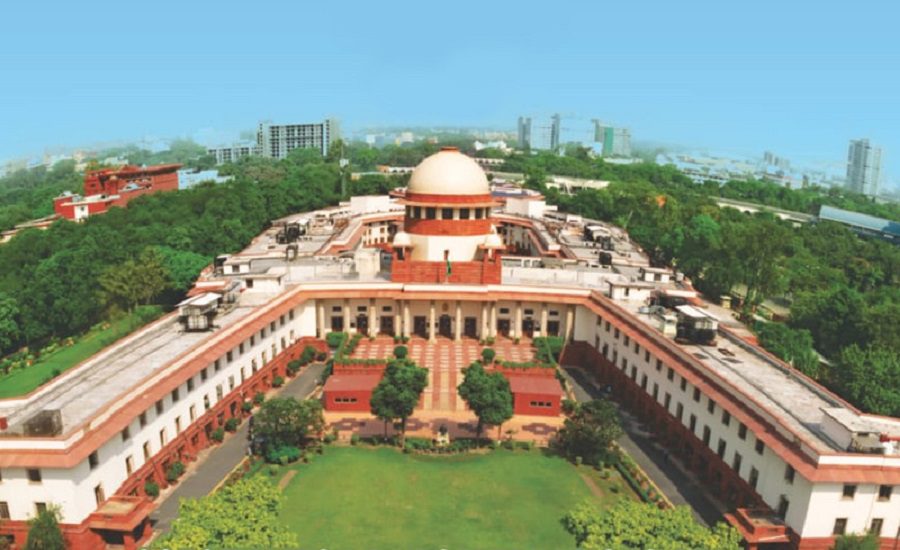
New Delhi: The principles of judicial review in exam evaluation disputes were recently explained by the Supreme Court while setting aside an Allahabad High Court order that had interfered with examination-related decisions taken by subject experts. 

The apex court clarified that courts should exercise extreme caution in academic matters and should not replace the views of experts with their own assessment. The ruling reinforces established legal principles governing judicial review in examination and recruitment disputes.

Details of Principles of Judicial Review in Exam Evaluation Disputes

The case arose from a dispute involving the Uttar Pradesh Public Service Commission (UPPSC) examination process. 

Read also: Allahabad High Court Rules Govt Servant Cannot Challenge Salary Denial After Voluntary Retirement

The Allahabad High Court had directed re-evaluation of answer sheets, deletion of certain questions, and awarding of marks in some cases after examining the correctness of answers provided by experts. The UPPSC challenged this decision before the Supreme Court.

Principles of Judicial Review in Exam Evaluation Disputes: Supreme Court’s Key Observation

A Bench of Justice Dipankar Datta and Justice Sandeep Mehta held that courts cannot use judicial review to substitute the opinion of academic experts with their own conclusions. The Court observed that the High Court had gone beyond the permissible limits of judicial review by examining disputed academic questions and effectively acting as an expert body.

What Is Judicial Review in Examination Matters

The Supreme Court explained that judicial review is meant to examine whether the decision-making process is lawful and fair. It is not intended to determine whether an academic answer is correct or incorrect when qualified experts have already evaluated the issue.

Principles Laid Down by the Supreme Court

The Court relied on its earlier judgment in Ran Vijay Singh v. State of Uttar Pradesh (2018) and reiterated important principles governing examination disputes.

1. Re-evaluation Is Allowed Only When Rules Permit

If examination rules specifically allow re-evaluation or scrutiny of answer sheets, the examining authority may conduct such a process. Otherwise, courts should generally avoid directing re-evaluation.

2. Judicial Interference Must Be Rare

Even when re-evaluation is not provided under the rules, courts may interfere only in exceptional situations where a clear and material error is visible. Such intervention should remain limited and carefully justified.

3. Courts Are Not Subject Experts

The Court emphasized that judges do not possess expertise in every academic discipline. Academic issues should normally be left to qualified experts and examination authorities.

4. Correctness of Answer Keys Must Be Presumed

Courts should generally presume that answer keys prepared by experts are correct unless a glaring mistake is clearly established. This principle helps maintain consistency and fairness in examinations.

5. Benefit of Doubt Goes to Exam Authorities

If there is uncertainty regarding an academic issue, the benefit should ordinarily go to the examination authority rather than individual candidates. This approach prevents excessive judicial interference in academic assessments.

Why Is This Judgment Important

The ruling reinforces a long-standing principle that academic and technical decisions should primarily be made by experts. It also provides clarity for future recruitment examinations, competitive tests, and public service commission evaluations across India.

Supreme Court Allows Appeal

After examining the matter, the Supreme Court concluded that the Allahabad High Court had exceeded the limits of judicial review. The appeal filed by the Uttar Pradesh Public Service Commission was therefore allowed.
Read also: Who Can Decide Andhra Pradesh Scheduled Area Non-Tribal Property Cases? Supreme Court Gives Clear Answer


Indian Masterminds Stories
Join our WhatsApp Channel
ADVERTISEMENT
ADVERTISEMENT
Related Stories
ADVERTISEMENT
ADVERTISEMENT
NEWS
Principles of Judicial Review in Exam Evaluation Disputes
Supreme Court Explains When Courts Can Interfere in Exam Results and Answer Key Disputes
Shaurya Chakra awardee Mohan Singh Window Compensation Order
Supreme Court Delivers Justice After 26 Years, Grants ₹10 Lakh to Gallantry Awardee’s Widow
Madhya Pradesh Cabinet decisions July 2025
Madhya Pradesh Cabinet Approves ₹1,757 Crore Bhopal-Vidisha 4-Lane Road Project, ₹47,990 Crore Development Proposals
NHSRCL
NHSRCL Appoints Alok Katiyar as Director (Works) on Additional Charge from September 1, 2026 
ITI limited ITI Ltd
ITI Limited Appoints Sanjiwan Sinha as Government Nominee Director, Succeeds Arun Agarwal
Har-ghar-tiranga-up
From Madrasas to 694 Panchayats: UP’s Big Tiranga Push
NBCC defence infrastructure project
NBCC Q1 FY27 Results: Net Profit Rises 32% to ₹150.65 Crore, ₹0.15 Interim Dividend Declared 
DGFT
DGFT Ends Physical Challans for Export Obligation Certificates, Moves Duty Verification Online
ADVERTISEMENT
ADVERTISEMENT
Videos
Sumit Ramteke tn
IPS Sumit Ramteke on the Cases That Changed His Career and Shook Organized Crime | Video Interview
How NAFED is Strengthening Farmers, Markets and Food Security
Piyusha Jagtap
How IFS Piyusha Jagtap Is Changing Conservation Through Stories, Communities and Compassion | Video Interview
ADVERTISEMENT
UPSC Stories
From Engineering Desks to the Uniform: The Inspiring Journeys of UPSC CAPF 2025’s Top 5 Toppers
Sheershoo Deb, Aryan Sheoran, Akanksha Vishwakarma, Rohan and Harsh Shankarlal Solanki prove that there...
How Family Sacrifices Helped Pradip Bhandare Achieve His IFS Dream
After seven Civil Services Mains, three Indian Forest Service Mains, five UPSC interviews and years of...
IAS Subhankar Bala
How IAS Subhankar Bala Cracked UPSC Without Coaching: The Story of AIR 79 and His Five Practical Preparation Tips
IAS Subhankar Bala secured AIR 79 in UPSC CSE through self-study after failing his first mains. He shares...
CSR NEWS
Project Bright Horizon
HPCL, Assam Rifles and Antogattva Foundation Sign MoU to Launch Project Bright Horizon in Northeast
Project Bright Horizon aims to directly impact 1,500 people and benefit 2,500 more through better learning,...
CMPDI CSR
CMPDI Partners with Frontline Global Services to Train 60 Jharkhand Youth Under CSR Initiative
 CMPDI will invest ₹73.62 lakh to provide residential Phlebotomy Technician training, helping unemployed...
GRID-INDIA ALIMCO
GRID-INDIA Signs MoU with ALIMCO to Provide Assistive Devices to Persons with Disabilities
The CSR partnership aims to promote accessibility, independence and social inclusion by providing assistive...
ADVERTISEMENT
ADVERTISEMENT
ADVERTISEMENT
Latest
Principles of Judicial Review in Exam Evaluation Disputes
Supreme Court Explains When Courts Can Interfere in Exam Results and Answer Key Disputes
Shaurya Chakra awardee Mohan Singh Window Compensation Order
Supreme Court Delivers Justice After 26 Years, Grants ₹10 Lakh to Gallantry Awardee’s Widow
ADVERTISEMENT
ADVERTISEMENT
ADVERTISEMENT
ADVERTISEMENT
ADVERTISEMENT
ADVERTISEMENT
ADVERTISEMENT
Videos
Sumit Ramteke tn
How NAFED is Strengthening Farmers, Markets and Food Security
Piyusha Jagtap
ADVERTISEMENT
ADVERTISEMENT