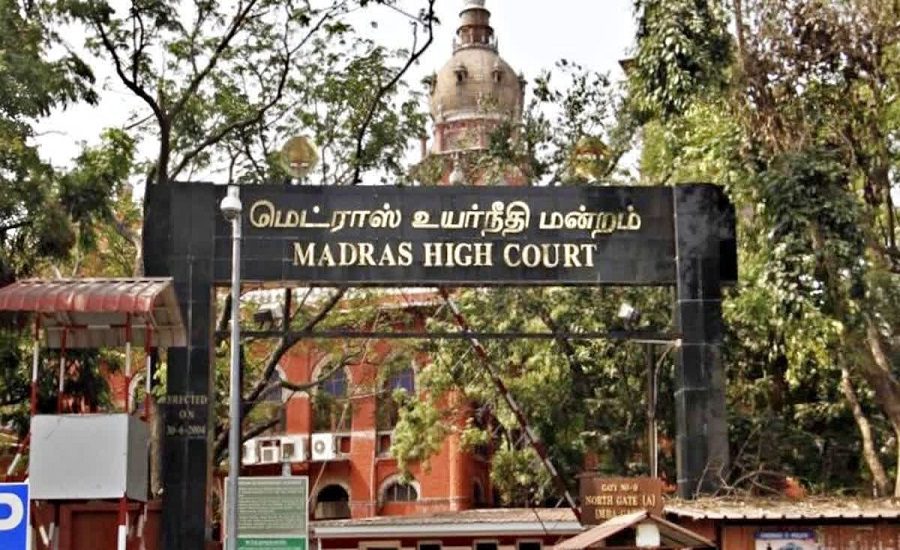
Chennai: The Madras High Court on Wednesday dismissed as not maintainable a Public Interest Litigation (PIL) filed by YouTuber ‘Savukku’ Shankar, who had sought a Central Bureau of Investigation (CBI) probe against senior IPS officer and Director of Vigilance and Anti-Corruption (DVAC), A. Arun.
The Division Bench comprising Chief Justice Sushrut Arvind Dharmadhikari and Justice G. Arul Murugan held that the petition lacked bona fides and was driven by personal animosity rather than genuine public interest, observing that the court’s PIL jurisdiction cannot be misused to pursue private grievances.
Court Says PIL Cannot Be Used to Settle Personal Scores
Delivering the judgment, the Bench underscored the constitutional purpose of Public Interest Litigation, stating that PILs are intended to provide access to justice for marginalized and vulnerable sections of society who are unable to approach courts due to structural or economic disadvantages.
The judges observed: “PIL is a sacred tool intended to bring justice within the reach of the marginalised and vulnerable segments of society who are unable to approach the courts due to structural or economic socio-disabilities. It cannot be reduced to a forum for vindicating personal animosity.”
The court emphasised that while public interest litigation remains an important constitutional remedy, it cannot become a mechanism for pursuing personal vendettas under the guise of public interest.
Read also: Madras High Court Orders Tamil Nadu to Submit District-Wise POCSO Court Status Report
Petition Lacked Bona Fides, Says Bench
The High Court noted that the petitioner had relied on adverse observations made by another Division Bench in a habeas corpus petition to seek a CBI investigation against Arun.
However, the Bench held that the material on record clearly established a hostile personal background between the petitioner and the IPS officer.
“The ultimate test of substance and public interest cannot be used as a shield to validate an action that is fundamentally rooted in personal animosity,” the court observed.
According to the Bench, the petitioner’s personal grievance against the officer completely deprived the PIL of its bona fide character.
Previous Court Order Recorded Personal Hostility
The judges further pointed out that the very Division Bench order relied upon by the petitioner had itself recorded the hostile relationship and serious personal allegations made against the officer.
Given that background, the Bench held that the present petition could not be regarded as a genuinely public-spirited litigation.
The court observed that the intent behind the petition was not purely in public interest and therefore failed the legal test required for maintaining a PIL.
Supreme Court Principles Also Considered
Referring to settled legal principles laid down by the Supreme Court on the maintainability of Public Interest Litigations, the High Court concluded that the petitioner failed to establish the bona fides necessary to invoke the extraordinary jurisdiction of the court.
“In light of the aforesaid findings and authoritative pronouncements of the Supreme Court, this court holds that the petitioner lacks the bona fides required to sustain this action,” the Bench ruled while dismissing the petition.
Court Warns Against Abuse of PIL Jurisdiction
The High Court also cautioned against the misuse of PILs by individuals pursuing hidden or personal motives.
The Bench observed that the court’s extraordinary jurisdiction should not be abused by litigants who present themselves as acting in the public interest while actually seeking to settle personal disputes.
The judgment reiterates the judiciary’s consistent position that Public Interest Litigation is meant to advance public justice and protect disadvantaged sections of society, and not to become an instrument for pursuing individual grievances.