Mumbai: Government-owned Nuclear Power Corporation of India Limited (NPCIL) has signed a strategic Memorandum of Understanding (MoU) with the Indian Institute of Technology Bombay (IIT Bombay) to collaborate on the technical development and trials of the Deep Soil Mixing (DSM) technique for ground improvement at the upcoming Gorakhpur Haryana Anu Vidyut Pariyojana (GHAVP) Units 3 and 4 in Haryana.
The collaboration aims to establish the feasibility and effectiveness of DSM for the twin 700 MWe Pressurised Heavy Water Reactor (PHWR) units planned at the GHAVP site. If successfully developed and adopted, the technique would be the first application of DSM for a nuclear power plant in India.
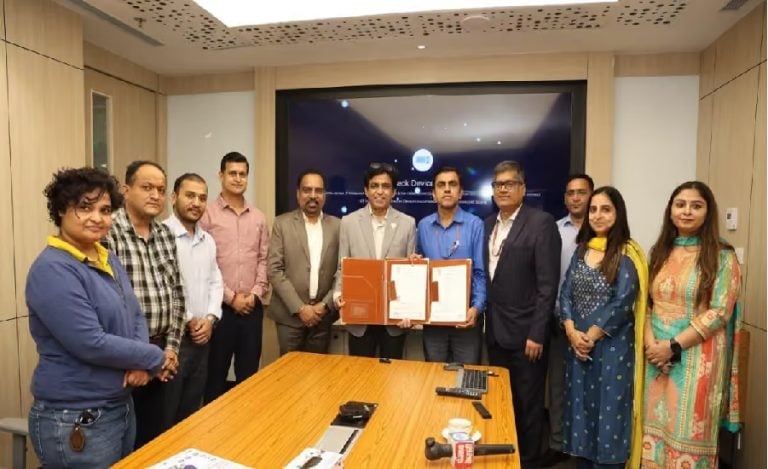
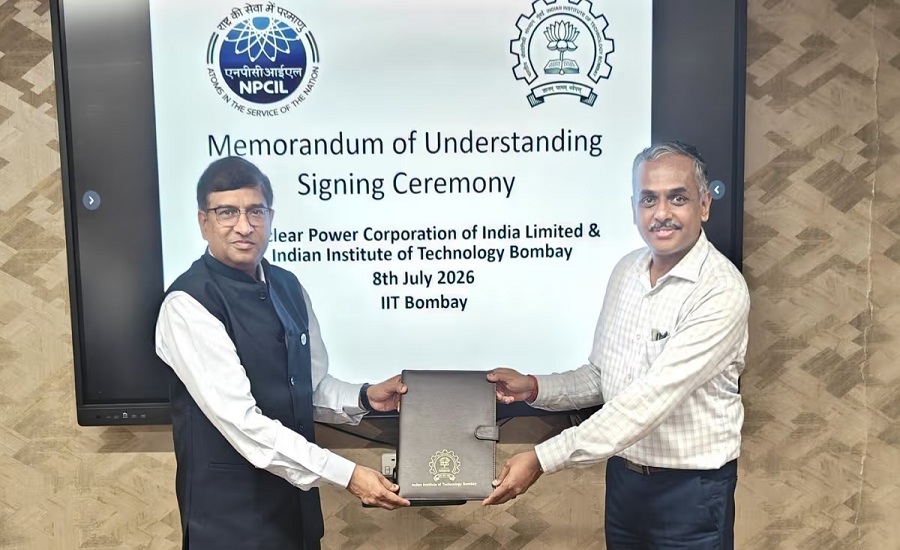
The MoU was signed on 8 July 2026 at the IIT Bombay campus in Powai, Mumbai.
NPCIL and IIT Bombay to Focus on Deep Soil Mixing Technology
The strategic collaboration will focus on developing and evaluating Deep Soil Mixing as a potential method for improving ground conditions at nuclear power project sites where soil forms the founding strata.
DSM is a ground improvement technique that involves enhancing the engineering properties of soil at a project site. NPCIL and IIT Bombay will conduct trials to assess whether the technique can meet the requirements of nuclear power projects.
The key objectives of the collaboration include:
- Establishing the feasibility of the DSM technique at the GHAVP site.
- Evaluating the efficacy of DSM for ground improvement.
- Developing DSM as a potential method for nuclear power projects.
- Supporting faster and safer construction of nuclear power plants on sites with soil as founding strata.
- Exploring the possibility of expanding the range of sites suitable for future nuclear power projects.
Read also: NPCIL and ECIL Enter MoU to Boost Indigenous Control Systems and Nuclear Technology Solutions
GHAVP Units 3 and 4 to Be the Focus of DSM Trials
The trials will be carried out in connection with the upcoming twin 700 MWe PHWR units at GHAVP Units 3 and 4 in Haryana.
The application of the Deep Soil Mixing technique at GHAVP would be a first-of-its-kind initiative for a nuclear power plant in the country.
According to NPCIL, successful development of DSM as a candidate ground improvement method could enable nuclear power plants to be constructed more efficiently at locations where soil is the founding strata.
This could potentially contribute to faster project execution while maintaining the required focus on safety and technical standards for nuclear power infrastructure.
DSM Could Expand Options for Nuclear Power Plant Construction
The development of DSM as a viable ground improvement technique could have wider implications for India’s nuclear power programme. At present, the suitability of a site for a nuclear power project depends on several technical and geological factors. Establishing an effective method for improving soil conditions could potentially widen the range of locations where nuclear power plants can be considered.
NPCIL expects that the development of the technique could support the construction of nuclear power plants at sites with soil as founding strata, while contributing to faster and safer project development.
Strategic Collaboration to Support India’s Nuclear Energy Goals
The NPCIL-IIT Bombay partnership comes as India continues to expand its nuclear energy capacity as part of its long-term clean energy strategy. The development of DSM has been linked with India’s broader roadmap of achieving 100 GWe of nuclear power capacity by 2047 and its Net-Zero emissions goal by 2070.
A successful ground improvement technique could help address site-specific challenges and support the development of nuclear power infrastructure as India works towards increasing the role of nuclear energy in its future energy mix.
MoU Signed by Senior Officials from NPCIL and IIT Bombay
The strategic MoU was signed by Sulok Kumar Saxena, Executive Director (Engineering), NPCIL, and Prof. Shrikrishna V. Kulkarni, Dean (Research and Development), IIT Bombay. The signing ceremony was held at the IIT Bombay campus in Powai, Mumbai, in the presence of Prof. Deepankar Choudhury, Project Investigator from IIT Bombay, along with senior officials from both organisations. The collaboration brings together NPCIL’s expertise in nuclear power project development and IIT Bombay’s research capabilities to explore and establish the feasibility of DSM for use in nuclear infrastructure.
Deep Soil Mixing Trials Could Support Faster and Safer NPP Construction
The proposed DSM trials at the GHAVP site are aimed at determining whether the technique can be effectively deployed for ground improvement in nuclear power projects.
If established as a viable method, DSM could:
- Improve soil characteristics at project sites.
- Enable construction at locations where soil forms the founding strata.
- Potentially accelerate the construction of nuclear power plants.
- Support safe and efficient development of nuclear infrastructure.
- Expand the potential range of sites suitable for nuclear power projects.
The initiative marks an important step in NPCIL’s efforts to explore innovative technical solutions for India’s expanding nuclear power programme.
About Nuclear Power Corporation of India Limited (NPCIL)
Nuclear Power Corporation of India Limited (NPCIL) is a Government of India enterprise under the Department of Atomic Energy (DAE), responsible for the design, construction, commissioning and operation of nuclear power plants in the country. NPCIL operates nuclear power stations across India and plays a key role in expanding the nation’s nuclear energy capacity. The company is also involved in adopting new technologies and technical solutions to support the safe, reliable and efficient development of nuclear power infrastructure.