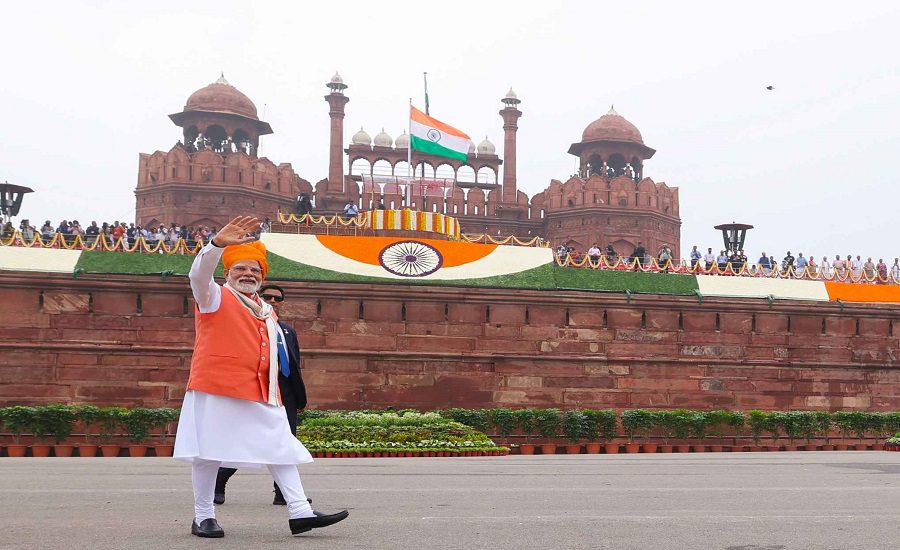
New Delhi: In a significant move aimed at strengthening India’s internal security framework, Prime Minister Narendra Modi is set to preside over a first-of-its-kind conference of officers of the Central Armed Police Forces (CAPFs).
The high-level conference will bring together top leadership from various CAPFs to deliberate on emerging internal security challenges and explore ways to enhance coordination with state police forces and central agencies.
IB Tasked with Preparing Agenda
While the exact schedule of the conference is yet to be finalised, the Intelligence Bureau (IB) has been entrusted with preparing the agenda.
According to sources:
- All formations and wings of CAPFs have been asked to submit agenda points by Monday
- These proposals will first be reviewed by respective Director Generals (DGs)
- Finalised agendas will then be forwarded to the IB
The IB, which is India’s premier intelligence-gathering agency, regularly organises conferences involving Directors and Inspectors General of Police and other investigative bodies.
Objective: Unified Platform for Security Leadership
Officials indicate that the primary objective of the conference is to create a unified platform where senior CAPF leadership can:
- Discuss emerging internal security threats
- Strengthen inter-agency coordination
- Improve collaboration with state police forces
- Define the evolving role of CAPFs in national security
Backdrop: New Law on IPS Deputation to CAPFs
The conference assumes added significance as it comes soon after the Union government introduced a new law institutionalising the deputation of Indian Police Service (IPS) officers to CAPFs in senior ranks.
The law provides:
- 50% of Inspector General (IG) posts reserved for IPS officers
- At least 67% of Additional Director General (ADG) posts for IPS officers
- All Special DG and DG-level posts to be held by IPS officers on deputation
Criticism from CAPF Cadre Officers
The new policy has drawn sharp criticism from cadre officers of CAPFs, who have raised concerns over career progression and representation.
The CAPFs affected include:
- Border Security Force
- Central Reserve Police Force
- Central Industrial Security Force
- Indo-Tibetan Border Police
- Sashastra Seema Bal
Many officers have argued that the policy could impact promotion avenues within the forces, leading to dissatisfaction among cadre personnel.
Strategic Importance of the Conference
Given the evolving nature of internal security challenges—ranging from border management to internal disturbances and infrastructure protection—the upcoming conference is expected to play a crucial role in shaping future policy directions.
It also signals the government’s intent to:
- Strengthen centralised coordination mechanisms
- Align policy and field-level execution
- Address concerns arising from recent structural reforms