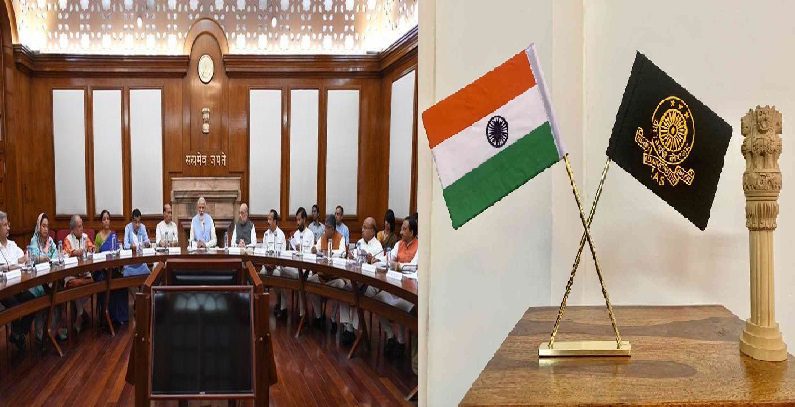
New Delhi: Prime Minister Narendra Modi on Tuesday chaired a high-level meeting of Secretaries from all Central Government ministries and departments, with the government’s reform agenda, administrative efficiency, digital governance and improved public service delivery dominating discussions.
The meeting, held at Seva Teerth, brought together the country’s top civil servants in one of the first full-secretary-level interactions chaired by the Prime Minister during the current financial year. The exercise is aimed at aligning the bureaucracy with the government’s policy priorities for the second half of 2026 and accelerating reforms under the broader vision of ‘Viksit Bharat @2047’.
According to sources, every Union Secretary made presentations before the Prime Minister, outlining the progress made by their respective ministries and presenting future roadmaps to strengthen governance, improve citizen services and drive economic growth.
Top Bureaucracy Participates in High-Level Review
The meeting witnessed the participation of senior government functionaries, including:
- Cabinet Secretary T. V. Somanathan
- Principal Secretary to the Prime Minister P. K. Mishra
- Principal Secretary Shaktikanta Das
- Secretary, Department of Military Affairs
- Secretaries of all Central Government ministries and departments
The presentations began at around 4:00 PM, with each ministry highlighting key achievements, reform initiatives and implementation strategies.
Officials described the interaction as one of the most significant reviews of the government’s administrative agenda in recent months.
Next-Generation Governance Reforms Take Centre Stage
Sources indicated that discussions largely revolved around next-generation governance reforms designed to make government functioning more efficient, transparent and citizen-centric.
Among the major areas reviewed were:
- Ease of Doing Business
- Ease of Living
- Digital Governance
- Administrative Reforms
- Deregulation
- Service Delivery Mechanisms
- Last-mile Delivery of Government Schemes
- Reduction of Bureaucratic Delays
The Prime Minister is understood to have emphasised the importance of ensuring faster implementation of reforms while strengthening coordination across ministries.
Secretaries Present Ministry-Wise Progress Reports
Each Union Secretary reportedly made detailed presentations highlighting:
- Progress of flagship schemes
- Ministry-specific reform initiatives
- Governance innovations
- Digital transformation efforts
- Administrative simplification
- Public service delivery improvements
The review also assessed how ministries are working to eliminate procedural bottlenecks, improve efficiency and ensure that welfare schemes reach intended beneficiaries without delays.
Officials said the exercise was designed to encourage greater accountability among ministries and foster a results-oriented administrative culture.
Aligning Bureaucracy with Government’s 2026 Priorities
The meeting assumes significance as it seeks to synchronise the functioning of the Central bureaucracy with the government’s priorities for the remainder of 2026.
Sources said the interaction is intended to ensure that ministries remain focused on implementing reforms that contribute to economic growth while improving governance outcomes for citizens and businesses alike.
The review is also expected to help ministries identify policy bottlenecks requiring inter-departmental coordination.
Building Towards Viksit Bharat @2047
The discussions were closely aligned with the government’s long-term vision of transforming India into a developed nation by 2047, when the country celebrates 100 years of Independence.
Officials indicated that ministries were encouraged to formulate long-term policy roadmaps capable of supporting sustained economic expansion, technological advancement and improved governance over the coming decades.
The government’s reform agenda continues to place strong emphasis on institutional efficiency, digital public infrastructure and citizen-centric governance as key pillars of the Viksit Bharat mission.
Follow-Up to Council of Ministers Meeting
The latest interaction builds upon the reform priorities outlined by Prime Minister Modi during the Council of Ministers meeting held on June 21.
During that meeting, the Prime Minister had stressed that the government would leave no stone unturned in improving:
- Ease of Living
- Ease of Doing Business
- Employment opportunities for youth
- Administrative responsiveness
Tuesday’s meeting with Secretaries is seen as translating those policy priorities into actionable administrative strategies.
Economic Reforms Amid Global Uncertainty
The review also comes at a time when India continues to navigate an uncertain global economic environment marked by:
- Geopolitical tensions in the Middle East
- Volatility in international crude oil markets
- External economic headwinds
Despite these challenges, the government remains focused on maintaining India’s growth momentum through structural reforms and improved governance.
According to sources, discussions explored policy measures that could further strengthen India’s investment climate and improve the overall business ecosystem.
Second Major Bureaucratic Interaction in Less Than Two Months
Tuesday’s meeting marks Prime Minister Modi’s second major interaction with the country’s top bureaucracy within two months.
Earlier, on May 21, the Prime Minister had chaired a joint meeting of the Union Council of Ministers and Central Government Secretaries to review regulatory reforms and governance priorities.
The latest review goes a step further by requiring individual ministries to directly present their performance, reform initiatives and future action plans before the Prime Minister.
Officials believe this format will strengthen accountability while encouraging ministries to accelerate implementation of government programmes.
Focus on Accountability and Faster Delivery
Sources indicated that the Prime Minister’s review is intended to ensure that every ministry contributes effectively towards achieving the government’s long-term governance and development goals.
By directly evaluating ministry-specific roadmaps, the government aims to improve administrative accountability, speed up execution of reforms and enhance coordination across departments.
The exercise is expected to play a key role in driving policy implementation as India advances toward its vision of becoming a developed nation by 2047.