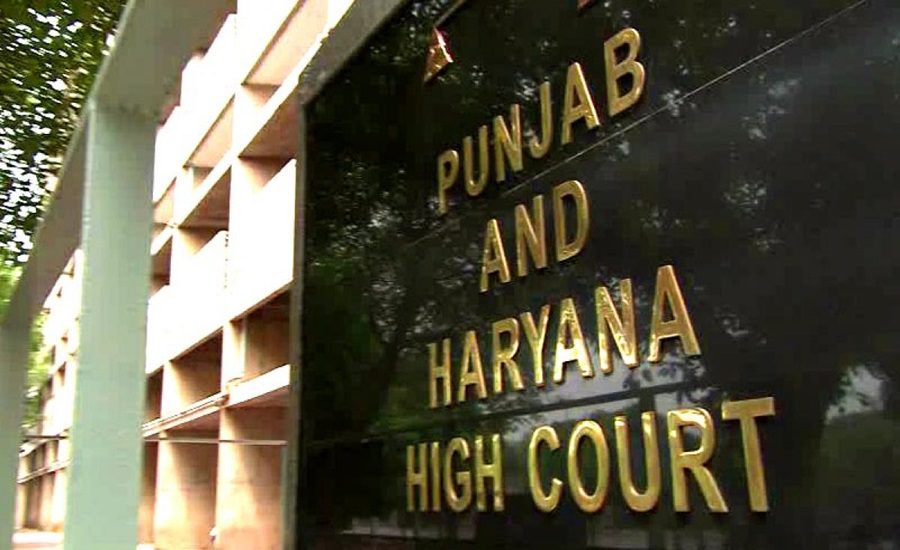
Chandigarh: The Punjab and Haryana High Court has struck down Section 147A of the Income Tax Act, 1961, declaring the newly inserted provision unconstitutional. The ruling could have implications for income tax reassessment proceedings and the authority of Jurisdictional Assessing Officers (JAOs) under the faceless tax assessment framework.
A Bench comprising Justice Deepak Sibal and Justice Rupinderjit Chahal delivered the ruling on Wednesday, September 9. A detailed order explaining the court’s reasoning is yet to be released.
The provision had been introduced retrospectively from April 1, 2021, to clarify the role of JAOs in reassessment proceedings under Sections 148 and 148A of the Income Tax Act.
What Did the Court Rule on Section 147A?
Section 147A was inserted with retrospective effect from April 1, 2021. It provided that, for the purposes of Sections 148 and 148A, the expression “Assessing Officer” would refer to an Assessing Officer other than the National Faceless Assessment Centre (NFAC).
The provision became significant because of a prolonged dispute over who had the authority to issue reassessment notices after the introduction of the faceless assessment system.
The latest ruling by the Punjab and Haryana High Court has now struck down Section 147A as unconstitutional. The detailed judgment is expected to clarify the legal reasoning behind the decision and its implications for reassessment proceedings.
Read Also: MP High Court Chief Justice AY Kogje Calls Independent Bar Essential For Fair Justice
Why Was There a Dispute Over Jurisdictional Assessing Officers?
The dispute emerged after the post-2021 faceless assessment framework came into force. Several taxpayers challenged reassessment proceedings initiated by their Jurisdictional Assessing Officers.
The central question was whether JAOs could independently initiate reassessment proceedings or whether such proceedings had to be conducted through the prescribed faceless mechanism involving the National Faceless Assessment Centre.
The Punjab and Haryana High Court had previously ruled against the Revenue in cases involving this issue. In Income Tax Officer, Ward 2(1), Chandigarh & Ors. vs Tej Partap Singh, the court had quashed orders passed under Section 148A(d) and subsequent notices issued under Section 148.
The court held in such cases that the proceedings should have followed the prescribed faceless mechanism.
However, the legal position was not uniform across the country. Some other High Courts took a different view and upheld the authority of JAOs to initiate reassessment proceedings.
This difference in judicial interpretations eventually took the matter to the Supreme Court.
What Did the Retrospective Amendment Change?
The Income Tax Department’s Revenue authorities challenged adverse High Court rulings before the Supreme Court. While those appeals were pending, Parliament introduced Section 147A retrospectively from April 1, 2021.
The amendment sought to clarify that JAOs could act as the Assessing Officer for proceedings under Sections 148 and 148A and that such authority was not restricted to the National Faceless Assessment Centre.
In effect, the amendment provided legislative backing to the position that JAOs could conduct these reassessment proceedings.
The retrospective nature of the amendment was particularly important because it sought to cover proceedings dating back to April 1, 2021, when the relevant faceless assessment framework came into force.
Supreme Court Sent JAO Cases Back to High Courts
The Supreme Court subsequently sent the batch of cases concerning JAO and faceless assessment proceedings back to the respective High Courts for fresh consideration in light of the retrospective insertion of Section 147A.
The top court also allowed the petitioners to challenge the constitutional validity of the retrospective legislative amendment before the respective High Courts.
The Punjab and Haryana High Court’s latest decision came in this context and has now declared Section 147A unconstitutional.
The detailed order will be important in determining the precise reasoning of the court and how the ruling affects reassessment proceedings that were initiated by JAOs.
What Is Section 147A of the Income Tax Act?
Section 147A was introduced into the Income Tax Act with retrospective effect from April 1, 2021. Its purpose was to clarify who could function as the “Assessing Officer” for reassessment proceedings under Sections 148 and 148A.
In simple terms, the provision sought to establish that reassessment proceedings could be handled by the taxpayer’s Jurisdictional Assessing Officer, rather than being restricted to the National Faceless Assessment Centre.
The provision was introduced against the backdrop of several court rulings questioning the authority of JAOs to issue reassessment notices under the post-2021 faceless assessment system.
By giving the provision retrospective effect, Parliament attempted to cover reassessment proceedings dating back to April 1, 2021.
The Punjab and Haryana High Court’s decision has now invalidated that provision, adding a significant development to the continuing legal dispute over jurisdiction and reassessment under India’s faceless income tax framework.
Why the Ruling Matters for Taxpayers
The ruling is important because reassessment notices can have a direct impact on taxpayers and their tax proceedings. The dispute is essentially about which authority can legally initiate and conduct reassessment proceedings under the framework introduced after April 2021.
With Section 147A now struck down by the Punjab and Haryana High Court, the detailed judgment will be closely watched for its impact on past and ongoing reassessment proceedings and the government’s position on the authority of JAOs.
The decision also highlights the continuing judicial scrutiny of retrospective tax legislation and the balance between legislative clarification and constitutional limits.
Read Also: Why MP High Court Wants A Nationwide E-Rickshaw Policy Within Just 60 Days