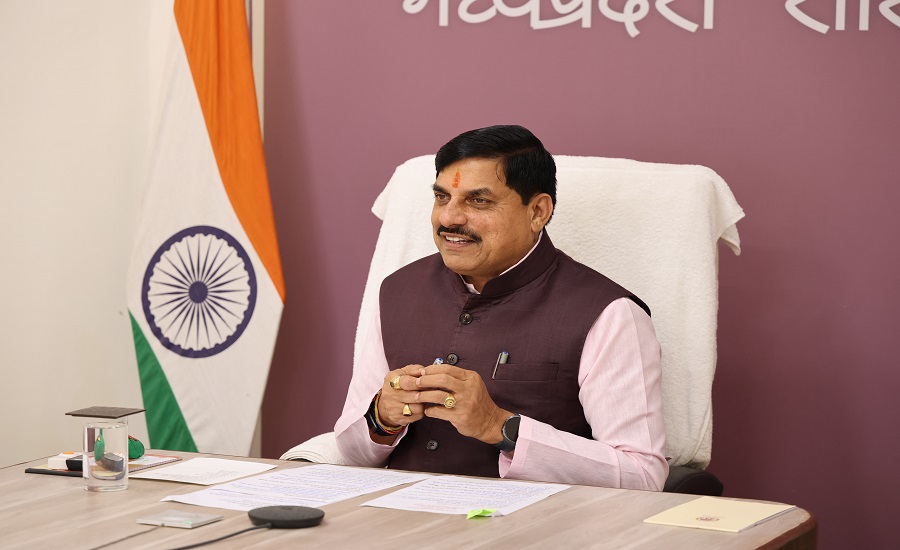
Bhopal: Madhya Pradesh Chief Minister Dr. Mohan Yadav personally began the demolition of a portion of his ancestral home in Ujjain as part of a road-widening project being undertaken ahead of Simhastha 2028.
After offering prayers outside the house, Yadav picked up a pickaxe and began breaking the structure himself. The moment turned emotional as he spoke about the house where he was born, grew up and spent his childhood. He said that parting with a family home naturally affects a person emotionally, but development in the public interest sometimes requires such sacrifices.
The road-widening project covers a 730-metre stretch from Khajur Wali Masjid through Abdalpura and Jiwajiganj Police Station to Ganesh Chowk. The road is planned to be widened to 15 metres, with 272 buildings identified as falling within the widening alignment.
‘The House Where I Grew Up’
Speaking about the decision, Yadav recalled his childhood memories associated with the house.
He said that when a person has to see the house where they were born, grew up and played being demolished, it is natural for the moment to have an emotional impact. However, he said that if the work is necessary for Simhastha, people must be willing to make the required sacrifice.
According to reports from the event, Yadav and his family have agreed to remove the affected portion of the property. Reports also said the family has stated that it would not seek compensation for the affected portion.
The Chief Minister’s action came as Ujjain prepares for the large influx of pilgrims and visitors expected during Simhastha 2028.
Read Also: MP Power Generation Company Offers 559 On-the-Job Training Positions Under Seekho-Kamao Scheme
A Road Project Linked to Simhastha 2028
The road-widening work is part of the infrastructure preparations underway in Ujjain ahead of Simhastha.
The proposed route runs through a busy part of the city, connecting Khajur Wali Masjid with Ganesh Chowk via Abdalpura and the Jiwajiganj police station area. The existing road, reported to be around 6 to 10 metres wide at different points, is being planned for expansion to 15 metres.
The project is estimated to cost around ₹9.80 crore. The widening is intended to improve traffic movement and connectivity in the area before the major religious gathering.
The project has also brought several private properties within the road alignment. The Chief Minister’s ancestral house and the residence of his sister Kalawati Yadav are among the properties affected.
‘Ujjain Has Set an Example’
Yadav used the occasion to speak about the importance of setting examples through personal conduct.
He recalled his own public life and said that whenever he contested elections, he believed that leaders should keep the future in mind and demonstrate through their actions the kind of example they want society to follow.
He also referred to Prime Minister Narendra Modi as an example of putting public responsibilities and governance priorities above personal interests.
Yadav said Ujjain residents had also contributed to the city’s development by allowing portions of their properties to be moved back for infrastructure works.
He described this cooperation as an example of how citizens and the administration can work together when major public projects require changes to existing structures.
Public Interest at the Centre
The Chief Minister’s ancestral home being affected by the project has brought a personal dimension to the wider road-widening exercise.
The project applies to properties located along the identified road alignment, including the Chief Minister’s family property. Yadav’s decision to personally begin the removal of the affected portion has therefore become a visible part of Ujjain’s preparations for Simhastha 2028.
The move also reflects the scale of urban changes planned for the city before the event, particularly in areas where narrow roads and dense settlements could create traffic challenges when the number of visitors increases.
Reports have identified 272 buildings along the proposed widening stretch as affected by the project.
Preparing Ujjain for a Larger Pilgrim Footfall
Ujjain is expected to face a major increase in pedestrian and vehicular movement during Simhastha 2028. Improving road width and connectivity is therefore one of the key components of the city’s infrastructure preparations.
The 730-metre corridor from Khajur Wali Masjid to Ganesh Chowk is an important local connection through the old city. Widening it to 15 metres is expected to provide additional road space and support smoother movement during periods of heavy traffic.
The project also demonstrates how large urban infrastructure plans can affect existing residential properties. While the Chief Minister’s family has publicly supported the removal of the affected portion of their property, other affected property owners remain part of the wider implementation process.
A Personal Sacrifice for a Public Project
The image of the Chief Minister personally using a pickaxe at his childhood home has added a human dimension to the infrastructure work.
For Yadav, the house represents decades of family memories. Yet, while beginning the demolition, he framed the decision around the larger preparations for Simhastha and the need to improve Ujjain’s infrastructure.
The road project is one part of the broader transformation planned for the city ahead of Simhastha 2028. Its implementation will determine how effectively key routes can handle increased traffic and visitor movement during the major gathering.
For Ujjain, the immediate focus remains on completing the road-widening work and other infrastructure improvements in time, while balancing development requirements with the impact on properties and residents along the route.
Read Also: MP to Relaunch Public Bus Services After 21 Years Under CM Sugam Parivahan Seva