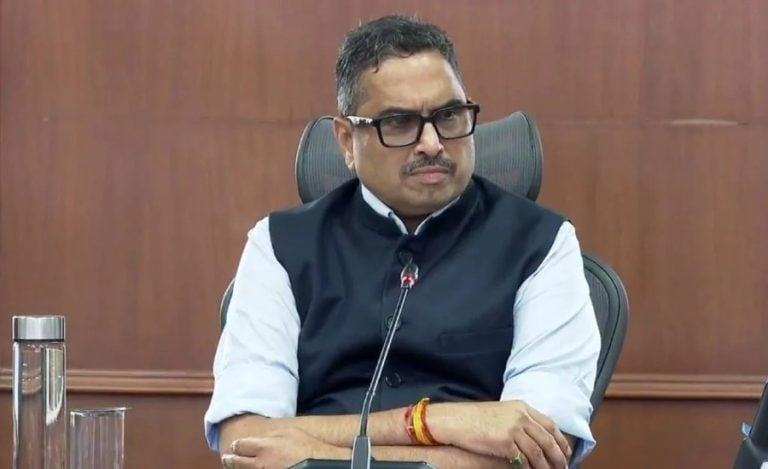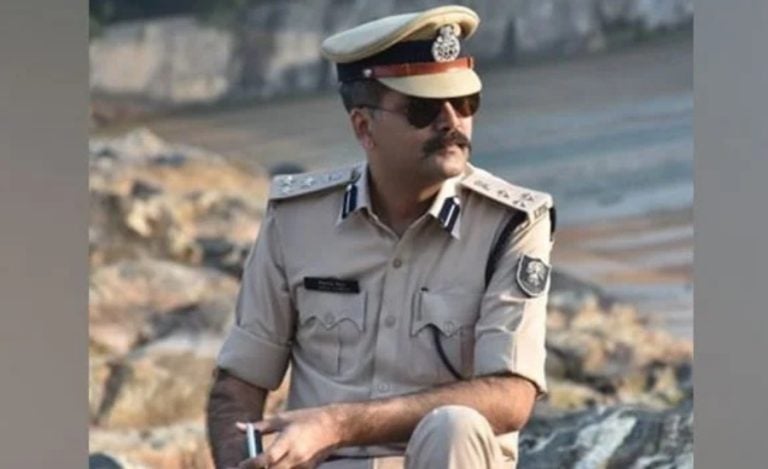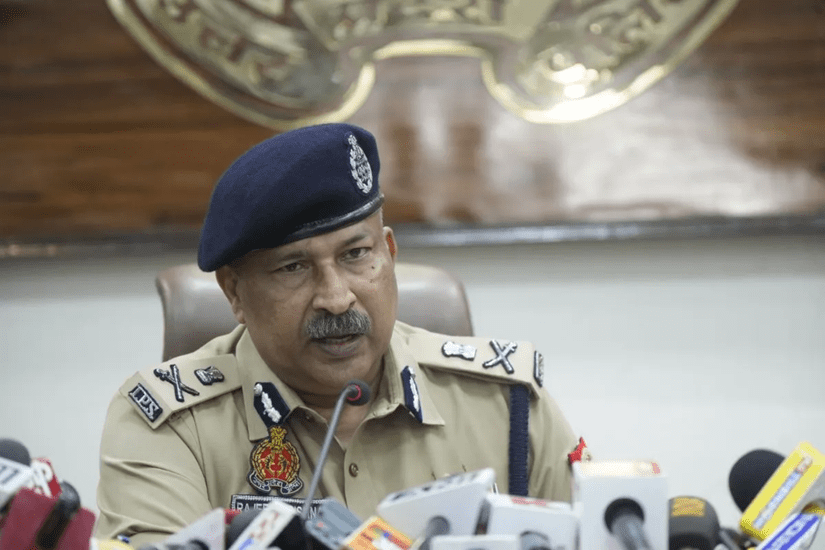
Lucknow: Uttar Pradesh Director General of Police (DGP) Rajeev Krishna, an IPS officer of 1991 batch, has outlined a comprehensive, technology-driven strategy aimed at achieving “zero loss of life” during floods and water-related disasters, emphasising prevention, preparedness, and rapid response as the cornerstones of the state’s disaster management framework.
Addressing a national seminar on “Flood and Flood-Related Disaster Management” at Surya Auditorium in Lucknow Cantonment on Friday, the DGP said recurring floods impact millions of people every year and require coordinated action involving multiple agencies rather than isolated efforts by individual departments or states.
The seminar was jointly organized by the Uttar Pradesh State Disaster Management Authority (UPSDMA) and Central Command, bringing together senior officials from disaster management agencies, the armed forces, state governments, and technical institutions.
Senior Officials Participate in National Seminar
The event was attended by several prominent dignitaries, including:
- Water Resources and Flood Control Minister Swatantra Dev Singh
- UPSDMA Vice-Chairman Lt Gen Yogendra Dimri
- Principal Secretary (Revenue) Aparna U
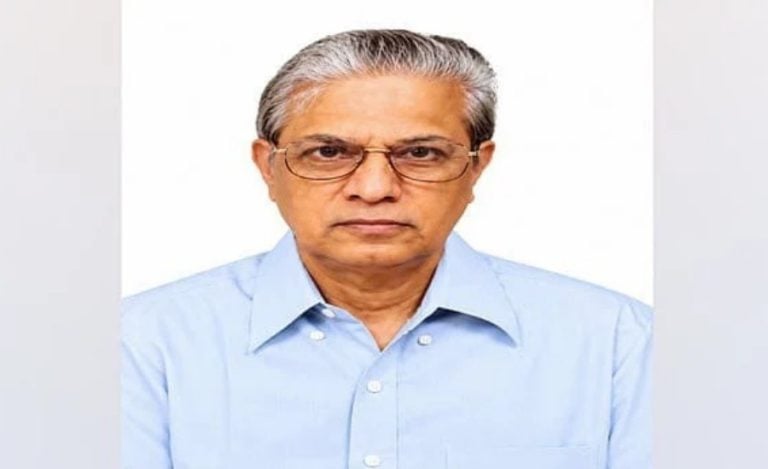
- Bihar State Disaster Management Authority Vice-Chairman Dr. Uday Kant Mishra
- Central Command Chief Lt Gen Anindya Sengupta
Read Also: Telangana Police Association Election: DGP C.V. Anand Orders Early Process, Cites Welfare Importance
The discussions focused on flood mitigation strategies, disaster preparedness, inter-agency coordination, and emerging technologies for flood response.
Five-Pillar Framework for Disaster Management
Presenting the Uttar Pradesh Police disaster response model, DGP Rajeev Krishna said the state’s strategy is built around five key pillars:
- Prevention
- Preparedness
- Prediction
- Protection
- Prompt Response
According to him, disaster management should not be viewed as a reactive activity but as a continuous process involving planning, training, technology, and public participation.
He stressed that strong coordination among police, SDRF, civil administration, armed forces, and local communities remains essential for minimizing casualties and property damage during emergencies.
Expanded Disaster Response Capacity Since SDRF Formation
The DGP highlighted the significant strengthening of Uttar Pradesh’s disaster response infrastructure since the establishment of the State Disaster Response Force (SDRF) in 2017.
Currently, the state has:
- 17 Provincial Armed Constabulary (PAC) Flood Relief Companies
- 51 PAC flood-relief platoons
- 6 SDRF companies
- 18 specialized SDRF teams
- Nearly 2,500 trained personnel on 24-hour standby
These resources have been strategically positioned to ensure swift deployment during floods and other emergencies.
44 Districts Identified as Flood-Prone
Based on vulnerability mapping and risk assessment exercises, Uttar Pradesh has identified 44 districts as flood-prone.
The categorisation includes:
18 Highly Sensitive Districts
12 Sensitive Districts
14 Moderately Vulnerable Districts
The state has deployed trained personnel, rescue equipment, and emergency resources in these districts to reduce response time and improve preparedness.
Modern Equipment and Specialised Training
To strengthen rescue operations, flood response teams have been equipped with modern rescue and communication tools, including:
- Motorboats
- Life jackets
- Life buoys
- Searchlights
- Scuba diving equipment
- Underwater communication systems
- Advanced ambulances
The DGP said personnel are currently undergoing a 45-day specialized training programme from May 16 to June 30 at various river ghats across the state.
Training modules include:
- Boat operations
- Scuba diving
- Rope rescue techniques
- CPR and first aid
- Relief material distribution
- Emergency evacuation procedures
The programme aims to ensure that rescue teams remain fully prepared ahead of the monsoon season.
Focus on Ghat Safety and Water-Related Incidents
Rajeev Krishna noted that a large number of water-related fatalities in Uttar Pradesh occur not during floods but at religious gatherings, fairs, and idol immersion events.
To address this challenge, Uttar Pradesh Police has implemented a comprehensive Standard Operating Procedure (SOP) for safety at river ghats and water bodies.
Key measures include:
- Barricading of dangerous zones
- Installation of warning signboards
- Improved lighting arrangements
- Public announcement systems
- Regulation of boat operations
- Mandatory use of life jackets
These interventions are intended to reduce accidental drownings and improve public safety during mass gatherings.
Mahakumbh 2025 Recorded Zero Drowning Fatalities
Highlighting a recent success story, the DGP said that Mahakumbh 2025 witnessed zero drowning deaths despite the presence of millions of pilgrims.
He attributed this achievement to meticulous planning, extensive deployment of divers and rescue personnel, constant surveillance, and strict implementation of safety protocols.
The experience, he said, serves as a model for future crowd and water safety management initiatives.
UP-112 Playing Critical Role in Emergency Response
The DGP also highlighted the role of UP-112’s 24×7 Emergency Operations Centre in disaster response and emergency management.
According to him, the system enables:
- Real-time tracking of rescue resources
- Quick deployment of emergency teams
- Seamless inter-agency communication
- Faster emergency response
The platform has emerged as a key component of Uttar Pradesh’s integrated disaster management ecosystem.
Building a Resilient Future
Concluding his address, Rajeev Krishna stressed the need for regular mock drills, public awareness campaigns, community participation, and greater use of technology to strengthen resilience against future flood threats.
He reiterated that the ultimate goal of the state administration is to ensure “zero loss of life” through preparedness, prevention, and coordinated action, making Uttar Pradesh better equipped to deal with flood-related disasters in the years ahead.
Read Also: IPS Officer Shobhit D Saksena Appointed DCP Outer North Delhi After Serving in Jammu and Kashmir